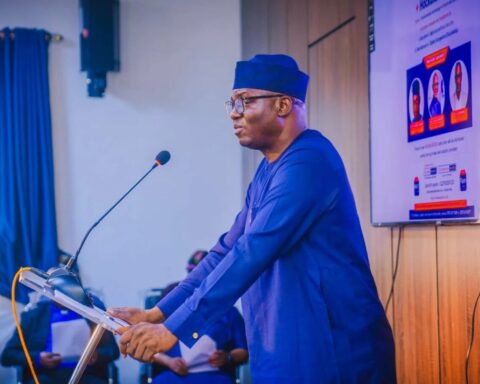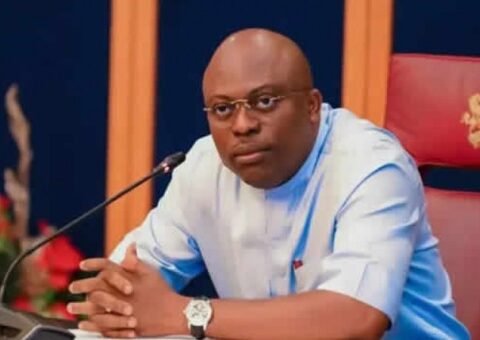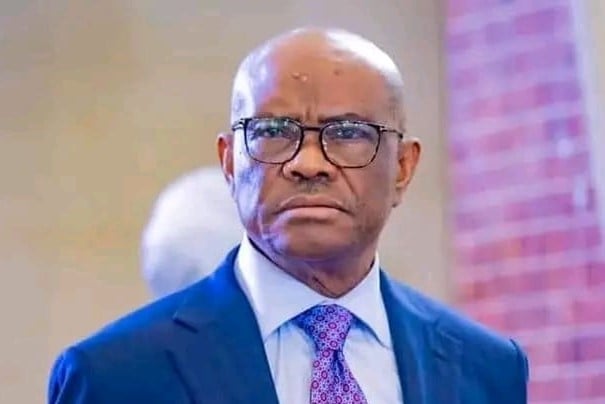
The political crisis in Rivers State has grown beyond a quarrel between a former governor and his successor. It has become a revealing moment in Nigeria’s democracy, exposing how power is transferred, brokered and sometimes quietly taken away. At the centre of this drama are four actors: Nyesom Wike, the former governor and current FCT minister; SiminalayiFubara, the sitting governor; President Bola Tinubu; and increasingly, Governor Hope Uzodinma of Imo State.
The key question many Nigerians are now asking is simple: where does all this leave Wike?
For years, Wike was the undisputed political strongman of Rivers State. He controlled party structures, determined candidates and shaped political outcomes with confidence and confrontation. His installation of Fubara as governor appeared to confirm his dominance. But politics, like power, is never static.
Once sworn in, governors acquire constitutional authority that does not flow from their political benefactors. This distinction lies at the heart of the Rivers crisis. What began as internal disagreement soon escalated into a struggle over who truly governed the state the elected governor or the political structure that produced him.
Governor Fubara’s eventual defection from the PDP to the APC should not be romanticized as ideological conversion. Nigerian politics rarely works that way. It was a survival move. Surrounded by hostile party machinery, legislative pressure and prolonged instability, Fubara sought protection where it mattered most: the presidency and the ruling party.
This is where President Tinubu’s interest and Governor Hope Uzodinma’s role become crucial.As Chairman of the Progressive Governors’ Forum, Uzodinma sits at a powerful intersection of party strategy and political mediation. Unlike more vocal political actors, his influence often operates quietly through negotiation, reassurance and alignment. In the Rivers saga, Uzodinma emerged as a key broker, helping normaliseFubara’s entry into the APC and positioning him as the party’s rallying point in the state.
Uzodinma’s involvement reflects a broader APC strategy: prioritising the control of sitting governors over loyalty to political history. For the party, absorbing an incumbent governor is more valuable than preserving old alliances. This calculation may be cold, but it is effective.
President Tinubu’s endorsement of Fubara fits neatly into this logic. Rivers State is politically strategic and economically vital. Aligning it with the ruling party strengthens federal influence in the South-South and reduces uncertainty. From a purely pragmatic perspective, Tinubu chose stability, incumbency and utility over sentiment.
For Wike, this shift has been costly.At the state level, his influence has clearly diminished. Many former loyalists have adjusted to the new centre of power, not out of betrayal but political realism. Power attracts loyalty, and once power moves, loyalty follows. This is a hard truth of Nigerian politics.
Nationally, however, Wike is far from finished. As a serving minister and a politician with deep networks, he remains relevant. What has changed is that Rivers State no longer revolves around him. The political sun has shifted, and Wike now operates outside its centre.
This moment exposes the limits of godfatherism. While political sponsors may help candidates win elections, governance ultimately rests on constitutional authority. Governors who understand this and secure institutional backing often outlast those who rely on personal loyalty alone.
There is a moral lesson here, echoed in the biblical story of Judges Chapter 9, where Abimelech rose through manipulation and force only to be abandoned by those who helped him. The story is not about ancient kings alone but about the fragility of power built on control rather than consent. When loyalty is enforced instead of earned, resistance is inevitable.
To be clear, Wike is not Abimelech, and Nigerian politics is far more complex than biblical parables. But the pattern is familiar: authority that refuses to adapt to changing realities often becomes isolated.
The Rivers crisis also highlights the growing importance of political brokers like Uzodinma. Modern Nigerian politics is no longer driven solely by loud strongmen. Increasingly, it is shaped by quieter actors who build consensus, manage party interests and facilitate alignment behind the scenes. In today’s climate, these brokers may wield more durable influence than traditional political enforcers.
Still, there are broader democratic concerns. While political alignment may bring short-term stability, the steady absorption of opposition figures into the ruling party weakens pluralism and accountability. Democracy thrives on competition, not consolidation alone. Nigeria must be careful not to trade stability for stagnation.
So where does this leave Wike?
Not defeated, but displaced.
Not irrelevant, but restrained.
Not powerless, but reminded.
The Rivers crisis is a lesson in political transition. Power must evolve with time or risk being negotiated away.
For Wike, the challenge now is whether to adapt through reconciliation, restraint and reinvention — or to resist a tide that has clearly shifted.
In politics, as in life, how power is held matters just as much as how it is acquired.