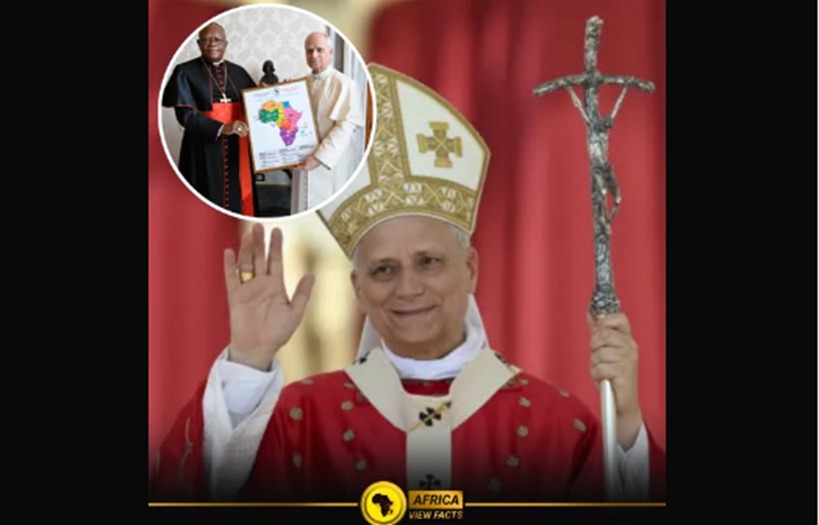
In what is already being described as a defining moment of his young papacy, Pope Leo XIV is set to embark on an ambitious 11-day journey across Africa, marking his first major international trip since ascending to the leadership of the Roman Catholic Church last year.
The 70-year-old pontiff will begin the historic visit on Monday, travelling across four nations—Algeria, Cameroon, Angola, and Equatorial Guinea—in a tour that will span over 18,000 kilometres. The journey is expected to be both physically demanding and symbolically powerful, as the pope brings messages of unity, peace, and hope to a continent often at the crossroads of global challenges.
Since his election in May, Pope Leo XIV has drawn global attention for his measured tone and emphasis on dialogue, particularly in an increasingly polarized world. This trip, Vatican officials say, is intended to reflect his commitment to engaging directly with communities and addressing issues that resonate far beyond church walls.
Africa, with its rapidly growing Catholic population and complex social realities, provides a fitting stage. The continent is home to millions of faithful, many of whom look to the Vatican not only for spiritual guidance but also for moral leadership on pressing issues such as inequality, governance, and human dignity.
Throughout the visit, the pope is scheduled to deliver 11 speeches, preside over seven masses, and visit at least a dozen locations, ranging from major cities to underserved communities. Each stop has been carefully chosen to highlight different aspects of the Church’s mission—interfaith dialogue in North Africa, peacebuilding in conflict-prone regions, and advocacy for social justice in economically challenged areas.
In Algeria, a predominantly Muslim nation, the pope is expected to emphasize dialogue between Christianity and Islam. Observers see this as a crucial opportunity to strengthen mutual understanding at a time when religious tensions continue to shape global narratives. His meetings with Islamic leaders are likely to focus on shared values—peace, compassion, and coexistence.
Moving into Cameroon, attention will shift to internal conflicts and humanitarian concerns. The country has faced years of unrest in certain regions, and the pope’s presence is expected to shine a spotlight on the need for reconciliation and sustainable peace. Faith leaders and civil society groups are hopeful that his message will encourage dialogue among divided communities.
In Angola, the focus will likely turn to economic inequality and development. Despite its vast natural resources, many citizens continue to grapple with poverty and limited access to basic services. The pope’s speeches here are expected to challenge leaders and institutions to prioritize inclusive growth and human dignity.
Finally, in Equatorial Guinea, issues of governance and human rights are expected to take centre stage. The country has long been under scrutiny from international observers, and the pope’s visit could serve as a platform for advocating transparency, accountability, and respect for fundamental freedoms.
Beyond the regional context, the timing of the trip adds another layer of significance. The world is currently navigating a period of deep uncertainty, shaped in part by ongoing tensions in the Middle East and the ripple effects on global energy markets. Against this backdrop, the voice of Pope Leo XIV carries added weight.
His words—often carefully chosen and widely interpreted—are expected to address not only local concerns but also broader global anxieties. Analysts suggest that the pope may use the platform to call for restraint, cooperation, and renewed commitment to international peace.
For the Catholic faithful, the visit is more than a diplomatic mission; it is a moment of spiritual connection. Crowds are expected to gather in large numbers at each stop, eager to witness the pope’s presence and receive his blessing. In many communities, preparations have been underway for weeks, with churches organizing events, choirs rehearsing, and local authorities coordinating logistics.
Yet, beyond the ceremonies and symbolism, the true impact of the trip will likely be measured in its lasting messages. In a world grappling with division and uncertainty, the pope’s emphasis on dialogue, justice, and shared humanity offers a counter-narrative—one that seeks to bridge divides rather than deepen them.
As Pope Leo XIV boards his plane to begin this landmark journey, expectations are high. Whether addressing world leaders, engaging with religious figures, or speaking directly to ordinary citizens, his mission remains clear: to inspire hope, foster understanding, and remind the world of the enduring power of faith and compassion.