By Casmir Igbokwe
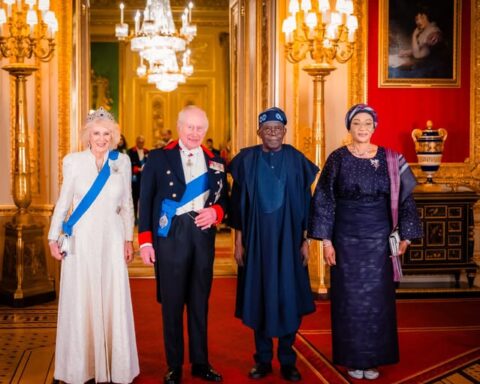
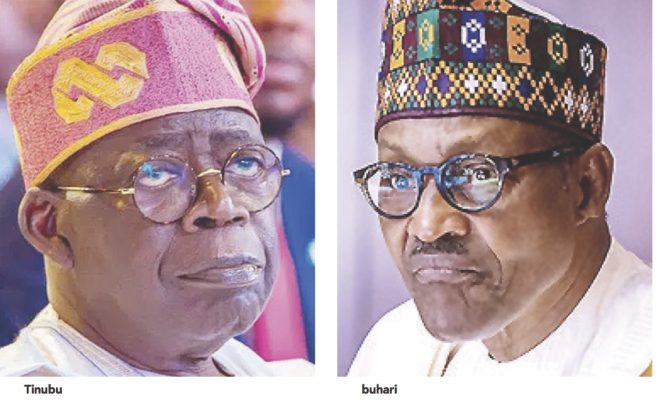
While hosting the leadership of the Nigerian media at the State House in Abuja recently, President Bola Tinubu enthused that Nigeria had come back from the brink. As if to put a lie to that statement, the 2026 World Happiness Report, which came out last Thursday, saw Nigeria slipping back from the 105 it ranked in 2025 to 106 this year. In 2024, the country ranked 102.
The happiest country in the world based on the 2024 report is Finland. It has retained this position for 10 consecutive years. Denmark, Iceland, Sweden, Israel, and Netherlands rank second to sixth respectively.
In Africa, the happiest country is Mauritius. It ranks 73rd in the world. Among the top 10 happiest countries in Africa are Libya, Algeria, Mozambique, Gabon, Cote d’Ivoire, Cameroon, South Africa, Niger and Tunisia.
Rankings are determined by analyzing Gallup polling data in six categories: gross domestic product per capita, social support, healthy life expectancy, freedom to make your own life choices, generosity of the general population and perceptions of corruption levels.
From this ranking, it is apparent that there is a correlation between good governance and happiness. Finland, which is the number one happy country, also ranks first in the latest global governance index. The second to fifth best-governed countries, according to the World Economics Governance Index 2026, are Denmark, Norway, Sweden, and the Netherlands. These countries also top the list of the happiest countries in the world.
Mauritius, which is the happiest country in Africa, ranks second among the 10 best-governed countries on the continent. South Africa is among the top 10 best-governed countries in Africa. It also featured among the best 10 happiest countries on the continent. Nigeria is in the league of countries in the poor governance category. It ranks 112 in the world and did not feature among the top 10 best-governed countries in Africa.
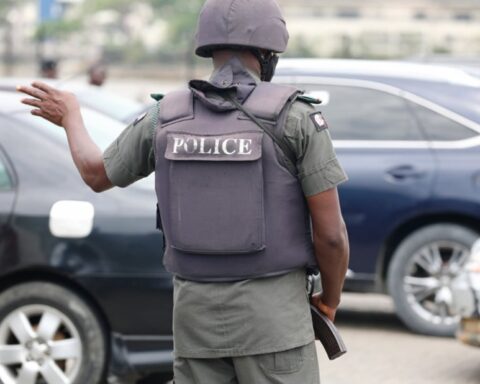
The reasons are obvious. In almost every aspect of life, Nigeria lags behind, no matter what the powers that be would want us to believe. The country is currently gripped by a high rate of insecurity. Human lives have no meaning anymore as people are being killed like chickens. The other day in Borno State, suicide bombers killed at least 23 people in Maiduguri and wounded over 100 others. Boko Haram and Islamic State West Africa Province (ISWAP) group carried out many attacks against army bases in Borno state this month. They killed many soldiers and seized their weapons. Innocent citizens are routinely kidnapped, molested, and sometimes killed.
In the 2026 Global Terrorism Index report, Nigeria ranks as the world’s fourth most-terrorised country in the world. In 2024 and 2025, the country emerged eighth and sixth most-terrorised country respectively. Pakistan is the world’s most-terrorized country. It is followed by Burkina Faso, Niger, Nigeria, Mali, Syria, Somalia, Democratic Republic of the Congo, Colombia, and Israel.
In the area of the economy, Nigeria has not fared better. The country has a poverty rate of over 60 per cent. Government appears more interested in collecting taxes than ameliorating the plight of the poor. It is not in doubt that the conditions Nigerians live now are worse than when the present government came to power in 2023. The sudden removal of fuel subsidy and the floating of the exchange rate compounded the woes of the citizens. Many companies shut down operations leading to a hike in the rate of unemployment.
There are three basic needs of man: food, housing, and clothing. Among these three, which one can the majority of Nigerians easily afford? None! Prices of food items and other essential commodities have gone beyond the reach of many citizens. Food inflation is said to have slightly come down. It reportedly fell to 8.89 per cent year-on-year in January 2026. But it has not significantly affected the cost of living, which is still very high.
As of 2015, a bag of 50kg of rice was less than N10,000. It went up during Muhammadu Buhari’s administration to between N30,000 and N40,000. It further went up to between N80,000 and N100,000 when Bola Tinubu came to power. Now, it has slightly come down, but still not affordable to many families. The same thing goes with the prices of other food items.
Due mainly to poverty, about two million children under five suffer from acute malnutrition in Nigeria. UNICEF estimates that Nigeria has the highest burden of stunted children in Africa. It is second globally. The global body said 11 million Nigerian children under five experienced severe child food poverty in 2024.
With regard to housing, the cost of building materials has more than quadrupled. As of 2015, the price of a bag of cement was a little above N1,000. Today, it is over N11,000. This is not to talk about the price of rod, granite, and other building materials. Little wonder, the cost of renting a house in many cities has skyrocketed. In many parts of Lagos, renting a two-bedroom flat goes for an average of between N2.5 million and N3.5 million per annum depending on the location.
The situation is so bad that in a place like the University of Lagos, about 40 per cent of lecturers now reportedly sleep in their offices because they cannot afford the cost of renting a house. A professor of estate management, Timothy Nubi, reportedly said penultimate week that these lecturers were seen taking baths every morning around the faculty. According to him, a two-bedroom apartment around Akoka area of Lagos was recently rented for N3.5 million per year. “No professor will conveniently afford to pay N3.5 million for accommodation. That is about seven months of salary,” he said.
Tell me, how can a man in this kind of situation be happy? What manner of knowledge will he impart to his students? This somehow reflects on the state of our education, one of the most critical sectors in any country.
Our public schools lack the basic facilities that define good schools. Libraries are outdated. Laboratories are not equipped. Hostel facilities are antiquated and dilapidated. Lecturers are frequently on strike. Those who are entrepreneurial abandon their job for some other ventures. Some relocate abroad for greener pastures. A former Vice-Chancellor of the University of Lagos, Professor Oluwatoyin Ogundipe lamented last year that no fewer than 239 first-class graduates of UNILAG employed to teach in UNILAG quit the school within seven years due to poor pay.
It is the same story for the health sector. The Coordinating Minister of Health and Social Welfare, Professor Muhammad Pate, said last year that Nigeria loses about $2 billion to medical tourism annually. According to the Nigerian Medical Association (NMA), over 50,000 Nigerian-trained doctors practise outside the country. This is despite the huge amount of money spent to train them.
Do you blame the doctors? Their counterparts in Nigeria are frequently on strike. Health workers spent 84 days at home recently in the name of a nationwide strike. Their demands are legitimate. But we have a government that bothers less about the welfare of its citizens. This is a country that recorded over 20,811 maternal and child deaths between January and September 2025 alone.
The major thing that concerns them now is how to rig the 2027 election and come back to power. They have employed various surreptitious means to achieve that. The President recently signed the contentious Electoral Act (Amendment) Bill 2026 into law. The law has obvious loopholes for rigging such as not making real time electronic transmission of election results the only means of transmitting results.
The opposition parties are not allowed to breathe. Anywhere they gather, especially the African Democratic Congress (ADC), thugs appear to attack them.
The Peoples Democratic Party (PDP) is a ghost of itself. The party is factionalised like many other opposition parties. From the look of things, some of these factions are sponsored to destabilize the parties. The fear of a one-party state is real. And we claim to be running a multiparty democracy. Shame!
Ironically, our President believes we have come back from the brink! Does anybody believe him? Perhaps, mainly politicians and those around the corridors of power will believe him. The majority of Nigerians know where the shoe pinches them. Some of them visit drinking joints in search of artificial happiness. But they end up drinking to stupor and bringing sickness upon themselves. Genuine happiness can only occur when we succeed in removing greedy and selfish politicians from power.
Unfortunately, they are so entrenched in their evil ways that removing them amounts to rolling a stone up a mountain. But there is a limit to which a human being can play God. Nigerians have gone through different terrible phases in their march to nationhood. This phase too will pass away.