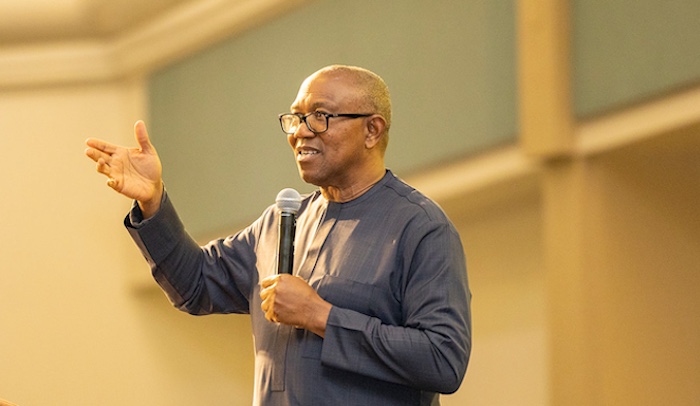
The presidential candidate of the Nigeria Democratic Congress, Peter Obi, has warned against the increasing tendency to associate criminal activities with particular ethnic groups, describing such narratives as dangerous, divisive, and harmful to national unity.
Obi made the remarks in a post shared on his verified X handle on Monday, where he urged Nigerians to resist stereotyping entire communities because of the actions of a few criminal elements.
The former governor stressed that criminality is a human problem and not an ethnic identity, adding that no tribe or community should be unfairly judged based on the misconduct of individuals.
According to him, many Nigerians have experienced discrimination and prejudice rooted in ethnic sentiments, a development he said continues to weaken trust and cohesion among citizens.
“As an Igbo man, I have endured stereotypes, judgment, and labelling solely based on my ethnic origins. This is not an isolated Igbo experience. Most Nigerians have, at some point, been reduced to their ethnicity rather than recognised for their true character,” Obi stated.
He further observed that many Fulani people are currently facing similar prejudice because of the activities of criminal elements who do not represent the values, culture, or identity of the wider Fulani community.
Obi noted that while insecurity and violent crimes remain serious national concerns, addressing them through ethnic profiling would only deepen divisions and create further tension across the country.
He maintained that Nigerians must distinguish between criminals and the innocent communities they claim to belong to, warning that collective blame could fuel hatred, discrimination, and retaliation.
The former presidential candidate urged citizens to embrace fairness, empathy, and understanding in national conversations surrounding insecurity and crime.
According to him, every ethnic group in Nigeria has, at one point or another, faced unfair stereotypes, making it important for citizens to rise above divisive narratives capable of threatening peaceful coexistence.
Political analysts say Obi’s comments come at a time of heightened national debate over insecurity, banditry, kidnapping, and violent attacks in several parts of the country.
In recent years, discussions around insecurity have frequently generated ethnic tensions, particularly on social media, where entire communities are sometimes blamed for the actions of criminal gangs and armed groups.
Observers have repeatedly warned that such rhetoric risks escalating mistrust among ethnic nationalities and undermining efforts to build national unity.
Obi stressed that Nigeria’s diversity should not become a source of hostility but rather a foundation for mutual respect and national strength.
He called on political leaders, opinion moulders, and citizens to avoid inflammatory comments capable of worsening ethnic tensions, noting that responsible leadership and communication are critical in maintaining peace and unity.
The former governor also urged security agencies to remain professional and intelligence-driven in addressing criminality without encouraging narratives that stigmatise innocent citizens.
According to him, sustainable peace can only be achieved when Nigerians focus on justice, accountability, and inclusive nation-building rather than ethnic suspicion and blame.
Obi further warned against attempts by politicians and vested interests to exploit ethnic sentiments for political advantage, saying such tactics have historically contributed to instability and division in the country.
He insisted that Nigerians must begin to see themselves first as citizens with shared hopes and responsibilities, regardless of tribe, religion, or region.
The statement has since generated widespread reactions online, with many supporters commending Obi for speaking against ethnic profiling while others engaged in broader debates about insecurity and national identity.
Civil society groups and commentators have also continued to advocate greater caution in public discussions around crime and ethnicity, arguing that stereotyping entire communities only complicates efforts to address Nigeria’s security challenges.
Obi concluded by urging Nigerians to build bridges of understanding and reject narratives that encourage hatred and division, insisting that unity remains essential to achieving peace, development, and progress in the country.