And to the Distant
But how shall we go?
The robbers will strip us of our tendons!
For we sense
With dog-nose a Babylonian capture,
The martyrdom
Blended into that chaliced vintage;
And savour
The incense and in high buskin,
Like a web
Of voices all rent by javelins.
…Christopher Okigbo
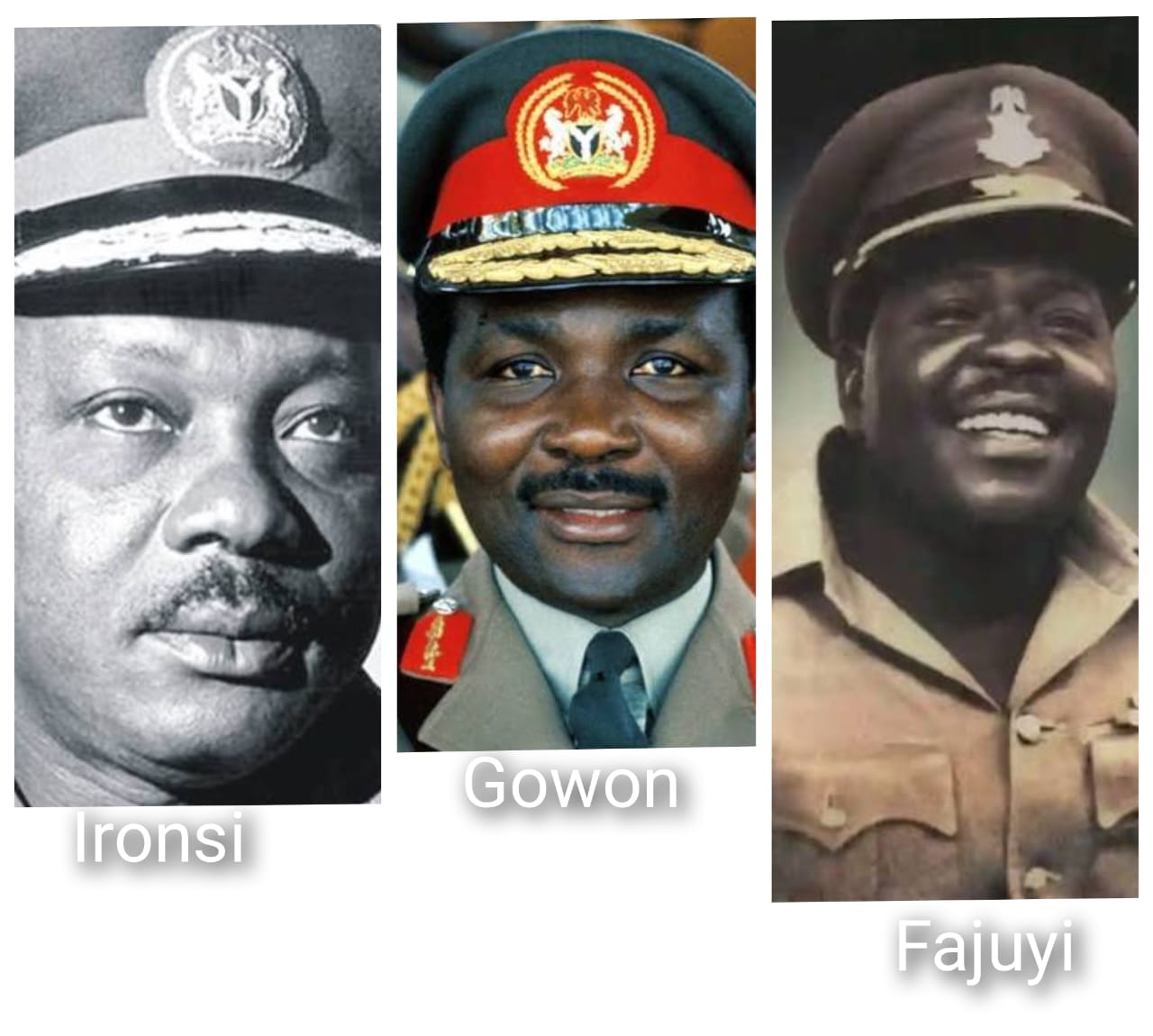
July 29, 1966. Government House, Ibadan. 0030 hours. The telephone rang. Lieutenant Andrew Nwankwo, the supreme commander’s Air Force ADC, picked up the receiver instantly. Bad news. He tautened his physique. The voice at the other end of the line belonged to Police Superintendent Joseph Adeola. His message was that the much-feared and much-rumoured counter-coup had indeed started.
By way of expatiation, Mr. Adeola revealed that Captain Rowland Ogbonna had telephoned him with the news that Lieutenant Colonel Gabriel Okonweze, Major John Obienu and Captain E. B. Orok, all of the Abeokuta Garrison, had already been shot dead. Only thirty minutes earlier, Major General Aguiyi-Ironsi had gone to bed, as had Lieutenant Colonel Francis Adekunle Fajuyi, his host. They had to be informed immediately.
Nwankwo told Lieutenant Sanni Bello, the Head of State’s Army ADC, what he had heard. The information was passed to Lieutenant William Walbe, the commander of General Aguiyi-Ironsi’s security convoy. The three of them slept in the same room, but Walbe lay across the door in such a way that he had to remove himself for it to be opened. He cleared the door as Nwankwo took the terrible news to Lieutenant Umar, Colonel Fajuyi’s ADC.
Umar went and informed Ironsi who immediately put on his uniform. “Get me on the hotline!” he ordered Nwankwo. The General tried to contact Lieutenant Colonel Yakubu Gowon, his loyal Chief of Army Staff, who was holding fort in Lagos. But he could not reach Gowon, either in his residence or at the Army Headquarters. By this time. Fajuyi was by his side. He was worried at the turn things had taken, and he kept suggesting respectfully to Ironsi that they should hurriedly leave the Government Lodge. But his Supreme Commander would not hear of it. Many more attempts at reaching Gowon on the phone proved abortive.
It was imperative that the rebellion be put down. But where was help going to come from? Almost reduced to a telephone operator, Ironsi dialled Government House, Kaduna. Lieutenant Colonel Hassan Usman Katsina, the military governor, was out of the city. Upon inquiries, a reply came that he was in Kano in fulfilment of a tour of parts of the Northern Region. Another try at Kaduna linked up with Lieutenant Colonel Philip Effiong, the acting Commander of the 1 Brigade. There was hardly much that he could do, given the distance between Ibadan and Kaduna.
Thomas, Ironsi’s 12 years old son, home on holiday from England where he attended a public school, was now awake. He could not quite understand why a Colonel and four ADCs, all looking worried, stooped intently over his father, who single-mindedly focused his attention on the telephone. Another attempt at contacting Gowon proved abortive. Ironsi contemplated the situation. He issued another order: “Fetch Njoku!”
Lieutenant Colonel Hilary Njoku, the Commander of the 2 Brigade, was in the Head of State’s entourage. He was summoned on telephone from where he was staying and walked straight to where Ironsi and Fajuyi and their ADCs were. He found Fajuyi in mufti, pacing up and down. They briefed Njoku on the state of things and added ominously that word had come in to the effect that the soldiers who struck at the Abeokuta Garrison were even at that moment on their way to Ibadan. It was now Njoku’s turn to see what miracle the telephone would perform. He dialled the number of the Lieutenant Colonel Henry Igboba, the Commander of the 2nd Battalion, Ikeja. Not getting through, Njoku called his own home and told Rose, his wife, to ask Igboba to give him a ring.
Before long, the telephone rang and it was Igboba calling… He had noticed unusual developments, he told his Brigade Commander, and was taking necessary precautions. Next, Njoku called Lieutenant Colonel Ojukwu in Enugu. The military governor had already been told of the rebellion. Then Lieutenant Colonel David Ejoor telephoned from Benin City. He, too, had learnt that something was amiss. Yet, there was, up till this moment, not a word. Not a whisper, from Colonel Yakubu Gowon, the Chief of Army Staff. Yet again, the telephones were in perfect working condition, not having been tampered with by the counter-coup makers.
A little after her sleep was shattered by the urgent telephone call from her husband, Mrs. Rose Njoku went beyond her brief, which was simply to ask Colonel Henry Igboba to contact her husband in Ibadan. The news from Ibadan left her restless. So, picking up the restricted telephone directory from her bedside, she dialled Government House, Ibadan. Ironsi himself answered. The situation was desperate, she gathered. Next, she telephoned Mrs. Victoria Aguiyi-Ironsi who instantly got through to her husband. When hysteria threatened to envelope the other end of the line, the Head of State calmly put down his own receiver.
Mrs. Ironsi then returned to Mrs. Njoku. “Rose”, she called out, and then spoke in Igbo. “Ihuna na Johnny ga nwu onwu mu agahi ahu ya anya.” (Rose, can you imagine that Johnny is to end in a way that I will not even be able to set eyes on his corpse.) Every word was laden with emotion. But Mrs. Njoku was determined to find out what was going on. So once she was through with the First Lady, she tried elsewhere. “I rang the Brigade Headquarters and the telephone was replaced when my voice was heard”. She wrote later. “I called Jack Gowon next for enlightenment on the situation, but there was no reply either from his office or his house.”
Back inside the Government House in Ibadan, it was decided that Njoku should return to Lagos to take control of the situation. As he strode out of the premises, he was shot in the thigh. Valiantly, he fled into the darkness and escaped first to the University College Hospital, Ibadan, where he was treated before being smuggled to the refuge of the Eastern Region much later.
In another Government guest house in Ibadan, the telephone rang. Mr. S. O. Wey, the Secretary to the Military Government took it. He was told by Mr. Peter Odumosu, the Secretary to the West Regional Government, that his attention was required early that morning at the Government House. Wey quickly prepared and left to answer the summons. As his chauffeur negotiated the driveway into Government House, it became obvious that there was trouble. Soldiers ostensibly on guard duty, Wey noticed, stood facing the building with their rifles at the ready. Normally, they faced outwards.
It would be risky to beat a retreat as they were clearly within firing range. So Wey instructed his chauffeur to drive on. Once they reached the gates, they were arrested. Wey soon found out that he was in the great company of the assorted arrested, including ordinary level Government House assistants, domestic house helps, civilian drivers attached to the Government car pool, washer men, gardeners and the arrested soldiers of the genuine security detail. The atmosphere was tense. It was daybreak
One by one, the Head of State and Colonel Fajuyi started to send out their aides to approach the gates and determine the position of things. Lieutenant Umar, Fajuyi’s ADC went out first and returned moments later to report everything was fine. A party to plot to topple Ironsi, he was the mole in Government House, Ibadan. This explains why soldiers who had already surrounded the building allowed him to return to the beleaguered Ironsi team and file a misleading report.
Lieutenant William Walbe, the Commander of the Head of State’s security convoy went also to “see” what was going on. He simply joined his co-conspirators. All the others who went to the gate were arrested. Until it remained Lieutenant Nwankwo. His own instruction was slightly different and somewhat curious. It was very clear at this stage that the place had been besieged. But Nwankwo was told to go and clear the gates so that both Ironsi and Fajuyi could drive out.
In the military, you simply are expected to obey lawful instructions. So Nwankwo walked down the stairs, entered the courtyard and met Major T Y Danjuma. Danjuma was a friend of his. He wore a smile, but Nwankwo thought the Major looked confused. Suddenly, a soldier came out of nowhere and trained his rifle on Nwankwo, shouting at him to hands up. But Danjuma told the soldier to lower his rifle and back off, which he did.
Major Danjuma now spoke to Lieutenant Nwankwo. He confessed to being confused. News had got to them that another coup d’etat had started and they did not want to be slaughtered again as happened during the January coup. Was it possible for the Head of State to come downstairs and lead them to the safety of the 4th Battalion, and , if possible, give them instructions on what their next line of action should be? Danjuma wanted to know. At this stage, Nwankwo led Danjuma and his men, all armed, into the compound and into the main building where Ironsi and Fajuyi were.
As they entered, they met Fajuyi on the stairs and promptly arrested him. Running up the stairs, they saw Ironsi, standing in the living room. He had his pistol. The weapon was instantly removed. Some accounts of what followed next claimed that after Danjuma had saluted the Supreme Commander “a painful dialogue” ensued between both of them. Some other account insist that any hand that went up before Ironsi, did not do so in salutation, but was like the racket of a Wimbledon star before prime serve: it came down as a thunderous blow.
On the Nigerian Head of State. And this tallies with the recollection of Lieutenant Nwankwo who says that “immediately they got to the Supreme Commander, they started asking him about the Sardauna, Maimalari and all those people who were killed in the first coup and started beating him up.” Lieutenant Titus Numan, the non-commissioned officer whom the Head of State had promoted to full lieutenant, confiscated the staffed crocodile which the Supreme Commander used in place of regulation swagger stick. He also tore off his pips. And the beating of Ironsi and Fajuyi continued unabated.
At length, they were dragged downstairs, their hands tied behind their backs with cut telephone wires. In the courtyard the beating spread to Nwankwo, Lieutenant Bello and all the others earlier on arrested. And what did Ironsi do in the face of this sadistic development? He simply denied being part of the bloody January coup and warned the rebels not to perpetrate an act which they would regret for the rest of their lives. After saying this he just switched off and looked scourge. The merciless walloping continued.
Then Ironsi, Fajuyi, Nwanknwo, Bello and the other arrested were pushed into a Land Rover and two minibuses. The convoy took off but Danjuma did not get to the execution ground with it. He only left his instruction and returned to the Letmauk Barracks, Ibadan, from where he hurried back to Lagos, mission accomplished.
Those who took the Head of the State to his death were Lieutenant Walbe, Lieutenant Garba Paiko, Lieutenant Numan and other soldiers, mostly of lower rank. Inside the vehicles the beating continued. When the convoy got to the Iwo Road junction, it veered into an earth road which cut through a palm bush. The convoy stopped. The journey resumed on foot almost immediately and the beating continued. Every one of those held was to be shot. But an argument ensued between two of the officers. As Colonel Bello recollects, one of the officers maintained that the instruction was not to kill every arrested person.
Mercifully, he carried the day. And that was how people like Mr. S. O. Wey escaped an appointment with the firing squad. They were all driven back to Ibadan and thrown into detention, inside the Letmauk Barracks, But Ironsi, Fajuyi, Nwankwo, Bello were not released. Their castigation continued but the animus was mostly against Ironsi and Fajuyi who were now all blood and gore from the thud of gun butts, the swipe of metal-ended belts, the kicks from jungle boots. “Revenge” was on. The blows descended on the unfortunate, whose hands remained tied to their backs. It was that sort of day.
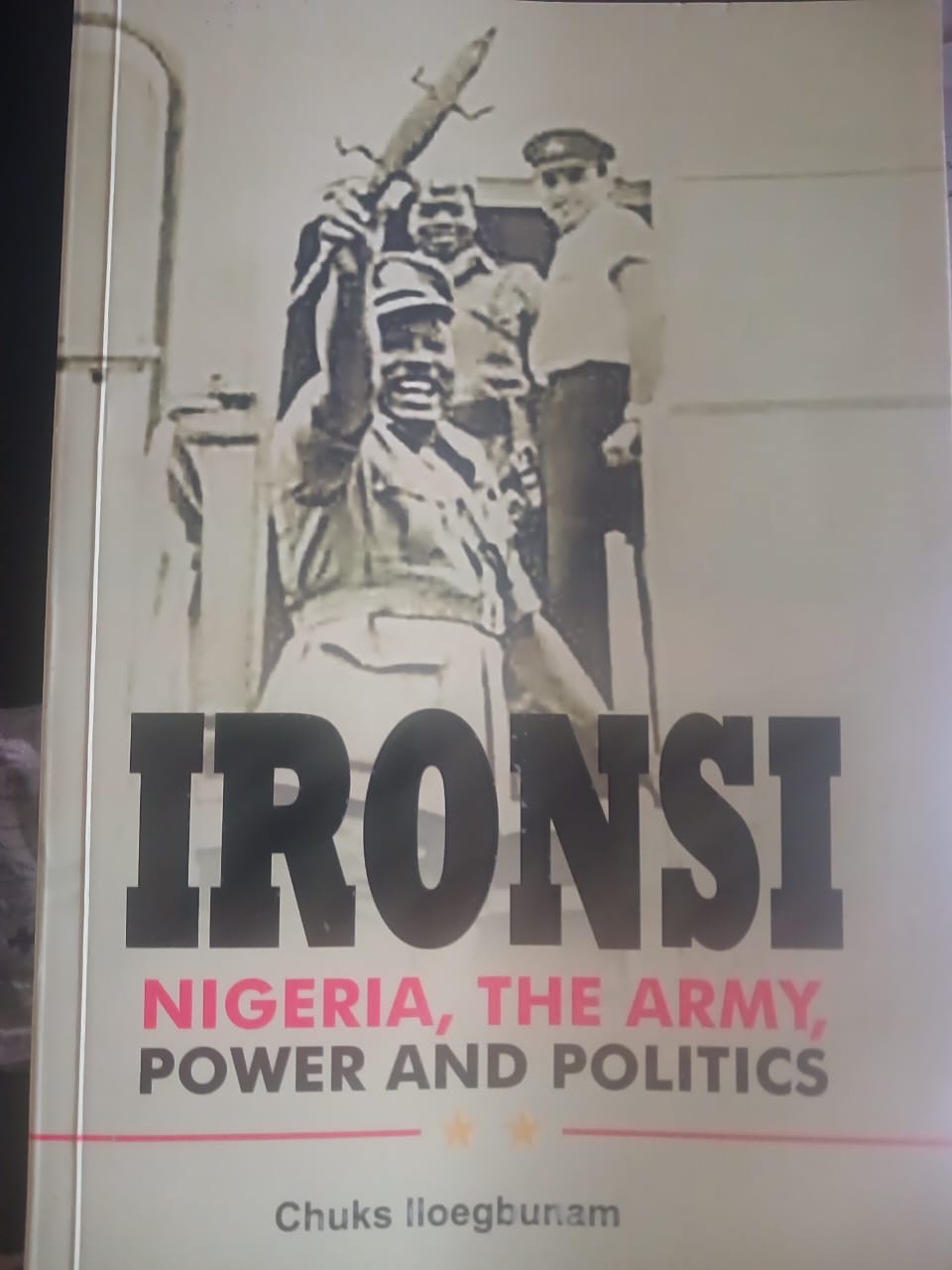
Excerpts from IRONSI NIGERIA, THE ARMY, POWER AND POLITICS By Chuks Iloegbunam
Published in Nigeria by EMINENT BIOGRAPHIES