By Martins Azuwike
On May 27, 1967, Rivers State was created from the former Eastern Region by the Military Government of General Yakubu Dan-Yumma Gowon. Historically, the reason for this was to give the minority ethnic groups in the Niger Delta their own administrative identity.
Although various analysts have interpreted the move by Jack Gowon (a nickname informally used during his military career) from diverse perspectives coated and coded with meanings, the state has, over the years, witnessed many narratives and trajectories, some positive and others negative.
Rivers State is naturally endowed with resources, like crude oil and gas. Aside from abundant human talent and marine and blue economic resources, it is also blessed with agricultural endowments. When experts analyse the Nigerian economy, they usually rivet their gaze on the lines of the popular ALP market triangle.
Their crystal balls, lenses, and analytical antennae tell them that the market comprises Abuja, Lagos, and Port Harcourt. While Abuja is described as the seat of government where major expenditure decisions and contracts originate, Lagos is seen as the commercial/financial centre, being a former federal capital territory, and Port Harcourt is regarded as the oil and gas hub.
This underscores the rush by corporate organizations to locate their operational offices around the perceived business triangle, isolating the loop in the triangle that also brims with immense opportunities. The apparent rationalization here is that the entire market would have been covered once their hegemonic presence is established along the angles of the triangle. How wrong they are. There’s still much within the loop.
Counting from the year of its creation, the state is 58 years old. Oil and gas exploration and production activities have been ongoing at a fast rate over the years. Politics, especially now, has been played at a frenetic rate and on a grand scale. It is strategic as an oil-rich and port-accessible region. In league, these have delivered indelible developments.
Today, driven by oil and gas, petrochemicals, LNG, and shipping, the state’s 2025 estimated GDP is N7.96 trillion (~ $ 19.7 billion), making it Nigeria’s second-largest economy by GDP. It has gained momentum in infrastructural development in the economic and social spheres. Educational and health institutions are numerous in the state. Many other positive developments, perhaps innumerable, have happened in the state over the past 58 years.
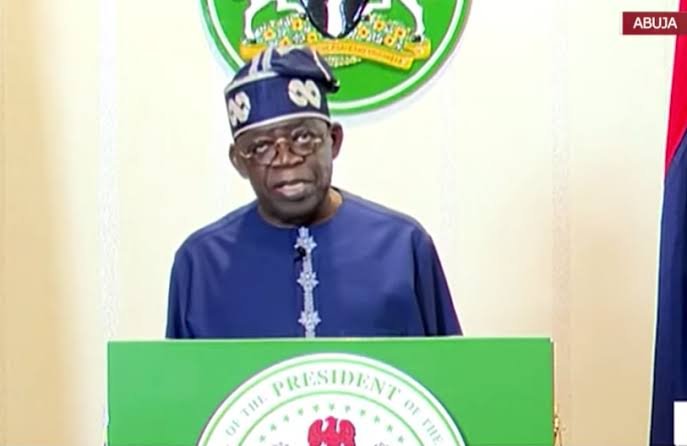
Yet, for 57 years until 2024, one cardinal institution that should have made a clear difference in either earning Rivers State the number one spot or, at worst, placing it neck and neck with Lagos, was left out by the previous administrations in the state since its creation. That institution is what the present Governor, His Excellency, Amaopusenibo Siminalayi Fubara, has not only identified but has also established. He is the pioneer of this. Nobody can take that credit from him. Indeed, even if, and only if, he does nothing again for the state, he has scored the bull’s eye here. It is a legacy institution to his credit in the annals of the state.
What’s that core institution? It is the Rivers State Investment Promotion Agency (RSIPA). While some were encumbered with distractions and other mundane issues and narratives, Fubara tiptoed into scanning the environment, simulating and building scenarios to figure out legacy institutions, programmes, and projects that could lift the state to higher and sustainable development and growth pedestals. Now, he has won the crown jewel as the pioneer. Previous administrations focused on infrastructure and development related to oil and gas. None of them institutionalized investment promotion through a specialized agency. It can neither be contested nor gainsaid. RSIPA is the first of its kind in the state’s history.
Had it been established much earlier by any of the previous administrations since 1967, the size of the economy would probably be approximating that of Lagos State, which is the country’s largest economy, with a GDP estimated in 2025 at a whopping ₦41.17 trillion (~$102 billion). The Lagos economy is driven by commerce, entertainment, finance, and tech. It was a manufacturing hub, but the sector has not been as vibrant as before due to macroeconomic disruptions.
Creation of RSIPA
The Rivers State Investment Promotion Agency (RSIPA) was created through Executive Order No. 002 of August 2024, signed by Sir Siminalayi Fubara, Governor, and a Fellow of the Chartered Institute of Accountants of Nigeria (FCA). All other administrations in the state’s history had closed their eyes to the idea of formally establishing an institution dedicated to investment promotion. No mistake about it, they might have invested in projects or even invited investors (local and foreign) one way or another, to bet their resources on the economy of the state. But these initiatives could not have taken the shape of a formal and well-structured investment promotion agency.
It was established with a clear purpose to rebuild investor confidence, improve the ease of doing business, and position the state as a competitive destination for both local and foreign investment. Yes, a preferred investment destination.
The core objectives of the agency include simplifying bureaucratic processes and reducing red tape for investors, providing a stable and transparent environment for businesses, and positioning the state as a hub for commerce, industry, and foreign direct investment. It is also expected to act as a one-stop shop for investment facilitation, liaising between the government and the private sector.
Being relatively new, the agency is expected to face challenges stemming from past political precariousness that dispirited investors, gaps in developing infrastructure, and regulatory bottlenecks. It also presents opportunities. Moreover, it has immense potential to leverage the state’s strategic location, oil-rich status, and port availability to build a diversified economy driven by agriculture, manufacturing, and technology. It further demonstrates the government’s renewed commitment to reforms and investor-friendly policies.
Opinions expressed by experts coalesce to the point that “RSIPA is a critical step in repositioning Rivers State’s economy.” Analysts further assert: “By institutionalizing investment promotion, the government signals seriousness about creating a business-friendly environment.” If successful, they maintain, the initiative could diversify the state’s economy beyond oil and restore Port Harcourt’s reputation as a commercial hub.
Age Is No Barrier
It is still young. No doubt about this. After all, some politicians in the country still refer to democracy in Nigeria as ‘nascent’ (budding, embryonic), despite 25 years of mixed outcomes. It took Brazil 17 years to address the country’s hurtful and puzzling economic difficulties of the 1980s and early 1990s. Singapore, under Lee Kuan Yew, transformed from a backwater economy at Independence in 1965 to a first-world economy only 35 years afterwards. And how old is Nigeria as an Independent nation? 65 years. But can we attain Singapore’s status today, even in the next 50 years, the way we are going? This is an objective question that calls for introspection.
The agency may be young in age, but not in focusing on the big picture to deliver on its core mandate. It has already laid the groundwork for the state’s economic diversification beyond oil and gas, which has remained the backbone of the economy for years. This is in recognition of agriculture, manufacturing, real estate, and tech as the growth frontiers that could transform Rivers State into a more balanced and resilient economic giant. Age has been no barrier to the agency’s operations since its inception.
Established in 2024, RSIPA has already achieved some landmarks in rebuilding investor confidence, promoting ease of doing business, and positioning the state as a competitive investment destination. It has participated in international trade fairs and exhibitions, unveiled investor-friendly reforms, and created amenable platforms for dialogue between the government and private sector.
So far, the agency has introduced measures to simplify business processes, reduce bureaucratic barriers and bottlenecks, and make the state more attractive to investors. That, in part, is delivering on its Ease of Doing Business (EoDB) mandate. It has helped rebuild trust in the state’s business environment, which has been traumatized by political turmoil, by publicly assuring investors of a warm reception.
The institution further played a vital role in the 18th Port Harcourt International Trade Fair held in 2025, where it showcased the state’s investment opportunities and engaged directly with local and foreign investors.
Regarding private sector collaboration, checks show that RSIPA has closely worked with top business leaders such as My-ACE China (Mayor of Housing), who emphasized the importance of protecting existing businesses while attracting new ones. It has also been instrumental in pushing for reforms such as the creation of the Security Fund and Publicity Fund to strengthen investor confidence and promote the state’s image and reputation. That is policy advocacy at work.
So far, RSIPA has positioned the state as a hub for petroleum-related investment by reassuring international oil companies (IOCs) of government support. It has also facilitated the exchange of ideas between the government and oil sector stakeholders in stabilizing operations soon after the recent political turmoil.
By any metric, that is an achievement. However, the biggest opportunities in the sector lie in RSIPA’s ability to attract downstream investments in refineries, gas-to-power projects, and petrochemicals, promote local content development and indigenous participation in oil servicing, drive diversification into cleaner energy, such as liquefied natural gas, and renewable integration with oil infrastructure.
Agriculture can be turned into the next big thing in Rivers State. Seeing this, RSIPA has already made bold and nimble moves to glean the benefits from the sector. It has highlighted the state’s fertile land and riverine environment at trade fairs and inspired agribusiness interests. The agency has also begun partnerships with private investors for commercial farming and agro-processing.
Yet, the juicier opportunities in the sector lie in developing large-scale mechanized farming in cassava, rice, and palm oil, establishing agro-processing clusters to stem post-harvest losses, promoting aquaculture and fisheries given the state’s abundant waterways, and positioning Rivers as a food-export hub to other states and the West African sub-regional market.
Real Estate remains a huge market in the state. This explains why RSIPA has engaged China’s My-ACE (Mayor of Housing) to encourage housing projects and urban renewal initiatives. It has also advocated for investor protection to rebuild confidence in the sector.
Again, the agency needs to deftly craft and implement policies that can expand affordable housing schemes to meet urban demand in Port Harcourt, promote commercial real estate, such as shopping malls and office complexes to support business growth, and attract private-public partnerships for smart city development. This remains a major growth frontier that needs to be strategically explored and optimally harnessed.
In all it has achieved so far, it must also recognize that technology remains a key enabler of business and economic growth in the contemporary world. It has taken the right first step and made progress in technology by showcasing the state as a potential tech hub at trade fairs and by discussing with ICT firms to improve digital infrastructure. Commendable. But it still needs to establish tech parks and innovation incubation hubs in the state capital, attract start-ups in fintech, healthtech, and agritech, and promote digital skills training to build a workforce for the knowledge economy. Overall, RSIPA should position the state as a regional center for software outsourcing and IT services.
Manufacturing is the king. RSIPA understands this and has promoted the state’s strategic location, laced with ports and transport links, to attract investment. In response, SMEs have shown early interest, although this is mostly in light manufacturing showcased at trade fairs and exhibitions.
The agency’s strides need to exceed these boundaries to develop industrial parks around Onne and Port Harcourt, attract investments in consumer goods manufacturing, cement, plastics, and steel. It also needs to leverage oil and gas by-products for petrochemical industries, in addition to creating export-oriented manufacturing clusters to serve the markets within the ECOWAS.
Overall, RSIPA’s success, experts say, will depend on sustaining reforms and aggressively marketing the state as a safe, profitable destination of choice for investment.
Why It Should Work
RSIPA has already demonstrated strong signs of seriousness in business after just one year of its establishment, as evidenced by its operational activities. But it must not rest on its oars.
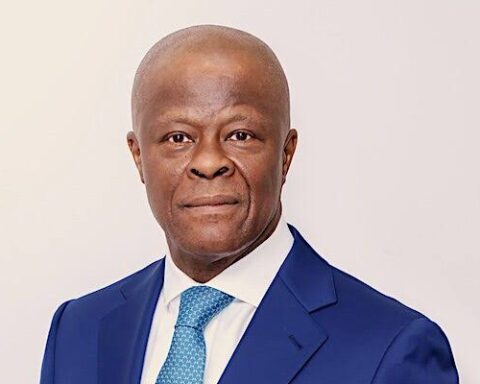
The agency’s leadership structure is top-notch. The Director-General/Chief Executive Officer is Dr. Chamberlain Peterside, a seasoned Wall Street finance practitioner, former Commissioner for Finance in the state, and an internationally recognized investment strategist. His blend of global financial expertise and networks, including local governance experience, could be leveraged to accomplish great things in the state.
Peterside has a global-local blend, with surging local and international credibility, given his Wall Street background and experience as Commissioner for Finance in the state. Ordinarily, this should build considerable investor confidence, especially when driven by reputation and strategic vision anchored in delivering quick-win opportunities that can stimulate the economy. He is perceived in the investment world as a reform-minded professional with the capacity to tackle negative perceptions of business environments.
The Chairman of the Board is Lawrence Fubara Anga, a professor of Law and Senior Advocate of Nigeria, SAN. He provides oversight and strategic direction for RSIPA. It is his responsibility to ensure world-class governance, policy alignment, and credibility at the highest level; that should give the agency a firm base to achieve its overall mandate.
Together with other team members and support from the government, the agency should have no reason not to deliver on its core mandate.
Martins Azuwike is an Economist, a member of the Guild of Public Affairs Analysts of Nigeria (GPAAN), the Nigerian Guild of Editors (NGE), and a multiple award-winning journalist in Banking/Finance (DAME Hall of Fame), Energy, Banking/Finance, Telecommunications (NMMA), and Business Analysis.