By Hyacinth Beluchukwu Nwafor
“My Journey into the Secret Kingdom of Omo Forest” Hyacinth Nwafor

Deep inside the thick rainforest of Omo Forest Reserve, where towering trees form a green cathedral and nature speaks in whispers, lies one of Nigeria’s most remarkable but largely unknown conservation treasures. My recent expedition to this ecological sanctuary as part of a media tour, revealed a rare ecosystem struggling to survive amid mounting human pressure.
The journey, facilitated by tourism journalist and promoter Frank Meke, was designed to help media professionals experience Nigeria’s tourism assets beyond newsroom narratives. According to Meke, who hosts the popular “Creative Nigeria” programme on Mainland Radio, 98.3FM Lagos, journalists must step into the field to truly understand and promote the nation’s cultural and ecological wealth.

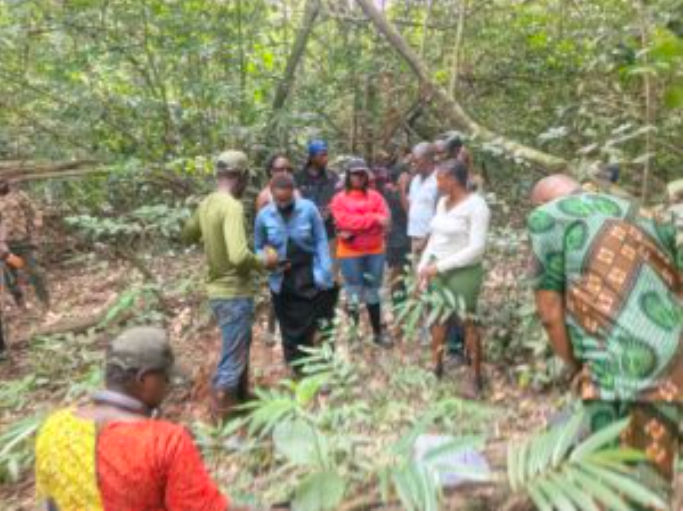
For members of our media expedition, the journey into the depths of the forest was not merely a routine tour but a deeply personal encounter with nature in its raw and undiluted form. I, Hyacinth Nwafor, alongside fellow participants, Odogwu Nonso, Daisy Yirmal, Modupe Akinyosoye, Adeola Adedeji Adijat, Rasaq Adejare, Emmanuel Gbadagon, Ayinbu Esther, Kuseju Pelumni, Dennis Chukwuebuka, Semir Adeniji Adele, Alex Appah, Cynthia Amaka, Dooshima Aku, Lanre Okanlawn, Ipole Loveth, Alausa Honourable, Okorie Uguni, Brown Iwari, Deji Ogunsola, Abimbola Otu, Olamide Agemo and Innocent Orok, experienced the reserve from unique perspectives that reflected our varied backgrounds in media and storytelling.

Guided and coordinated by tourism advocate and veteran journalist Frank Meke, each member of the team returned from the expedition with a different memory of the wilderness, some fascinated by the towering rainforest canopy, others captivated by the silence of the forest broken only by birds and distant animal movements. For many of us, it was the first time witnessing such a vast ecological sanctuary within Nigeria, an experience that underscored both the beauty of the landscape and the urgent need to preserve it for future generations.

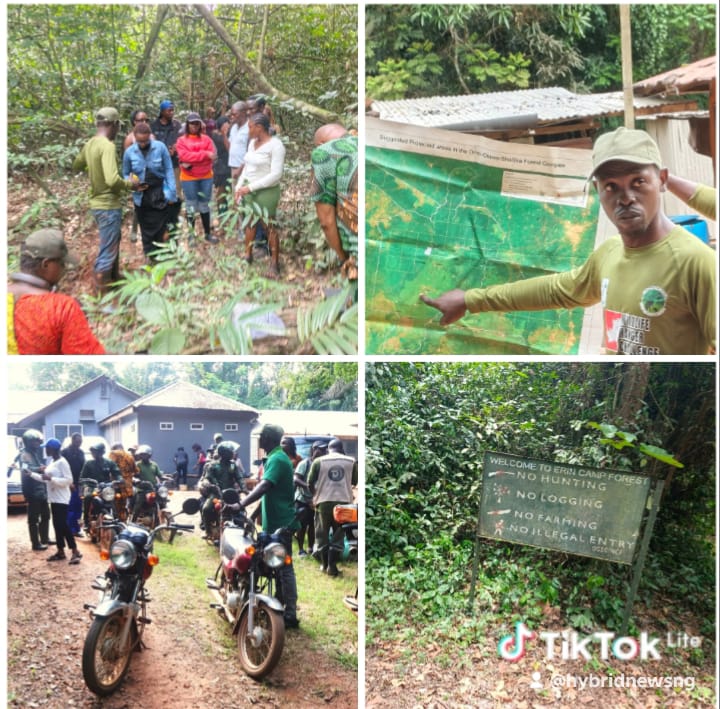
Reaching the forest’s conservation base at Erin Camp was an adventure in itself. From the J4 axis of the reserve, our team rode motorcycles through narrow muddy trails for nearly two hours. The rugged journey through settlements such as Mile 1, Bridge Camp and Eseke cost about #25,000 per person, an experience that highlighted both the remoteness of the reserve and the urgent need for better infrastructure to support tourism.

Despite the difficult access roads, the reception at the conservation centre was reassuring. The rangers stationed within the reserve displayed professionalism, warmth and deep commitment to protecting the forest and its wildlife. Their calm demeanour and dedication reflected the passion driving one of Nigeria’s most important conservation efforts.
At the centre of this effort is the Ogun Forest Elephant Initiative, a conservation programme managed by the Nigerian Conservation Foundation in partnership with the Ogun State Ministry of Forestry. The project aims to protect one of the last remaining populations of forest elephants in Nigeria and possibly in the entire West African region.

Speaking during our visit, the project manager, Emmanuel Olabode, explained that early population studies conducted between 2016 and 2017 initially estimated about 33 elephants within the forest. However, later sightings and migration events suggested that the number had been significantly underestimated.

“Today we believe there are between 50 and 70 elephants within the Omo landscape,” Olabode revealed. Unlike the larger savanna elephants that roam in huge herds across Africa’s plains, forest elephants move quietly in small family groups of four to twelve individuals, making them harder to track within dense rainforest terrain.
The elephants are only one part of a larger ecosystem. According to conservationists, the forest supports a rich diversity of plants, birds, reptiles and other wildlife species that form an interconnected ecological network. Rangers conduct daily patrols, documenting wildlife sightings and monitoring threats across the vast landscape.

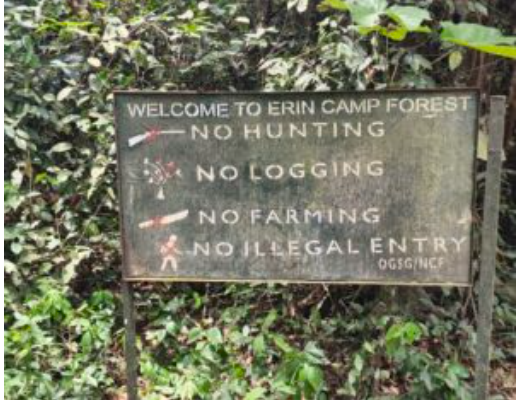
Yet the survival of this fragile ecosystem faces serious challenges. One of the most pressing is human encroachment. As settlements expand and farming activities spread deeper into the reserve, large portions of forest land are being converted into agricultural plots, reducing the natural habitat available for wildlife.
This expansion has intensified human-elephant conflict. Farmers who cultivate crops within elephant territory often experience crop raids when the animals wander into their fields in search of food.

Conservationists say these conflicts are not deliberate aggression by elephants but rather the result of humans moving into their ancestral habitats.

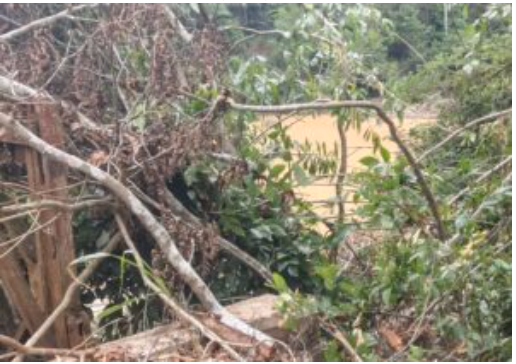
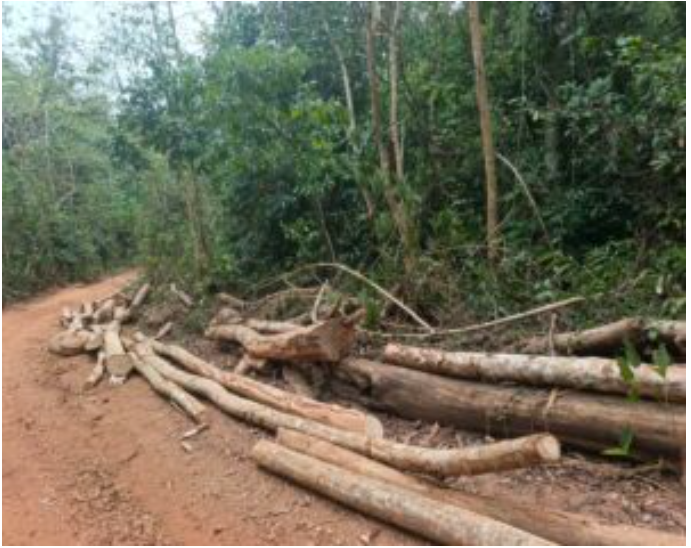
Adding to the complexity of the situation is the issue of logging. While timber harvesting is legally permitted in certain sections of the reserve under state licences, conservation experts warn that extensive logging near protected zones could disrupt wildlife movement and increase stress on the elephants.

Within the broader Omo landscape lies the Omo Strict Nature Reserve, a globally recognised research forest managed by the Forestry Research Institute of Nigeria. In this protected enclave, commercial activities such as logging and farming are completely prohibited to preserve biodiversity for scientific research.

Beyond conservation, Omo Forest holds enormous potential for eco-tourism. Attractions such as Bitu Hill, which rises about 200 to 300 metres above the forest canopy, offer breathtaking views and adventurous hiking opportunities. The nearby River Omo also provides possibilities for activities like kayaking, sport fishing and nature exploration if properly developed.

For me and the rest of the expedition team, the visit to Omo Forest was more than just a field trip, it was a revelation. Hidden barely a few hours from Lagos, this vast wilderness remains one of the country’s greatest ecological treasures. With stronger government support, better infrastructure and increased public awareness, Omo Forest Reserve could become a thriving centre for conservation, research and eco-tourism, ensuring that Nigeria’s last forest elephants continue to roam freely for generations yet unborn.