By Adepote Arowojobe
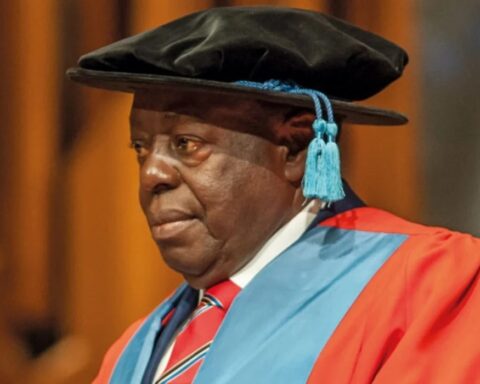
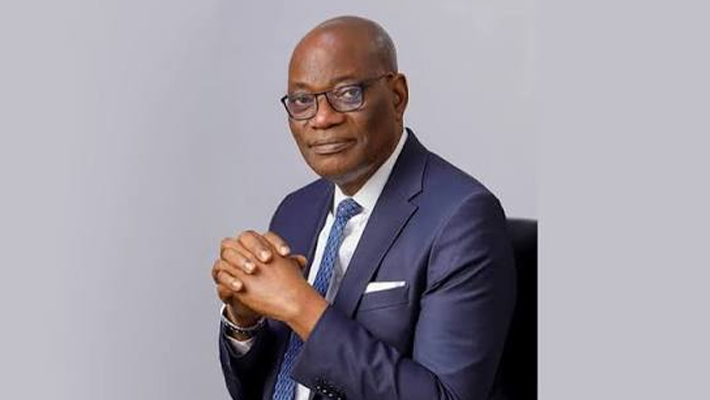
Prof. Oluwatoyin Ogundipe, Chairman, Governing Board, National Universities Commission (NUC)
has urged Human Rights advocates to reject selective justice.
He further emphasised the need to defend fundamental rights, without regard to political affiliations, religious beliefs, ethnic identities or personal interests.
Ogundipe, also the immediate past Vice Chancellor, University of Lagos, stated this on the sidelines of a public lecture in Lagos.
The lecture is with the theme: “Understanding Human Rights Beyond Emotions and Personal Interests.”
According to Ogundipe who was the keynote speaker at the event, human rights are inherent entitlements belonging to every individual by virtue of being human.
He noted that their protection must not depend on public opinion, personal sentiments or political considerations.
The don said human rights were universal, inalienable, indivisible and interdependent, requiring equal protection for everyone, regardless of race, ethnicity, religion, gender, nationality or social status.
Speaking further, he explained that the Universal Declaration of Human Rights, adopted in 1948 and other international instruments, established principles for protecting human dignity, freedom, equality and justice.
Ogundipe noted that the country’s 1999 Constitution, particularly Chapter Four, guaranteed fundamental rights, including the right to life, dignity, personal liberty, fair hearing, privacy, freedom of expression, peaceful assembly and freedom from discrimination.
He, however, expressed concern that human rights issues in Nigeria were sometimes assessed through ethnic, religious and political considerations, rather than objective legal standards.
The professor of Botany acknowledged that emotions could inspire human rights activism, noting that outrage against injustice and empathy for victims, often motivated people to demand accountability.
He warned, however, that emotions alone could not provide a reliable foundation for human rights protection, as public sympathy was often inconsistent and selective.
“A violation remains a violation, regardless of the victim’s identity or social standing”.
He urged activists to condemn abuses, irrespective of the individuals or groups involved.
Ogundipe identified personal, political, ethnic and economic interests, as major obstacles to effective human rights protection, saying some individuals and organisations, condemned violations only when their interests were threatened.
He said political actors sometimes manipulated human rights discourse for strategic purposes, condemning abuses by opponents, while ignoring similar violations within their own ranks.
According to him, ethnic and religious divisions also contribute to selective advocacy, with individuals sometimes prioritising members of their communities, while disregarding the sufferings of others.
He added that the rights of political opponents, religious minorities, criminal suspects, women, children, persons with disabilities and marginalised communities, deserved equal protection.
Ogundipe traced some human rights challenges in Africa to colonial-era institutions, designed primarily to maintain order and facilitate resource extraction, rather than protect individual freedoms.
He said the legacy had contributed to governance practices, in which state authority sometimes took precedence over citizens’ rights, undermining accountability and democratic freedoms.
He expressed concern over reports of killings, kidnappings and arbitrary restrictions on freedom of expression, arguing that violations required investigations and legal action against perpetrators.
“When criticism becomes a crime, the right to expression becomes a decoration, rather than a protection”.
According to him, identity politics has remained a major barrier to building a strong human rights culture, as similar violations often attract different reactions, depending on the victims’ ethnic, religious or political affiliations.
He urged the Committee for the Defence of Human Rights (CDHR) and other advocacy organisations, to embrace consistency, evidence-based advocacy and solidarity, insisting that human rights protection must be grounded in facts, legal arguments and impartiality.
“If we are serious about human rights in Nigeria and Africa, we must adopt a discipline of consistency.
“We must defend the rights of those we disagree with, as vigorously as we defend the rights of those we agree with”.
He added that activists must defend the rights of farmers and herders, separatists and unionists, as well as critics, from their own ethnic groups and opposing communities.
Ogundipe also called for stronger public education on human rights, improved partnerships between civil society organisations and effective policy reforms, to strengthen constitutionalism and the rule of law.
He said the media, religious leaders and traditional institutions should also promote dignity, tolerance, equality and justice, while government agencies must ensure accountability and transparency.
The don identified the need for investigations and prosecution in cases involving attacks on vulnerable communities, arguing that victims required justice and institutional protection, rather than sympathy alone.
The NUC board chairman concluded that human rights would become meaningful, when citizens and institutions defended them consistently, regardless of personal advantage, political loyalty, religious affiliation or public opinion.