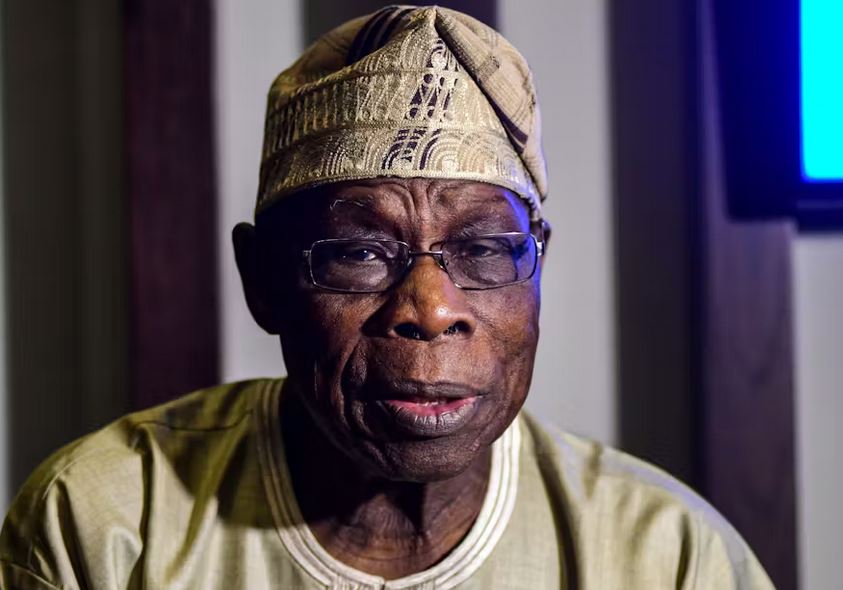
Former Nigerian President Olusegun Obasanjo has accused the country’s judiciary of being deeply compromised, alleging that corruption among judges has turned courts into “courts of corruption” rather than justice, in his new book, Nigeria: Past and Future, published by the Olusegun Obasanjo Presidential Library on August 21, 2025.
He claims the judiciary’s integrity has plummeted, particularly during Nigeria’s Fourth Republic since 1999, with justice now “commodified” and available to the highest bidder, posing risks of despair, anarchy, and violence.
Obasanjo recounts a visit to a northern state a decade after leaving office, where a governor pointed to six duplexes allegedly built by a judge using proceeds from chairing election tribunals, illustrating the depth of judicial corruption.
Obasanjo further alleges that former President Muhammadu Buhari colluded with judges during election petitions, securing favorable rulings through financial inducements and appointments regardless of judges’ qualifications or age.
He criticizes the Independent National Electoral Commission (INEC) Chairman, Mahmood Yakubu, for undermining elections since 2015, calling them a “charade” where judicial decisions override voters’ will. “After a false declaration of results, making losers winners and winners losers, the victim is advised to go to court, which is a court of corruption rather than a court of justice,” he writes.
The book’s allegations have reignited debates about Nigeria’s judicial and electoral systems, with Obasanjo warning that unchecked corruption threatens national stability. He cites the judiciary’s role in election disputes as particularly troubling, alleging that tribunal, appellate, and Supreme Court judges often subvert the electorate’s choice.
Legal scholar Chidi Odinkalu, referenced in The Sun Nigeria, supports Obasanjo’s critique, noting the book’s focus on judicial decay aligns with his own work, The Selectorate. While the EFCC and INEC have not directly responded to these claims, the controversy underscores persistent public distrust in Nigeria’s institutions, amplified by polarized X discussions calling for urgent judicial reforms.