The National Sugar Development Council has announced a $1 billion investment pipeline aimed at accelerating Nigeria’s domestic sugar production and ending its heavy reliance on foreign imports.
The council confirmed that the major initiative is built on a $1 billion Engineering, Procurement, Construction-plus-Finance partnership signed with Chinese industrial group SINOMACH, alongside a ₦10 billion Sugar Project Acceleration Fund established in collaboration with the Bank of Industry.
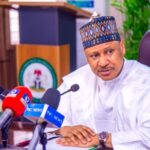
The announcement was made by the Executive Secretary and Chief Executive Officer of the council, Mr. Kamar Bakrin, during a courtesy visit on Thursday, 13 August, when he hosted a delegation from the Abuja chapter of the Chartered Institute of Directors at the agency’s headquarters in Abuja.
Bakrin explained that Nigeria consumes approximately 1.8 million metric tonnes of sugar every year, leading to an annual foreign exchange outflow of roughly $1 billion to international markets. The council plans to reverse this cash drain through the execution of the Nigeria Sugar Master Plan 2.0, an aggressive mandate meant to boost local processing capacity to nearly two million metric tonnes of sugar annually.
Bakrin emphasized that the primary challenge facing the domestic sugar sector historically has been execution and sector governance rather than a shortage of good policies. He added that the council views sugarcane as the foundation for a much broader bio-industrial ecosystem, capable of producing ethanol, livestock feed, and off-grid power alongside table sugar.
To support project financing and implementation, the Bank of Industry’s Executive Director of Public Sector and Intervention Programmes, Hadiza Shuaib, confirmed that the ₦10 billion fund will de-risk greenfield developments, expand technical skills, and help transform early-stage projects into bankable opportunities.
Commenting on the international backing, SINOMACH Vice President Li Xiao Yu noted that the $1 billion partnership aligns with joint efforts to advance food sovereignty, modernize agricultural processing, and deliver lasting social impacts across Nigeria’s rural farming communities.
The council has also restructured its Backward Integration Programme to protect investor capital and enforce local compliance. Moving forward, the regulatory framework will operate on strict principles of qualification, performance rewards, physical verification of estates, and rigorous enforcement of import quota penalties against default operators.