When the five-year mining ban in Zamfara State was lifted in 2024, it signaled a renewed push to harness Nigeria’s solid mineral resources for economic growth, particularly as the country seeks to diversify its economy.
The decision came amid concerns over illegal mining activities linked to banditry and shadowed by what analysts described as “powerful individuals.”
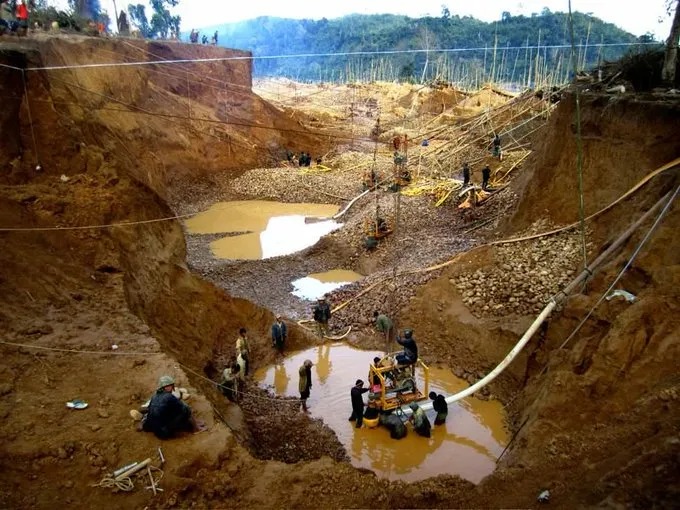
However, the Zamfara mining ban created a vacuum that was exploited by illegal miners to plunder the nation’s mineral resources.
The Nigeria Extractive Industries Transparency Initiative (NEITI) estimates that such activities cost Nigeria about $9 billion in revenue annually, even as 63 per cent of Nigerians approximately 133 million people remain multidimensionally poor.
The decision to reverse the ban was particularly significant because the state possesses critical minerals in commercial quantities that are essential to the global energy transition.
The Commitment and Wins
When President Bola Tinubu assumed office, he expressed a commitment to addressing the menace of illegal mining and repositioning the sector to contribute significantly to Nigeria’s Gross Domestic Product (GDP).
NEITI had repeatedly lamented that the sector’s contribution to the economy at less than one per cent was far below its potential.
Tinubu unveiled a roadmap aimed at transforming Nigeria’s economy into a three-trillion-dollar economy by the end of his second term.
Central to this vision is economic diversification and reducing the country’s overdependence on oil revenue through developing other sectors of the economy including the solid minerals sector.
The first step President Tinubu took was the creation of the Ministry of Solid Minerals Development from the former Ministry of Mines and Steel Development, alongside the appointment of his close ally, Dele Alake, as minister.
Alake quickly set to work, repeatedly asserting that powerful individuals involved in illegal mining were financing banditry and this was one of the reasons the problem had become deeply entrenched and difficult to resolve.
His allegations were echoed by Senator Adams Oshiomhole, while several Civil Society Organisations (CSOs) also raised similar concerns. Nevertheless, Alake pursued dual-pronged strategy to combat illegal mining through both persuasive and coercive measures.
On the persuasive side, the government focused on formalising the activities of small-scale and artisanal miners through cooperatives to transition from illegal mining. So far, more than 250 mining cooperatives have been established
On the coercive side, Mining Marshals (MM) was established in 2024 to address the surge in illegal mining operations and protect the country’s mineral resources.