By Sonnie Ekwowusi
Few national failures are as stark—or as enduring—as Nigeria’s electricity crisis. Here is a country richly endowed with natural gas, abundant sunlight, and a vast pool of human talent, yet condemned to grope in the dark. In an age defined by digital technology and industrial automation, Africa’s largest economy still cannot guarantee a stable supply of power.
For most Nigerians, electricity is not a utility but a gamble. Homes and businesses brace daily for outages. Generators rumble to life, filling the air with noise and fumes. The low hum of inverters has become the soundtrack of urban life. What should be a basic public good has been reduced to a private struggle for survival.
Why has this problem proved so intractable? Not for lack of resources, nor even for lack of ideas. Nigeria’s electricity crisis is, at its core, a failure of execution. Now Nigerians are told, once again, to adjust. Electricity distribution companies (DisCos) are rationing supply because they receive only 2,830 megawatts (MW) of power, a consequence of persistent gas shortages. In response, the Nigerian Independent System Operator (NISO) has scaled down grid generation to about 3,940.53 MW, with output at times plunging to as low as 1,490 MW.
The government’s reaction is telling. Rather than resolve the structural constraints, it has announced plans to add just over 200 MW of solar power through rural electrification initiatives. According to the Rural Electrification Agency (REA), this forms part of a $750 million public programme. While commendable in isolation, such measures barely scratch the surface of a crisis measured in thousands of megawatts.
The immediate consequences are evident in the allocation of limited power across the country. Abuja Electricity Distribution Company receives the largest share, followed by Ikeja Electric and Eko Electricity Distribution Company. Others make do with far less: Ibadan, Benin, and Enugu receive modest allocations, while Port Harcourt, Kano, Kaduna, Jos, and Yola operate on even tighter margins. In effect, scarcity is merely being redistributed.
At the heart of the problem lies a familiar paradox. Nigeria, a country endowed with vast natural gas reserves, cannot supply sufficient fuel to its own power plants. Instead, global market dynamics—exacerbated by tensions in the Middle East—make gas exports more lucrative, while domestic prices remain artificially constrained. The result is predictable: power plants are starved of fuel, and electricity generation falters.
For ordinary Nigerians, this is not news but routine. For decades, households and businesses have been forced to improvise—relying on generators, candles, rechargeable lamps, and increasingly, inverters. Electricity in Nigeria is not a public utility in any meaningful sense; it is a private burden, borne individually and inefficiently.
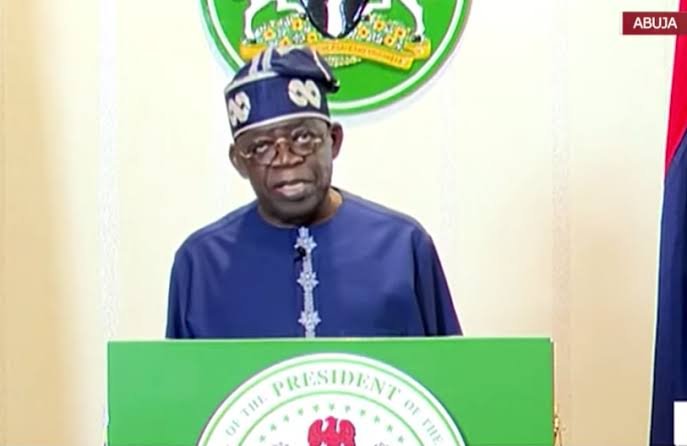
What is new, however, is the symbolism of the state’s response. Reports that the Aso Rock Presidential Villa has turned to solar power to mitigate unreliable supply are striking. When the seat of government adopts the same coping mechanisms as its citizens, it suggests not resilience but resignation.
This raises an uncomfortable question: if the Presidency must generate its own electricity, what hope is there for the rest of the country? Solar panels and inverters are not solutions to a national electricity crisis. They are escape routes for those who can afford them, leaving millions behind in darkness.
The human and economic costs are immense. Small businesses spend heavily on diesel to keep generators running. Students struggle to study at night. Hospitals maintain costly backup systems to power life-saving equipment.
Across the informal economy, artisans—from barbers to bakers—find their livelihoods repeatedly disrupted by unreliable supply. Productivity suffers, incomes shrink, and opportunities are lost.
Nigeria’s electricity crisis persists not for lack of resources or ideas, but for lack of execution and political will. Incremental measures and stopgap solutions will not suffice. What is required is a coherent, sustained strategy that addresses the entire value chain—from gas supply and pricing to transmission infrastructure and revenue collection.
Until then, Nigerians will continue to do what they have always done: adapt, endure, and pay the price for a system that does not work. But adaptation is not progress. And endurance, however admirable, is no substitute for reform.
Electricity reform has been frequent but rarely sustained. Each administration arrives with fresh promises, only to discard or dilute the policies of its predecessor. Long-term planning—essential in a capital-intensive sector—has been sacrificed to short-term political calculation. Unsurprisingly, investors remain wary, and reforms seldom mature into results.
The privatization of the power sector in 2013 was meant to change this trajectory. Instead, it produced undercapitalized distribution companies, a persistent liquidity crisis, and a system trapped in a vicious cycle of low investment and poor performance. More than a decade on, the results are underwhelming.
At every level, the system is broken. Distribution companies struggle to collect revenue in the face of widespread electricity theft and chronic non-payment. Generation companies grapple with unreliable gas supply. The transmission network, constrained by aging infrastructure, is often unable to carry the electricity that is produced.
Tariffs remain politically sensitive and frequently below cost, starving the entire value chain of funds.
The result is a system in perpetual disequilibrium—financially fragile, operationally inefficient, and structurally weak.
Now comes the latest reform: the proposed Grid Asset Management Company (GAMCO), intended to overhaul Nigeria’s dilapidated transmission network. The logic is sound. Transmission has long been the weakest link in the chain. Power is often generated but stranded, unable to reach homes and factories.
But Nigeria’s problem has never been a shortage of sensible ideas. It has been a surplus of poorly implemented ones.
Unless GAMCO is insulated from political interference, governed transparently, and backed by credible regulation, it risks becoming yet another bureaucratic contrivance—different in name, identical in outcome. Changing institutional structures without addressing underlying incentives will not deliver results. It rarely does.
More importantly, transmission is only one piece of a larger puzzle. Fixing the grid without addressing gas supply constraints, revenue collection failures, and tariff distortions is akin to widening a highway that leads nowhere. The crisis is systemic; any solution must be equally comprehensive.
Meanwhile, the situation continues to deteriorate. Electricity supply remains erratic, with output fluctuating sharply due to gas shortages. In a country with some of the world’s largest gas reserves, power plants are starved of fuel—a paradox made worse by global price dynamics that make exports more attractive than domestic supply.
Faced with these constraints, the government has turned increasingly to stopgap measures. Solar initiatives are being expanded. Rural electrification projects promise incremental gains. Yet these are, at best, partial solutions.
The deeper reality is more troubling. Nigeria is gradually normalizing failure. Citizens and institutions alike are adapting to dysfunction rather than demanding its resolution. Generators, inverters, and private solar installations have become substitutes for public infrastructure.
Reliable electricity is not a luxury; it is the foundation of modern economic life. No country can industrialize, innovate, or compete globally while relying on improvised power.
Nigeria’s failure in this regard is not inevitable. Countries with far fewer resources have transformed their power sectors through consistent policy, disciplined regulation, and sustained investment. Nigeria possesses all the necessary ingredients. What it lacks is coherence, continuity, and political will.
There is no escaping this reality. The Tinubu administration must confront the electricity crisis with urgency and seriousness. Incremental fixes and institutional reshuffling will not suffice. What is required is systemic reform, rigorously implemented and sustained over time.
Until then, the question will linger: if the Presidency itself must generate its own power, what hope is there for the rest of us ?
Nigeria deserves more than coping mechanisms. It deserves a functioning system—and a future brighter than endless darkness.
CONCLUDED