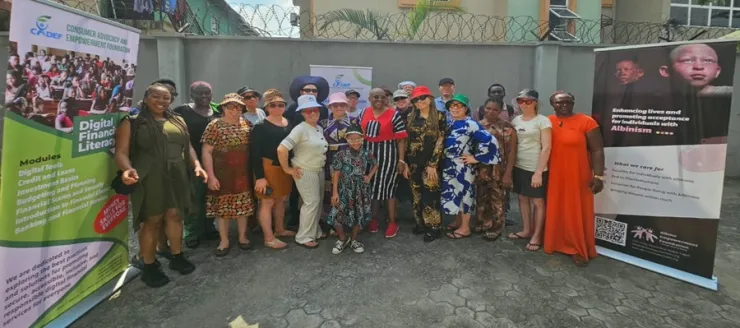
Nigerians living with albinism say their biggest challenge is not skin sensitivity or poor eyesight, but being seen, heard and treated as full human beings, a message that resonated at a recent empowerment session hosted by the Consumer Advocacy and Empowerment Foundation (CADEF) and Albino Empowerment Foundation.
The event last Saturday focused on lived experiences, self-advocacy and rights awareness rather than handouts, though participants received food, protective clothing and skin/eye care materials.
CADEF Executive Director, Prof. Chiso Ndukwe-Okafor, said real progress requires respect and inclusion, not pity, adding that knowledge of human rights equips people to demand fairness.
“Dignity begins when people are seen fully and treated equally,” she said.
Ifeoma Ngesina, founder of Albino Empowerment Foundation, defined inclusion as equal rights and participation in decisions affecting their lives, not stereotypes.
“When persons with albinism are included in schools, workplaces, leadership and media, harmful myths fade,” she said, stressing it builds confidence and leadership.
CADEF Advisory Board Member, Ms Kobi Ikpo, urged participants to own their narrative: “If you do not tell people how to treat you, they will not know how to address you. Once you accept yourself as a complete human being deserving of respect, it reflects in how you carry yourself — and that confidence commands respect.”
Afolake Odudinu highlighted parental ignorance leading to school dropouts, skin damage from sun exposure and social/marital stigma, noting skin cancer treatment remains inaccessible for many.
Efosa Peter, a father and associate pastor, rejected pity for genuine empowerment: “I hate pity. I don’t want to be pitied — I want empowerment.” He described persons with albinism as creatively gifted and warned against insincere initiatives.
“Empowerment must include self-esteem and self-motivation. When you see yourself as whole, others will follow,” he said.
Teacher Rose Adudu shared overcoming school bullying through discipline and advocacy, helping enrol a young albino girl in school despite later parental withdrawal.
“Your character will speak for you,” she said.
Participants were encouraged to use content creation for education and myth-busting, with CADEF planning annual events and advancing Digital Financial Inclusion Rights for Persons With Disabilities.
The forum underscored a core demand: opportunity, understanding and respect over sympathy.