By Prof. B. Chima Onuoha
It is no longer news that the Almighty God in His infinite mercy blessed Nigeria with enormous human and natural resources. Nigerians are among the most resourceful people on earth – hardworking, resilient and entrepreneurial.
This nation is blessed with 44 natural resources in commercial quantities. The country’s weather conditions are near perfect – normal rainfall and dry season, very conducive for maximum agriculture and food sufficiency and security. Nigeria does not have extreme environmental weather conditions – bush wire, hurricane, earthquake, tornado, heat waves, cold-waves, drought, floods, cyclones, etc.
In other words, there are no reasons why this blessed nation should not be developed like the other newly industrialised nations (NICs). Unfortunately and regrettably, she is grossly underdeveloped. To make us happy, the United Nations, her agencies and other development organizations classify the nation as developing
Economic and Development Indices
Truth be told, when all economic and development indices are considered, Nigeria is underdeveloped. Some of these indices include;
1. Economic growth (GDP growth rate).
2. Poverty (poverty head count ratio).
3. Inequity (Gini coefficient).
4. Health (life expectancy, malnutrition, infant mortality).
5. Education (literacy rate, school enrolment rates).
6. Standard of living (per capita income, access to base services).
7. Political (corruption perception index).
8. Human resources and workforce development.
9. Sustainable management of natural resources.
10. Capital formation and infrastructural investment.
11. Technological innovation, etc.
These indicators allow for monitoring progress, identify the development gap or lapses and give room for comparing the effectiveness of government policies and programmes. Like I stated earlier, Nigeria has not done well in most of these indicators. The question is what is responsible for these culpable outcomes? Simply put, it is leadership challenge/myopia and imperialistic manipulations. However, there are nations that resisted imperialistic greed and manipulations and worked assiduously and patriotically despite all odds and became developed.
Examples include Israel and the Asian Tigers – Hong Kong, Singapore, South Korea and Taiwan. This leaves us with the leadership question, the political elites whose performances are abysmal by all standard material. Just one example… Nigeria is blessed with oil and gas. While nations like Norway, Saudi Arabia, United Arab Emirates, Kuwait, etc, used their oil wealth to diversify their economies and raised the standard of living of their citizens, this country squandered hers. Nigeria remains the poverty headquarters of the entire world. This implies past, present and continuous missed opportunities.
Underdevelopment and the Leadership Question
Development economists, experts and activists have come up with many theories of underdevelopment. According to them, nations are not developed because of certain factors. Some of them include: modernization, dependency, geographical explanations, world systems and globalisation, poor capital formation, lack of industrialization, etc.
For Walter Rodney in his How Europe Underdeveloped Africa “a combination of power politics and economic exploitation of Africa by Europeans led to the poor state of African political and economic development evident in the late 20th century”.
Given the enormous natural resources at the disposal of the countries of the South (countries in the Southern Hemisphere) when compared to the countries in the North (Northern Hemisphere), there are no reasons why countries of the South including Nigeria should be underdeveloped. The blame squarely lies on the leadership challenge. This leadership lacuna is what has come to be known as the concept of “Sambo Personality”, which is largely about the attitude of political elites of Nigeria towards governance.
This attitude suggests the lack of mental capacity and reasoning, especially, in terms of foresightedness. This is leadership without the faculty or ability to plan, and plan strategically. This is lack of long-term and patriotic perspective to development. This leadership attributes include: proneness to corruption, nepotism, tribalism, religious bigotry, inordinate quest for power and money, lack of patriotism, warped values, double standards, etc.
Nigeria’s leadership challenge cuts across all sections of the society – religion, traditional, school system and political. My sole interest is on the political elites/class of Nigeria. This is because they occupy the three tiers of government, control the public sector, largely in charge of policy formulation and implementation and most importantly, controls more than 95% of the nation’s resources. In other words, they could conveniently be agents of development or underdevelopment. In our own ugly scenario, they are largely and perennially agents of underdevelopment.
It is important to note as follows: a) Politicians, once in government behave the same or have the same poor mindset or perspective towards development irrespective of party affiliations. b) The current poor state of the economy and nation at large did not start with the present administration. It is the outcome of accumulated leadership failures of the political elites, by successive administrations. The present administration only exacerbated them.
In order to perpetuate themselves and families (familiocracy) in power and office, political elites in this country ensure that we have docile citizens. The strategies for docile citizenry include: false propaganda, pathological lying, blind loyalty, sycophancy, hero worshipping, deliberate injustices, parochialism, giving peanuts to the masses, endemic poverty and dependency syndrome, etc. The tragedy of it all is that the oppressed, the poor masses are often ready and available to be used as tools in the hands of their oppressors. Pathetic indeed!
The political elites deliberately weaken or destroy institutions that were hitherto credible via poor salaries/working conditions, compromise, bribery, blackmail or underfunding. No institution is spared in this regard – the Military, State and National Assemblies, the Police, the Judiciary, Central Bank of Nigeria, University system, etc. While all state houses of assembly are rubber stamps of the various imperial governors, the current national assembly (particularly the leadership) is the worst in the history of democracy in Nigeria. Education is grossly underfunded and politicised especially at the tertiary level. The standards keep falling thus encouraging brain drain.
Brief Evaluation of Nigeria’s Leadership Failure
Let’s attempt a laconic evaluation of Nigeria’s leadership failure based on the broad divide of North and South; and other geopolitical zones. The verdict is the same – missed opportunities and/or inexplicable underdevelopment.
1. In the 65 years of the nation’s independence, Northern Nigeria has been at the federal helm of affairs for 45 years thus: North-West (22 years); North Central (18 years); and North-East (5 years). The entire North has the highest number of states and local governments. This lopsided administrative structure gave and continues to give the North major advantages in many areas thus: federal revenue allocations, other intervention funds, federal appointments and employments. That is the end of statistics. What have the political elites done with these undeserving advantages in terms of development? Nothing!
The North is lagging behind in all economic and development indices. The entire region is plagued with multidimensional poverty, highest infant and maternal mortality rates, culpable number of out-of-school children, booming child marriage (better still, child abuse), high illiteracy rate, many avoidable VVF cases, street beggars everywhere, etc. The region is the headquarters of insecurity – Boko Haram, ISWAB, banditry, cattle rustling, the consistent menace of herdsmen/Myetti Allah, kidnaping, armed robbery, sundry militant and criminal gangs, and religious extremism (jihadists). How does one explain this…?
The North-West Development Commission organised a summit for a backward geopolitical zone by all standard material, only a senator attended? All other prominent political elites did not. But when ten children of a former Minister of State for Defense wedded, it was a role call of northern and other political elites – former governors, present governors, senators, ministers, etc. The nation’s President was even in attendance. Nigerians can clearly figure out the preferences and priorities of their leaders.
2. The South-South geopolitical zone is the headquarters of oil and gas in the country. Leading oil exploration and servicing companies have solid operational bases there. Four out of the six states in the zone are the highest receivers or collectors of federal revenue allocations – monthly, year in, year out. They are Delta, Akwa Ibom, Rivers and Bayelsa states. The headquarters of the Niger Delta Development Commission (NDDC) is in Port Harcourt. There is the Federal Ministry of Niger Delta. There is the Amnesty Programme, etc. They also have huge 13% derivation and ecological funds. Unfortunately and regrettably, there are no serious developmental activities going on there except in their major cities. The masses there are as poor and hapless as other Nigerians. There is still high youth unemployment rate. Political hero worshipping and skills in composing praise songs for political godfathers are becoming full time professions.
3. The political elites, particularly the successive governors in South-East have conveniently taken advantage of the fact that more than 60 percent of social amenities in this Igbo enclave are provided or sponsored by individuals, families and communities/town unions. Hence, they have not done or are not doing much in terms of good governance. For myopic personal interests or gains, a number of top politicians from South-East are willing tools in the hands of the oppressors of their people and region. Again, successive governors of the zone lacked the mindset and capacity or have refused entirely to emulate the developmental strides of Dr Michael Okpara (of blessed memory), the former Premier of Eastern Region.
However, Governors Alex Chioma Otti of Abia State and Peter Mba of Enugu State are currently determined to change the ugly and unwholesome scenario by embarking on people-oriented programmes and projects. These two states are beginning to witness what good governance is all about. We hope that they sustain the tempo and not get distracted by hero worshippers, praise singers, political jobbers and lackeys or hatchet men.
In the case of Abia State – Dr Otti should not succumb or be distracted by the evil machinations of “political leeches” that kept the state in “development coma” for 24 years, now regrouping for their useless cum personal interests. Abians, themselves, in their own interests, should resist the activities (grandstanding, deceits, dishonesty) of all agents of their backwardness, spanning more than two decades. Abians should resist short-term peanuts over long-term prosperity for themselves and children/families. This is my innocuous and wise counsel.
I am speaking and writing as an insider who knows Abia State’s intellectual, economic and political terrain very well. I spent 19 years at Abia State University as a lecturer, administrator, labour leader – ASUU and member of the university’s Governing Council. I have been a member of the Friendship Heritage Club and serve as its secretary and president; its regular guest speaker on business, development and topical issues; have many friends in the state who are successful entrepreneurs and professionals.
4. The governments of Northern, Western and Eastern regions were competing among themselves for good governance in the First Republic. Chief Obafemi Awolowo (of blessed memory) as a visionary leader, laid a solid foundation for development of western region. Education was free and compulsory. Successive leaders of South West were/are not as visionary as Chief Awolowo, just like those of the other geopolitical zones.
By May 2027, South West would have produced the Head of State or President of the Federation for 16 years. The region has certain advantages: 1) The current federal government has taken nepotistic and tribalistic policies and programmes to the next higher level. 2) It hosts or is the domain of the former federal capital and biggest commercial city in Nigeria, which is Lagos. There are seaports, domestic and international airports, the headquarters of many multinational corporations, and international development agencies, etc.
Like the other geopolitical zones, most developments are concentrated in the urban cities of South West. Majority of rural areas are in shambles with all the attendant consequences. Political thuggery, entrenched area-boys syndrome, and motor park touting (agberos) are full-time professions in the zone, particularly in Lagos and Ibadan.
Demand for Accountability
The starting point for Nigerians to demand accountability from their leaders is to desist from selling their votes during election circles. I saw a cartoon which I like greatly. It states “sell your votes, buy your chains”. The implication is that if you sell your votes, you have bought the chains to tie yourself, your children and family with poverty. Nigerians should endeavour to vote credible candidates, not necessarily on the basis of party. They should guide their votes to ensure that they count. I read a recent article “Are Politicians Conscienceless?” by Macdonald Ebere. He made a lot of serious and correct maxims or axioms. Some of them include:
a) “Too often, political office is perceived less as a platform for service than as a ladder for personal advancement”.
b) “Where institutions are weak and accountability is inconsistent, self-interest flourishes”.
c) “A leader who seeks office merely to enrich himself and “children unborn” will inevitably treat public resources as private spoils”.
d) “If voters reward short-term inducements over long-term vision, they should not be surprised when governance mirrors that preference”.
e) “Nigeria is a deeply religious society. Sermons on righteousness fill churches and mosques each week. Yet the translation of private piety into public ethics remains uneven”.
f) “As 2027 approaches, Nigerians would do well to scrutinise not only manifestos but motivations”.
The developmental implication of all these citations is that every society reaps what it sows. Every society gets the type of leadership and pace of development it deserves. Nigerians should demand good governance and rapid development. It is against this backdrop that Nigerians should embark on the following:
1) Nigerians should stop being tools in the hands of their oppressors – who are the sources of their poverty and melancholy. They should also avoid the feelings of Political Stockholm Syndrome.
2) Monthly revenue allocations, VAT proceeds, 13% derivation are published regularly and the figures are in the public domain. Stakeholders, pressure groups, civil rights groups and ordinary people should not fail themselves by not asking for concrete evidences on how these huge sums are spent.
3) Constituents should as a matter of developing their communities insist on knowing what the members of the national assembly (their reps) are doing with the huge yearly allocations for constituency projects. They can use the impressive performance of Senator Natasha Akpoti-Uduaghan of Kogi Central Senatorial District and Hon Godwin Amobi Ogah of Isikwuato Federal Constituency (Abia State) in these areas, as benchmarks.
People should demand to know what positive impacts those holding other strategic federal appointments/positions have made in their immediate communities. They can also use the solid contributions to his state of Gombe by Isa Ali Pantami, when he was the Minister of Communications and Digital Economy, under Buhari, as yardsticks. He facilitated about 611 appointments across the private and public sectors of Nigeria for his people. Checkout the other multiplier effects! Pantami’s records though impressive, are laden with extreme nepotism, parochialism, tribalism and religious bigotry.
4) People, communities, churches, traditional institutions, etc., should stop dignifying political elites that stole public funds or refused to make positive impacts in the lives of their people. Infact, they should be treated with disdain or scorn.
5) It is the pastime of the nation’s political elites to send their children/relations abroad for schooling while underfunding the education sector in the country: and junketing all over the world on vacation or medical tourism. Nigerians in diaspora have critical roles to play to get the political elites to improve governance. They should be willing and ready to embarrass or harass them and their children when seen abroad enjoying while Nigerians are suffering down home. Their children should be made to school in Nigeria. They should do their vacations at home and avail themselves the medical facilities in the country, like other citizens. When all these things happen, they will have the need to fix these critical and other sectors of the country. I remember vividly how Senator Ike Ekweremadu was embarrassed and assaulted in Germany, for poor representation, few years ago. He did not learn any lesson before going to jail in the United Kingdom.
6) Does Nigeria still have such radical scholars, activists, columnists, patriots, etc., ever eager to put leaders and governments on their toes? I remember with nostalgia great personalities as Gani Fawehinmi, Fela Anikulapo-Kuti, Festus Iyayi, Patrick Wilmont, Balarabe Musa, Abubakar Rimi, Esko Toyo, Tunji Braithwaite, Biodun Jeyifo, Pa Alfred Rewane, Nkenna Nzimiro, Claude Ake, Wole Soyinka, Tai Solarin, Chinweizu, Olatunji Dare, Chidi Amuta, Dele Giwa, Ray Ekpu, Dan Agbase, Abraham Adesanya, Owei Lakemfu, etc. These were the nation’s moral and societal vanguards. Where have all the vibrant civil society and human rights groups gone to? They suddenly went silent, inactive or lukewarm. It is worrisome that our leaders and governments are having field days, no checks and balances, leading to brazenness and impunity.
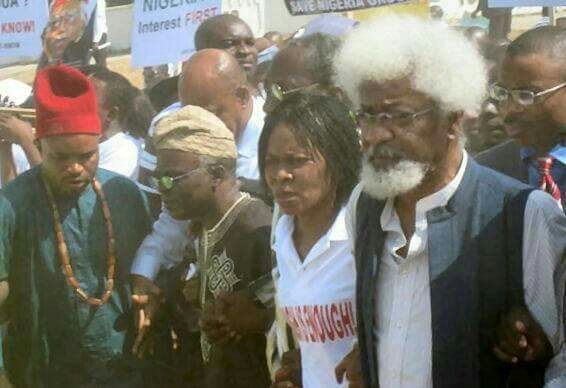
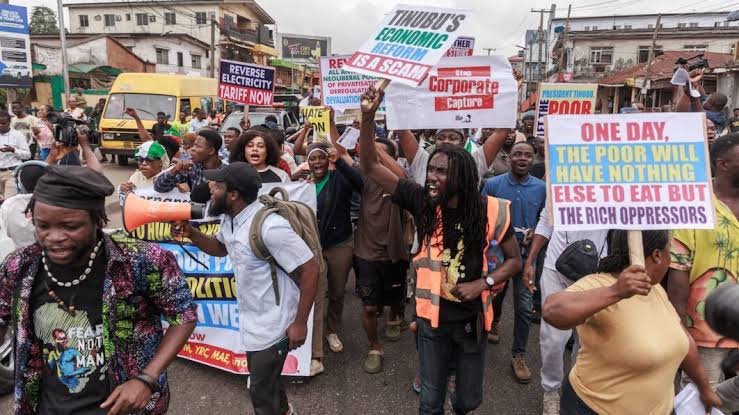
7) The masses should be willing and ever ready to stage peaceful protests/demonstrations against unpopular government policies/programmes and poor governance. They should demand transparency and diligent procedures in contract awards, especially for critical infrastructural projects. Nigerian political elites are hardened and wicked. They require constant harassments and embarrassments.
Conclusion
Nigeria has all the resources to make her developed, great and respected globally. But she is underdeveloped because of the greed and lack of patriotism of our leaders. My take is if our political elites cannot or refuse to do things right, they need to be encouraged or forced to sit up and utilise the God’s given human and natural resources more effectively and efficiently. Forcing them to do the right thing has become imperative because the ruling class in Nigeria has no enduring values. Nigerian politicians are self-centred and terribly acquisitive to the detriment of the citizens and society. A developed Nigeria will be to the benefit of all and sundry. And to God’s glory.