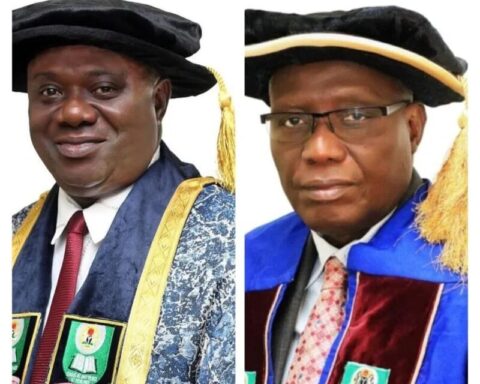
A former Vice-Chancellor of the University of Ibadan (UI), Prof. Idowu Olayinka, has lamented that Nigerian lecturers are among the lowest-paid in Africa, warning that poor remuneration will continue to fuel recurring industrial actions in the country’s public universities.
Olayinka, who stated this while delivering the convocation lecture at Adekunle Ajasin University, Akungba Akoko (AAUA), noted that inadequate funding, inefficient service delivery, ageing academic workforce and incessant strikes by staff unions remain major challenges confronting Nigerian universities, reports The Guardian.
He warned that incessant ASUU strikes would continue unless governments at both the federal and state levels take decisive steps to improve lecturers’ welfare and address infrastructural decay across campuses.
Data made available to The Guardian by ASUU revealed that professors with less than 10 years on the professorial cadre in African public universities earn about $4,400 yearly, while a South African professor takes home $57,471 yearly — more than 13 times higher.
Kenya follows with $48,000 per annum, while countries with far smaller economies than Nigeria, such as Eswatini ($41,389), Lesotho ($32,455), and Gabon ($29,907), pay significantly better.
Even Sierra Leone ($18,000), Zambia ($14,949), and Comoros ($12,960) rank above Africa’s largest economy. Olayinka decried the wage structure of Nigerian academics, saying it discourages talented individuals from pursuing academia as a lifelong career.
Olayinka said: “A nation that impoverishes its teachers undermines its future. Nigeria must learn that intellectual labour cannot be chained, and scholars cannot be caged. Lecturers are global citizens who belong to a borderless world of thought, and a government that fails to honour them is, ultimately, dishonouring itself.”
The don called on the government to discourage industrial actions by addressing the root causes of labour disputes in the university system, particularly issues bordering on welfare and funding.
He also suggested the recruitment of adequate and qualified academic staff through a competitive and transparent process to improve the staff-to-student ratio in universities.