Nigeria’s economic delegation concluded its engagements at the 2026 Annual Meetings of the International Monetary Fund (IMF) and the World Bank Group on Saturday, presenting a massive $78.5 billion investment pipeline to international financiers and signaling a decisive shift toward private sector, led economic expansion.
The weeklong summit, held from October 12 to 18, 2026, at the Queen Sirikit National Convention Center (QSNCC) in Bangkok, served as the global stage for Nigeria to showcase “Projects Nigeria”, a portfolio of 65 bankable capital projects spanning critical power infrastructure, transport networks, energy transition, agriculture, manufacturing, and technology.
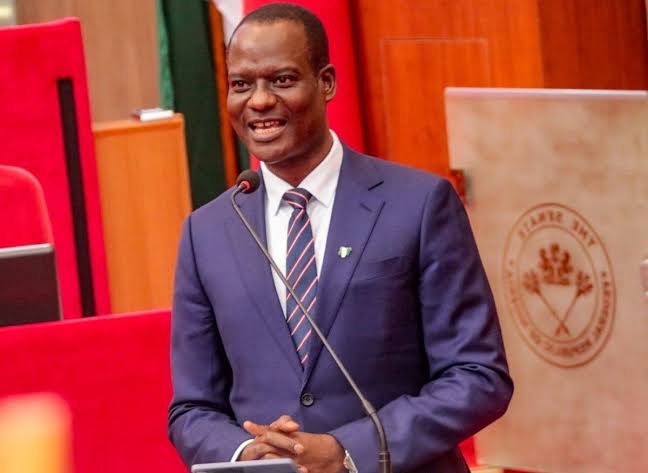
Addressing international investors and multilateral partners during a high-level briefing on Friday, October 17, Minister of Finance and Coordinating Minister of the Economy, Taiwo Oyedele, stressed that Nigeria’s hard-fought macroeconomic stability must now translate into job-creating growth.
”Stability was the first test. Growth that employs our people is the second,” Oyedele said, reassuring the global financial community that Nigeria will not backtrack on market-driven economic reforms, including the removal of fuel subsidies and the unification of exchange rates.
”We cannot afford growth that leaves our youth behind. As 1.2 billion young people globally enter the workforce over the next 15 years against only 400 million projected jobs, our investment focus must remain squarely on labor-intensive sectors.”
Oyedele also highlighted key macroeconomic indicators reflecting Nigeria’s ongoing recovery, including Q2 2026 GDP growth of 4.4%, four consecutive months of declining inflation, a tax-to-GDP ratio reaching 12.5%, and public debt maintained at a manageable 36% of GDP.
Central Bank of Nigeria (CBN) Governor Olayemi Cardoso detailed the monetary framework underpinning Nigeria’s medium-term economic goals during an interactive panel with global central bankers.
Cardoso disclosed that Nigeria’s gross foreign exchange reserves have crossed $55 billion, offering a robust buffer against global financial volatility.
”Stronger external reserves above $55 billion have significantly enhanced Nigeria’s capacity to absorb external shocks, restore foreign investor confidence, and maintain exchange rate predictability,” Cardoso stated.
Cardoso outlined the federal government’s mid-term targets, which include accelerating annual GDP growth to 7% by 2027/2028, expanding domestic crude production toward 3 million barrels per day, and boosting the national infrastructure stock to 75% of GDP.
The Nigerian delegation successfully secured preliminary expressions of interest from major institutional investors across Asia and Europe, backed by key multilateral guarantees.
In a press statement issued at the close of the summit on Saturday, Maryann Duke, Senior Special Assistant on Communications and Press Secretary to the Minister of Finance, confirmed that Nigeria secured World Bank Group guarantee instruments to de-risk investments in the power and transportation sectors.
Duke added that the delegation had also successfully concluded Nigeria’s chairmanship of the Intergovernmental Group of Twenty-Four (G-24), using the platform to advocate for a quota-based IMF governance structure, fairer sovereign credit ratings for emerging markets, and affordable financing mechanisms for developing economies.
As the Nigerian delegation departs Bangkok, the focus shifts to translating these high-level investment commitments into signed contracts and active project sites across the country.