By Agbafo Ijeoma
Nigeria is intensifying efforts to develop a self-reliant military industrial complex capable of meeting the equipment needs of the Armed Forces while reducing dependence on foreign suppliers.
For decades, the country relied heavily on imported weapons, ammunition, armoured vehicles and other military hardware, exposing it to procurement delays, foreign exchange pressures, export restrictions and global supply chain disruptions.
At the centre of the renewed drive is the Defence Industries Corporation of Nigeria (DICON), whose mandate was expanded under the DICON Act, 2023, to promote partnerships with local manufacturers, universities, research institutions, technology firms and foreign investors.
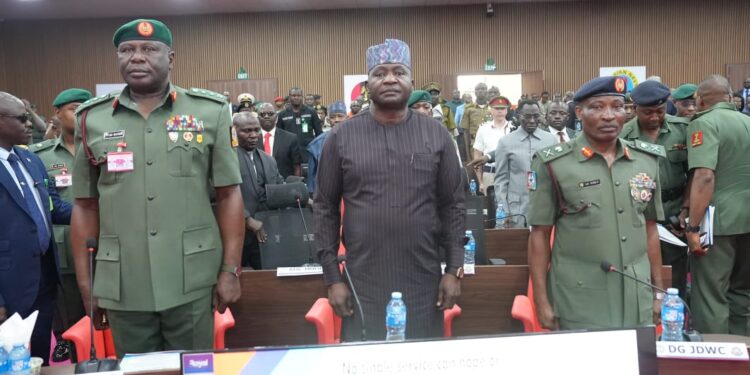
The Director-General of DICON, Maj.-Gen. Ibrahim Alaya, said indigenous defence production had become critical to strengthening national security and ensuring the timely availability of military equipment. He also stressed the importance of collaboration among government, industry and regulatory institutions.
The Federal Government has further strengthened the initiative through the establishment of the DICON Institute of Technology in Kaduna, which is expected to train engineers, technologists and other professionals in defence-related fields.
Stakeholders said sustained funding, private-sector participation, research and political will could help Nigeria conserve foreign exchange, create skilled jobs and emerge as a regional hub for defence manufacturing.