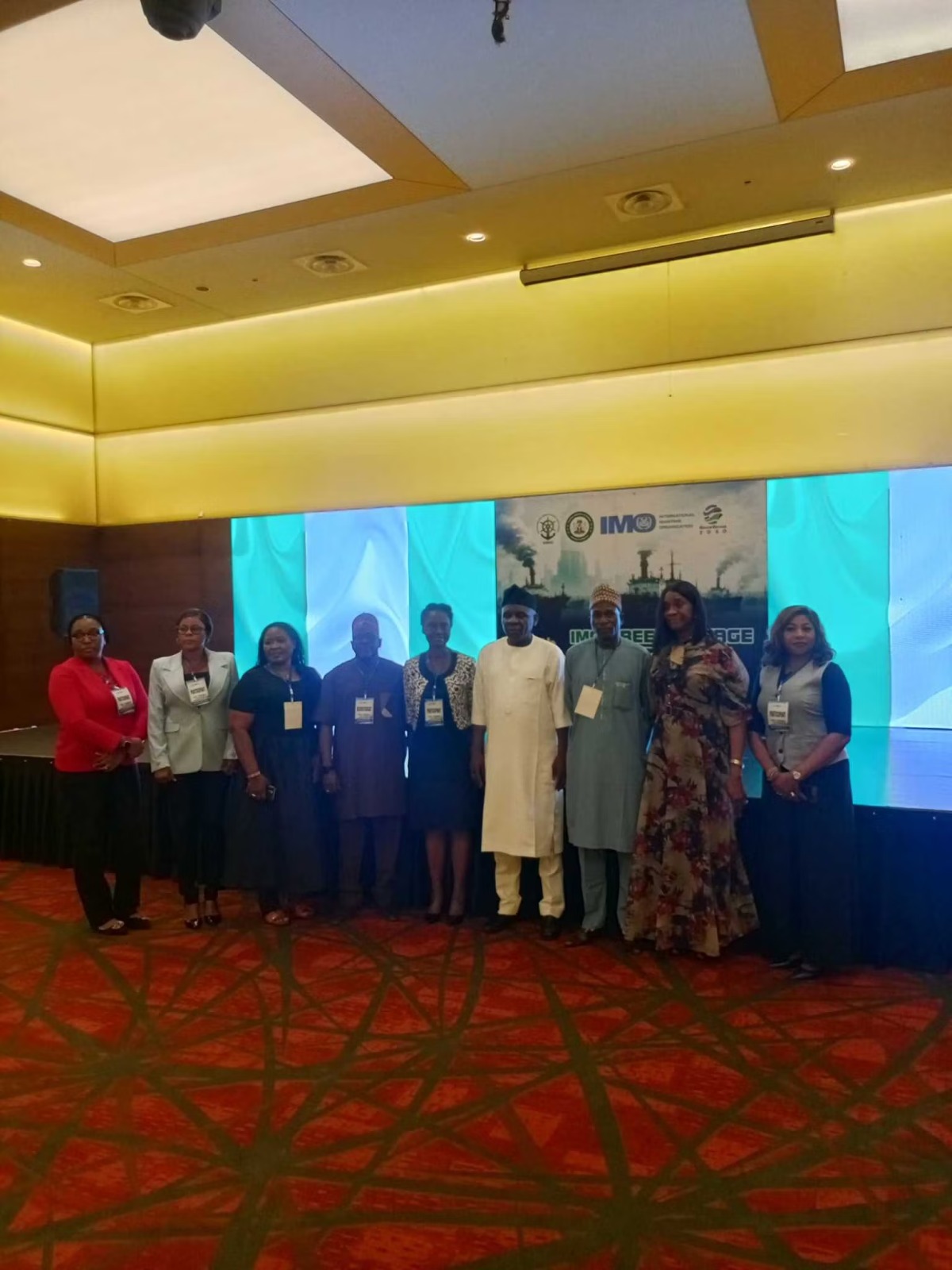
Nigeria has partnered with the International Maritime Organization under the GreenVoyage 2050 Project to develop a comprehensive National Action Plan (NAP) aimed at decarbonising the country’s maritime sector and aligning it with global net-zero targets.
The collaboration was unveiled at the IMO GreenVoyage 2050 national stakeholders’ workshop held in Lagos, positioning maritime decarbonisation as both a climate responsibility and a competitiveness strategy for Africa’s largest economy.
Speaking at the workshop organised by the Nigerian Maritime Administration and Safety Agency, the Minister of Marine and Blue Economy, Adegboyega Oyetola, said the proposed NAP would support the implementation of the IMO’s Greenhouse Gas (GHG) Strategy and assist developing countries in reducing emissions from ships.
“The overall goal of the action plan is to support the implementation of the Greenhouse Gas (GHG) Strategy and assist developing countries in their efforts to reduce emissions from ships,” Oyetola stated.
The minister, who was represented at the event by the Deputy Director of Maritime Safety and Security at the ministry, John Ogwuche, noted that the partnership would grant Nigeria access to critical technical expertise and global networks required to navigate the complexities of the green transition.
He observed that while shipping remains the backbone of global trade, the sector faces mounting pressure to transform in response to climate change and evolving international regulations.
Stakeholders at the workshop emphasised that the National Action Plan would provide a structured framework for cutting emissions, promoting energy-efficient technologies and encouraging the adoption of cleaner fuels within Nigeria’s maritime industry.
The GreenVoyage 2050 Project is designed to assist developing countries in meeting international climate commitments, particularly within the shipping sector, through policy support, capacity building and technology transfer.
Industry experts say Nigeria’s participation in the initiative signals its intention to remain competitive in global shipping while contributing meaningfully to global decarbonisation efforts.