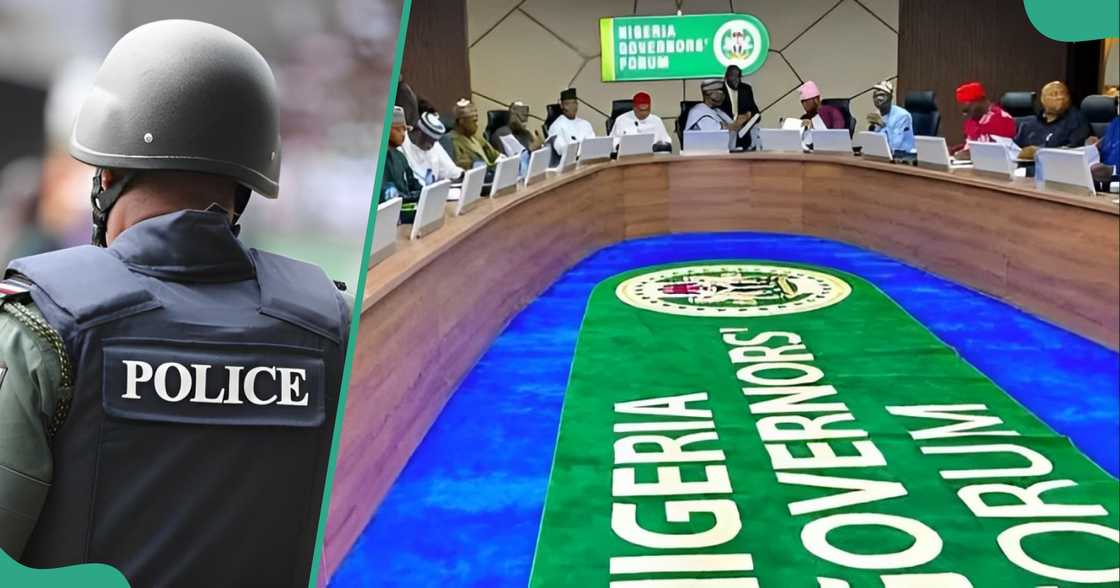
The push for the establishment of state police in Nigeria has entered a critical phase as the Nigeria Governors’ Forum (NGF), formally submitted its contribution to the proposed framework. The document, now with the Nuhu Ribadu, is expected to be transmitted to the National Assembly for legislative consideration.
This development reflects growing urgency among political leaders to reform Nigeria’s centralised policing structure amid persistent security challenges nationwide.
Background to the State Police Debate
Nigeria currently operates a centralised policing system under federal control through the Nigeria Police Force.
Over time, this model has been criticised as overstretched and insufficient in addressing localised threats such as:
- Terrorism
- Banditry
- Kidnapping
- Communal violence
The idea of state police—allowing individual states to establish and control their own police forces—has long been proposed as a solution to improve grassroots security.
Background to the State Police Debate
Nigeria currently operates a centralised policing system under federal control through the Nigeria Police Force.
Over time, this model has been criticised as overstretched and insufficient in addressing localised threats such as:
- Terrorism
- Banditry
- Kidnapping
- Communal violence
The idea of state police—allowing individual states to establish and control their own police forces—has long been proposed as a solution to improve grassroots security.
Supporters argue that state police would:
- Enhance rapid response to local threats
- Improve intelligence gathering
- Strengthen community policing
Critics warn about:
- Political misuse by governors
- Ethnic or regional bias
- Weak oversight mechanisms
- Submission of the Proposal
The NGF Chairman and Governor of Kwara State, AbdulRahman AbdulRazaq, disclosed the submission during a meeting with President Bola Tinubu at his residence in Ikoyi, Lagos.
According to AbdulRazaq:
“On the issue of state police, discussions are ongoing amongst various security organisations, led by the National Security Adviser, and the NGF has made its contribution.
That document will be taken to the National Assembly to see how we can have a legislative framework for state police.”
He emphasized that the proposal is part of ongoing multi-agency consultations, coordinated by the NSA, and represents the governors’ collective input into the reform process.
Role of Key Stakeholders
a. Nigeria Governors’ Forum (NGF)
The NGF:
- Drafted and submitted the proposal
- Represents the collective position of state governments
- Advocates for structural reforms in policing
b. National Security Adviser
Nuhu Ribadu is coordinating consultations among:
- Security agencies
- Government institutions
- Policy stakeholders
His office serves as the central channel through which the proposal will reach lawmakers.
c. National Assembly
The National Assembly will:
- Review the proposal
- Develop enabling legislation
- Amend the 1999 Constitution if necessary
This step is essential because policing is currently on the exclusive legislative list.
d. Nigeria Police Force
The Inspector-General of Police, Tunji Disu, has already set up a committee (February 2026), to design implementation modalities for state policing—indicating institutional preparedness.
Meeting with the President
The submission was discussed during a high-level meeting attended by:
- President Bola Tinubu
- Vice President Kashim Shettima
- Chief of Staff Femi Gbajabiamila
- About 25 state governors
AbdulRazaq noted that the turnout demonstrated strong support for the President’s leadership and commitment to national security reforms.
Governors’ Commitments on Security and Development
The NGF reaffirmed its commitment to:
- Strengthening collaboration with security agencies
- Combating terrorism and insecurity
- Expanding infrastructure
- Improving citizens’ welfare
AbdulRazaq stated:
“As governors, we commit to renew our collaboration with security forces to defeat terrorism steadily… and improve the lives of our people.”
He also stressed the need for collective national effort to end security breaches and urged leaders to embrace values such as unity, compassion, and selflessness.
Legislative and Constitutional Implications
The establishment of state police will require:
- Constitutional amendments
- New legal frameworks defining authority and jurisdiction
- Clear guidelines on funding and oversight
The proposal is expected to form the basis for debate and lawmaking in the National Assembly, making it a pivotal step toward decentralised policing.
Key Issues Likely Covered in the Proposal
Although full details are yet to be released, the framework is expected to address:
- Command Structure: Relationship between federal and state police
- Funding: Financial sustainability for states
- Accountability: Mechanisms to prevent abuse
- Recruitment & Training: Maintaining professional standards
- Coordination: Avoiding conflict between security agencies
Broader Political and Diplomatic Context
During the meeting, AbdulRazaq also:
- Congratulated President Tinubu on his state visit to the United Kingdom—the first in 37 years
- Described the visit as “bold and significant”
Expressed optimism that new bilateral agreements would:
- Strengthen Nigeria–UK relations
- Attract investment
- Boost economic prosperity
He further praised the President’s “Renewed Hope” agenda, stating it has increased citizens’ confidence and participation in nation-building.
Arguments For and Against State Police
Advantages
- Localised and faster security response
- Better intelligence gathering
- Reduced burden on federal police
- Enhanced community trust
Concerns
- Risk of political control by governors
- Potential human rights abuses
- Financial strain on weaker states
- Coordination challenges across jurisdictions
Significance of the Development
This submission marks a major milestone because it:
- Shows consensus among governors
- Advances long-standing security reform efforts
- Aligns with federal government priorities
- Sets the stage for constitutional change
Conclusion
The submission of the state police proposal by the Nigeria Governors’ Forum represents a decisive step toward restructuring Nigeria’s security system. While the final outcome will depend on legislative action and constitutional amendments, the process signals a shift toward decentralised governance in policing.
If properly implemented—with strong safeguards, accountability, and coordination—state police could significantly improve security across Nigeria. However, addressing concerns about misuse and governance will be crucial to ensuring its success.