It may appear to be an exaggeration to say that Nigeria is on the brink of collapse. But that is exactly what is happening. This should be of serious concern to every well meaning Nigerian. The tragedy is that there appears to be no hope in the horizon.
Governance has almost collapsed. The main function of government is to ensure the welfare and security of the citizens. But in Nigeria today, that is a tall dream. Insecurity has become the order of the day. On April 9, 2026, Boko Haram/ISWAP terrorists killed the commander of the 29th Task Force Brigade, Brigadier General Oseni Braimah, and many other soldiers during an assault on a military base at Benisheikh in Kaga Local Government Area (LGA) of Borno State.
On Easter Sunday, terrorists struck in Benue, Kaduna and Borno states with impunity. In Benue, they attacked Mbalom community in Gwer East LGA, killing about 17 people and setting ablaze several houses. That same day, they targeted ECWA Church and St. Augustine Catholic Church at Ariko community in Kachia LGA of Kaduna State and killed at least seven people while abducting some others.
In Borno State, they invaded Awapul community in Chibok LGA and burnt houses and shops. They later attacked an Internally Displaced Persons Camp at Damasak and Nganzai Divisional Police Headquarters. Four police officers and one hunter were reportedly killed.
Earlier on Palm Sunday, they wreaked havoc in Angwan Rukuba in Jos North LGA of Plateau State. About 30 people were killed and many others were injured. Across many states of the federation, it is the same story. Life has no meaning any more.
It is worrisome that despite the predictable pattern of these attacks, the security agencies are still not able to tackle it effectively. Usually, the terrorists attack on festive periods like Christmas and Easter. On Christmas Day in 2011, there was a suicide bomb attack at St. Theresa’s Catholic Church in Madalla, Niger State, and explosions at Mountain of Fire and Miracles Church in Jos, Plateau State. Gadaka and Damaturu in Yobe State also witnessed similar explosions. At the end of it all, about 40 people were killed. The same thing happened on December 25, 2023, when terrorists killed over 200 people in Plateau State.
Amid these killings, the powers that be think more of how to capture power in 2027. They have surreptitiously shut down the major opposition parties.
The Peoples Democratic Party (PDP) is practically dead. The African Democratic Congress (ADC) is battling some engineered intra-party crisis. The Labour Party has been decimated. The only party which appears to be standing strong today is the ruling All Progressives Congress (APC). Ironically, despite luring 31 of the 36 state governors to the party, the chieftains of the party are still afraid of what 2027 portends for them. Hence, the plot to silence the opposition in order to grab power at all costs.
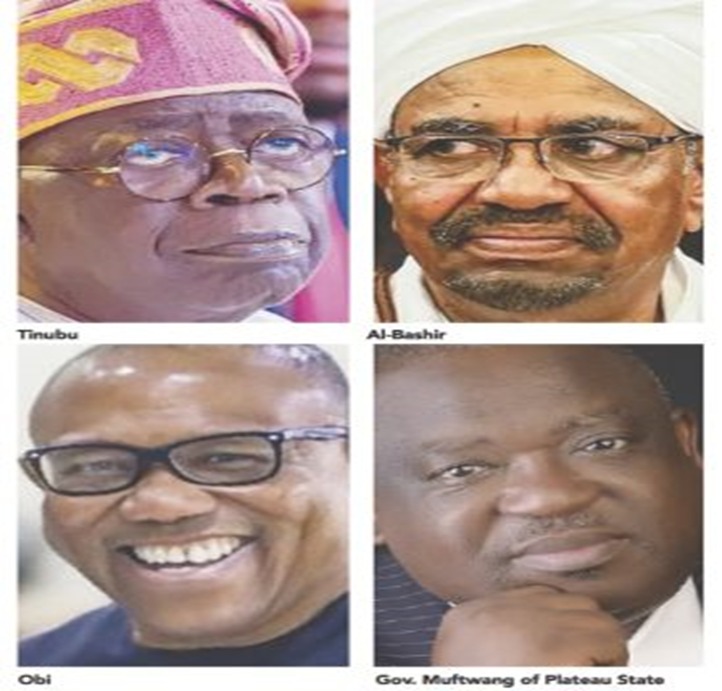
The presidential candidate of the Labour Party in the 2023 election and frontline presidential aspirant on the platform of the ADC, Peter Obi, has lamented about the moves to shut him out of the contest in 2027. Recently, Obi and some other opposition figures embarked on a protest in Abuja. They expressed disgust at the turn of events in the country.
Last week, a coalition of 52 civil society organisations (CSOs) warned that the country was on the brink of collapse. According to the organisations, there are eight areas of concern. They are insecurity and violence, banditry and food collapse, kidnapping epidemic, shrinking civic space, corruption and governance breakdown, economic hardship and inequality, threats to democracy and 2027 elections, as well as eroded judicial credibility. They said the federal budget had, in the past two years, surpassed N100 trillion, exceeding the total of all budgets from 1999 to 2017. Yet, there are no corresponding impacts on Nigerians.
The CSOs regretted, “Across the country, citizens count losses while politicians trade rhetoric. In Zamfara, displaced farmers now live on crumbs in squalid camps. In Abuja, a teacher spends half her income on transportation. In Lagos, families skip meals to pay rent. Yet, federal, state and local governments continue to enjoy record revenues and allocations.”
In other words, politicians get richer from these larger allocations while ordinary citizens get poorer.
The infrastructure deficit is horrible. The state of the roads in many states is nothing to write home about. Poverty and hunger have dealt a debilitating blow on the citizens. Over 141 million Nigerians live below the poverty line. Electricity is epileptic. I have been in my village, Isuofia, in Anambra State, since April 4, 2026. From then up until now, there has not been any public power supply. Not even for one day. I understand that the power outage started since January 2026, and it cuts across many communities in Anambra State. Other states may not be different.
Rather than seek solutions to the energy crisis in the country, the Presidency decided to install solar power in Aso Rock. Once there is solar in Aso Villa, you can imagine what will happen to the rest of Nigerians.
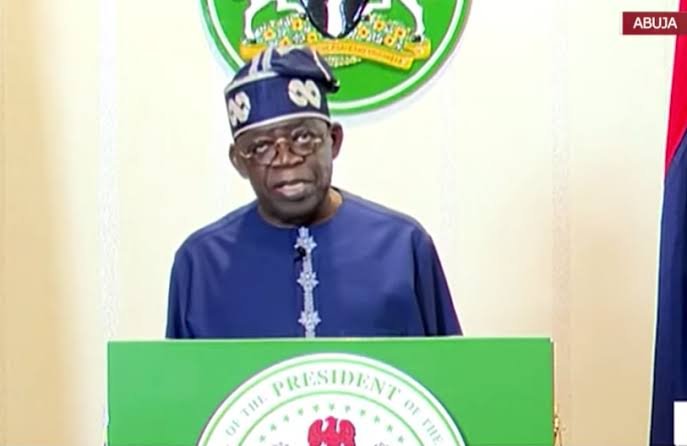
Almost every week, some of us will cry like a bird with a broken beak about the state of the country. It is as, if the more we lament, the worst things turn out to be. The people in government don’t care about the citizens’ welfare and concerns. Each time outrageous killings occur in any part of Nigeria, President Bola Tinubu and the affected governor come out with a statement condemning such barbaric acts and vowing to bring perpetrators to book. The more they make their feeble statements, the more the attacks. It is pathetic, to say the least.
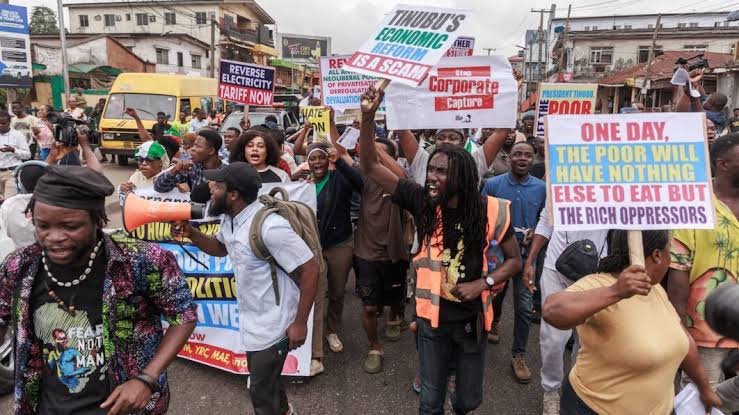
It is obvious that our democracy is under serious threat. Most Nigerians are famished and angry. They are disillusioned. Recently, protesters in Edo State blocked Lagos-Benin Expressway to express their anger over the state of affairs in the country.
Perhaps, the power grabbers feel they are insulated from the looming catastrophe. But be it known to them that emperors are human beings. They can die. Emperor Jean-Bédel Bokassa once terrorised Central African Republic, while Idi Amin Dada lorded it over Uganda. Today, they are both history.
For 30 years, Omar al-Bashir was a brutal dictator in Sudan. He suppressed political opponents, the media and civil society. The Sudanese Army removed him from power in April 2019 following months of nationwide protests that started in December 2018. Mohammed Siad Barre of Somalia was in the same mould as al-Bashir. For over two decades, he ruled with an iron fist, suppressed dissent and established the Somali Revolutionary Socialist Party as the sole party. He was overthrown in 1991 due to a rise in rebel activity and civil war. Sani Abacha once bestrode over Nigeria as a maximum ruler. Today, he is referred to in past tense.
Tinubu should strike when the iron is still hot. First thing is to tackle insecurity in the country. It should disturb him that Nigeria is the fourth most-terrorised country in the world. It ranks 13th globally and third in Africa, in the Numbeo 2026 global Crime Index. This placed it as one of the countries with highest perceived crime levels in the world.
The President should ensure he rejigs the economy. Pontificating on macro-economic gains that have little or no impact on the masses is of no use. Nigerians need food on their table. They need shelter. They need protection from predators and terrorists in our midst. They need to be assured that tomorrow will be better than today. Anything outside this will amount to courting crisis.
There is a limit to what people can tolerate. When citizens are pushed to the wall, they have no option but to push back. May we never get to that stage!
Re: APC’s good governance index
I wish to state that hardship did not start from Tinubu’s administration. The Igbo suffered untold hardship as a result of hunger as a legitimate instrument of war and twenty pounds policy by Yakubu Gowon’s military regime. Yet, they survived it and became more prosperous than other Nigerians. We enjoyed during the oil boom era to the extent that Yakubu Gowon said “money is not our problem but our problem is how to spend it”.
This goes to show that Yakubu Gowon did not have sense of storage and investment like the Pharaoh of ancient Egypt. We also witnessed austerity measures of Shagari administration.
We suffered during the change of currency by Buhari military regime in 1984 and another hardship during the change of currency by Buhari civilian administration in 2022.
Secondly, insecurity in Nigeria did not start from Tinubu’s administration. It started during the administration of President Olusegun Obasanjo and grew in dimension and proportion during the administration of President Goodluck Jonathan.
It also escalated during the administration of President Muhammadu Buhari because it was not technically decimated as we were told. Nigerians have been synonymous with biblical Job.
Please note that to destroy is easy but to rebuild is not easy.
Tinubu has sober reflection on poor university students and that is why he introduced students’ loan scheme so that they will be happy while pursuing their respective academic careers.