In a renewed demonstration of continental resolve to confront one of Africa’s most persistent development challenges, Nigeria and the African Union Commission have stepped up collaborative efforts to accelerate access to safe water and sanitation for millions of people across the continent.
The commitment was reinforced during a high-level engagement held in Abuja with the African Ministers’ Council on Water, where policymakers, technical experts, and development partners converged to chart a more aggressive path toward achieving universal water security and improved sanitation systems.
According to a statement issued on Wednesday by Nelson Gomonda, Officer-in-Charge of AMCOW at the AU secretariat, the meeting underscored the urgency of scaling up investments, strengthening governance frameworks, and enhancing regional cooperation to address water scarcity and sanitation deficits that continue to affect vulnerable communities.
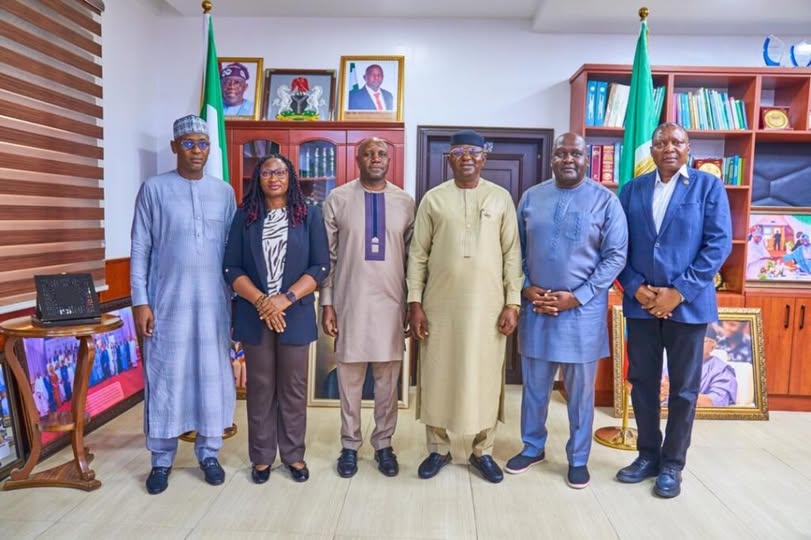
At the heart of the engagement was Nigeria’s Minister of Water Resources and Sanitation, Joseph Utsev, who received a high-powered delegation from the AU. The delegation was led by Harsen Nyambe, Director for Sustainable Environment and Blue Economy at the African Union Commission, alongside Gomonda and other senior officials.
The meeting, described by insiders as both strategic and action-driven, reflected a growing recognition among African leaders that access to clean water and sanitation is not merely a social service but a cornerstone for economic growth, public health, and environmental sustainability.
Utsev, while welcoming the delegation, emphasized Nigeria’s commitment to playing a leading role in advancing the continent’s water agenda. He noted that despite progress made in recent years, millions of Africans still lack access to potable water and safe sanitation facilities, a situation that continues to fuel health crises, hinder education, and slow economic productivity.
He stressed that Nigeria, as one of Africa’s largest economies and most populous nations, carries both a responsibility and an opportunity to drive transformative change. According to him, the country has already begun implementing reforms and projects aimed at expanding water infrastructure, improving rural access, and promoting hygiene awareness.
Nyambe, speaking on behalf of the AU Commission, highlighted the importance of aligning national efforts with continental frameworks such as the Africa Water Vision 2025 and the Sustainable Development Goals. He noted that while individual countries have made strides, the pace of progress must increase significantly to meet targets.
He pointed out that climate change, rapid urbanization, and population growth are intensifying pressure on water resources, making it imperative for African nations to adopt innovative solutions, including integrated water resource management, climate-resilient infrastructure, and data-driven decision-making.
Gomonda further explained that AMCOW, as a specialized body of the African Union, is committed to supporting member states through policy guidance, capacity building, and monitoring mechanisms. He said the council is working closely with governments and international partners to mobilize funding and ensure accountability in the water and sanitation sector.
The Abuja meeting also explored opportunities for deeper collaboration between Nigeria and AU institutions in areas such as technology transfer, investment partnerships, and community-based interventions. Participants discussed the need to empower local governments and grassroots organizations, recognizing that sustainable solutions must be rooted in community ownership.
Observers noted that the engagement comes at a critical time when many African countries are grappling with water stress exacerbated by erratic rainfall patterns and inadequate infrastructure. In rural areas especially, women and children often bear the burden of fetching water over long distances, a reality that continues to limit educational and economic opportunities.
Beyond infrastructure, the discussions placed strong emphasis on sanitation, a sector that has historically received less attention despite its direct link to public health. Poor sanitation remains a major contributor to diseases such as cholera and diarrhoea, which disproportionately affect children.
Stakeholders at the meeting agreed that addressing sanitation challenges requires not only funding but also behavioral change, policy enforcement, and sustained public awareness campaigns.
As the meeting concluded, there was a shared sense of urgency but also cautious optimism. The renewed partnership between Nigeria and the African Union Commission signals a stronger, more coordinated approach to tackling water and sanitation challenges at both national and continental levels.
For millions of Africans still waiting for the simple dignity of clean water and safe sanitation, the outcomes of such high-level engagements carry profound implications. Whether these commitments translate into tangible improvements on the ground will depend on sustained political will, effective implementation, and continued collaboration across borders.
But for now, the message from Abuja is clear: Africa is determined to turn the tide on water and sanitation challenges and Nigeria is positioning itself at the forefront of that mission.