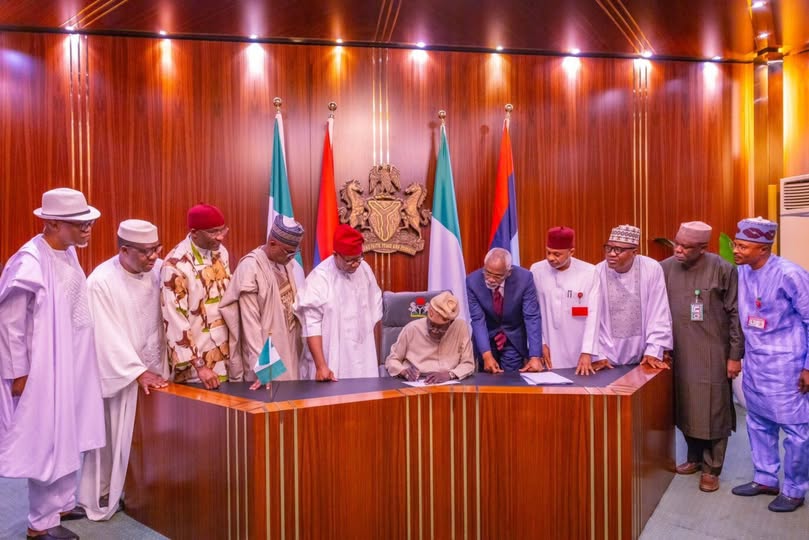
In the new Electoral Act signed into law by the President, Bola Ahmed Tinubu, following its passage by the National Assembly of Nigeria, the system of indirect primaries (delegate-based primaries) has been completely removed as one of the methods for selecting party candidates.
The new law states that political parties will no longer use the delegate system to elect their candidates.
Now, only two official methods remain:
1. Direct Primaries – where every registered party member has the right to vote directly.
2. Consensus – where the party and aspirants reach an internal agreement for one candidate to emerge.
What This Means:
• Delegates no longer control candidate selection.
• Every registered party member now has equal voting rights during primaries.
• Political parties such as the All Progressives Congress (APC), African Democratic Congress (ADC) the Peoples Democratic Party (PDP) etc, must restructure their primary election processes ahead of future elections.
📌 It’s Political Impact
Analysts say the reform could:
• Broaden participation within party structures,
• Reduce manipulation of delegate lists,
• Increase campaign costs due to larger voting populations,
• Shift internal power dynamics within parties.
This move is expected to significantly reshape preparations toward the 2027 general elections.
The new law means that all registered party members now have full voting power in direct primary elections (“kato bayan kato” – person-to-person voting), instead of restricting that power to selected delegates only.