By Tony Onyima
The federal government’s directive to make a thesis and project submission to the Nigeria Education Repository and Data bank (NERD) a prerequisite for National Youth Service Corps (NYSC) mobilisation marks a significant turning point in the country’s academic and professional landscape. Effective October 6, no graduate will wear the NYSC khaki without first uploading their final-year academic work to the national database.
At first glance, the policy seems like another bureaucratic hurdle. But in reality, it is an ambitious attempt to tackle Nigeria’s chronic issues of poor academic quality, plagiarism, and unverifiable certificates. The government has ensured that the policy has teeth by tying NYSC mobilisation—a rite of passage for every graduate—to compliance with NERD.
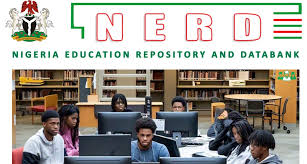
NERD is more than just a digital filing cabinet. According to Section 6.1.23 of its guidelines, it serves as a “quality assurance check and a yearly independent proof of continuous academic enrolment and affiliation.” Every deposited thesis or project becomes part of a permanent, traceable record of Nigeria’s intellectual output.
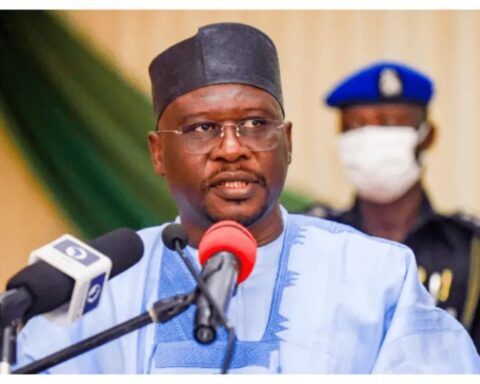
Each entry will carry not just the student’s name, but also those of the supervisor, co-supervisor, and head of department. This detail has a double-edged implication. For students, it offers visibility and proof of genuine academic work. For lecturers and institutions, it introduces a new level of accountability. As NERD spokesperson Haula Galadima explained, the knowledge that supervisors’ names will sit on a global digital platform should naturally elevate standards: few academics would want their reputations tied to poorly researched, sloppily written theses.
Nigeria has long struggled with doubts about the integrity of its academic system. The credibility gap has hurt students and institutions, from fake certificates to recycled projects. NERD seeks to close this gap by creating a national safeguard. The repository will, theoretically, make plagiarism more straightforward to detect, inflate the value of authentic degrees, and provide an intellectual database for research, innovation, and policy planning.
Moreover, by extending the requirement to graduates of foreign institutions, the government is signalling a broader aim: ensuring parity of academic verification regardless of where one studied. That levels the playing field for Nigerian-trained students, who their foreign-trained peers often overshadow.
Nigeria is not alone in this effort. Countries worldwide already run similar systems, with varying levels of sophistication: American universities have long required graduate students to submit dissertations to ProQuest. This global digital repository indexes millions of theses and makes them accessible to researchers worldwide. This repository has become a reference point for originality and academic visibility. The UK requires doctoral theses to be deposited in the Electronic Theses Online Service (EThOS), catalogued and available for download. This ensures transparency, prevents duplication, and contributes to global scholarship. Managed by the Indian University Grants Commission, Shodhganga is a digital repository of theses submitted by Indian universities. Like NERD, it enhances quality assurance and enables plagiarism detection. South Africa’s higher education institutions maintain the ETD portal, a national electronic theses and dissertations portal that strengthens quality monitoring and enhances the international visibility of local research. The central idea is clear in all these examples: digitised repositories are not just archives. They are intellectual fortresses that safeguard academic integrity and showcase national research contributions to the global community.
The Nigerian model, however, faces challenges. Power supply, internet connectivity, and institutional capacity could slow compliance. Universities and polytechnics, already battling overcrowded classrooms and underfunded libraries, may struggle with the logistics of digitisation. There is also the risk of bureaucratic bottlenecks – students stuck in limbo because of upload delays, or institutions overwhelmed by the technical process.
Yet, if properly implemented, NERD could reshape Nigeria’s academic culture. It could deter “miracle centres” for dissertations, inspire more rigorous supervision, and raise the reputation of Nigerian graduates internationally. Most importantly, it could ensure that the country’s vast pool of research, too often buried in dusty libraries, becomes accessible for real-world use in policy making, industry, and innovation.
Thus, the October 6 deadline is more than an administrative milestone. It tests Nigeria’s seriousness about academic integrity and its willingness to align with global best practices. If successful, NERD may become one of the most transformative legacies of Nigeria’s higher education reforms in the 21st century.