By Iniobong Udoh II
My biggest fear about Nigeria is no longer that things may never get better.
My fear is that Nigeria will eventually get better, opportunities will open up, industries will expand, investments will return, new companies will be built, and we will suddenly discover that millions of young Nigerians spent the years before the turnaround completely giving up on themselves.
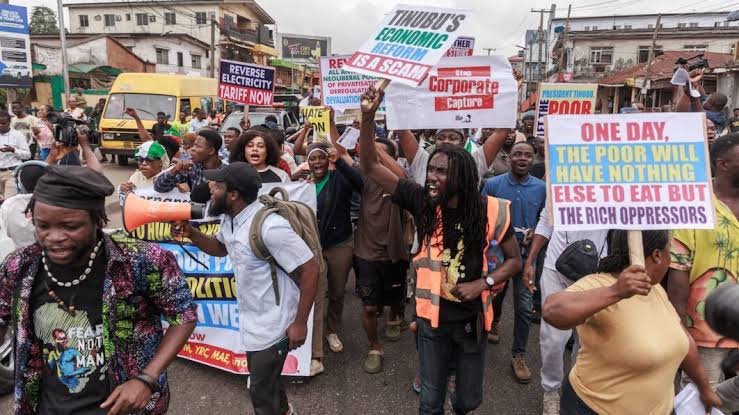
There is an air of hopelessness in Nigeria right now.
You can almost touch it.
You see it in the things people post online. You see it in the jokes that are no longer really jokes. You see it in people’s faces. You hear it in conversations.
“I don’t even care again.”
“Nothing can change in this country.”
“What’s the point?”
“Everybody should just find a way to leave.”
And I understand where that feeling comes from.
When you work hard and things keep getting more difficult, when the cost of living keeps rising, when institutions repeatedly disappoint you, when corruption appears to be rewarded and competence sometimes looks useless, something can begin to happen psychologically.
Psychologists call one version of it learned helplessness.
When people repeatedly experience situations they feel powerless to change, they can eventually stop trying, even when opportunities to change their circumstances appear.
The danger is that hopelessness can become a habit.
You stop learning because you think there are no jobs anyway. You stop applying because you believe they already know who they will employ. You stop building because you assume Nigeria will frustrate it. You stop participating in governance because you think your vote does not matter. You stop imagining a future because disappointment feels safer when you expect nothing.
That is how a bad economy can eventually produce something even more dangerous than poverty: a population that no longer believes effort is useful.
But history should teach us something.
Countries are not permanently condemned to the condition in which one generation meets them.
South Korea in the 1950s was one of the poorest countries in the world and depended heavily on foreign assistance. According to the World Bank, its GNI per person was around $67 in the early 1950s. By 2024, it was $36,624.
That transformation did not fall from heaven.
It took investment in education, infrastructure, industry, technology, institutions and human capital over decades.
Vietnam also went through a period of deep poverty and serious economic difficulty. In 1986, it began reforms that transformed it into a dynamic middle-income economy within a generation and lifted millions of people out of poverty.
Indonesia went through a devastating financial and political crisis in the late 1990s. Its economy went into free fall, yet its poverty rate later dropped dramatically.
None of these countries is Nigeria, and their histories are different.
The lesson is not that Nigeria will magically become South Korea.
The lesson is that national decline is not necessarily a permanent destination.
Countries go through terrible periods. Governments change. Policies change. Institutions can improve. Generations change. Technology changes what is possible. Sometimes a country can look hopeless for years and then enter a completely different economic period.
That is why I desperately want young Nigerians to resist the temptation to mentally retire at 23, 27, 31 or 35 because Nigeria is currently difficult.
You may still have 40, 50 or even 60 productive years ahead of you.
Nigeria itself is an incredibly young country demographically. More than 60% of Nigerians are under 30.
Imagine the tragedy if one of the youngest populations in the world becomes one of the most defeated.
So while we continue to demand better leadership, stronger institutions, accountability and better government, we must also prepare ourselves for the country we are demanding.
Keep building yourself.
And when I say skills, I do not mean everybody should learn coding.
The future will need far more than programmers.
Learn technology if it interests you. Learn data, cybersecurity, design, digital marketing, product management or cloud computing. But also learn sales, negotiation, communication, financial literacy, leadership, problem solving and how businesses actually make money.
Do not look down on physical and practical skills either.
Electricians, technicians, builders, mechanics, farmers, welders, fashion professionals, caregivers, logistics professionals and people who know how to actually make and repair things will still be valuable in any functioning economy.
And build emotional skills too.
Learn patience without becoming passive. Learn resilience without accepting rubbish. Learn how to take rejection without allowing rejection to become your identity. Learn how to work with people, regulate your emotions, change strategy when necessary and keep moving when things do not work the first time.
Sometimes the difference between two equally talented people is simply that one person survived disappointment long enough to meet the opportunity that changed everything.
And please learn AI.
Not because everybody must become an AI engineer.
Learn how AI can make whatever you already do better.
If you are a lawyer, understand how AI is changing legal research. If you are a teacher, understand AI-assisted learning. If you are a designer, learn AI workflows. If you are in agriculture, accounting, marketing, writing, engineering, research, administration or business, ask yourself one important question:
How is AI changing my field, and how can I use it instead of pretending it does not exist?
AI is not coming.
AI is already here.
The World Economic Forum estimates that almost 40% of the skills required in jobs will change by 2030. AI and big data are among the fastest-growing skills, but employers are also placing greater value on deeply human abilities like creative thinking, resilience, flexibility, curiosity and lifelong learning.
So the future is not simply human versus technology.
It is increasingly people who know how to use technology versus people who refuse to adapt.
This is why I do not want young Nigerians to spend the next ten years only being angry.
Be angry where anger is justified. Demand accountability. Vote. Ask questions. Challenge bad policies. Support competent leadership. Refuse to normalise mediocrity.
But while doing all of that, build.
Build your mind, your skills, your health, your network and your reputation. Build something people will pay for. Build something that solves a problem. Build the version of yourself that can function in the Nigeria you keep praying and fighting to see.
Because imagine that Nigeria finally begins to get some things right.
Manufacturing expands. Power becomes more reliable. Foreign and local investment increases. Technology companies grow. Infrastructure projects multiply. Agriculture becomes more productive. New industries emerge.
Companies begin looking for skilled workers, managers, technicians, designers, analysts, researchers, builders and entrepreneurs.
It would be heartbreaking if the opportunity finally arrived and we did not have enough prepared Nigerians to fill it because an entire generation had concluded ten years earlier that nothing would ever change.
Hope does not mean pretending Nigeria is fine.
Nigeria is not fine.
Hope is looking directly at everything that is wrong and refusing to believe that today’s condition has the authority to write the rest of your life.
Countries can recover. Institutions can be rebuilt. Political eras end. Economic cycles change. Technology creates industries that did not exist ten years earlier.
Your responsibility is to make sure that while Nigeria is trying to find its way, you do not lose yourself completely.
Fight for a better country.
But prepare for it too.
Because perhaps the greatest revenge against a terrible season is to make sure that when the season finally changes, you are still standing, still learning, still capable and ready.