By any objective measure, the chaotic Africa Cup of Nations Morocco 2025 final in Rabat was meant to be a celebration of African football. Instead, it has become a case study in how not to apply disciplinary justice, and Morocco finds itself at the centre of the fallout.
The decision of the CAF Disciplinary Committee to hand down what many observers have described as “incoherent and timid” sanctions following the January 18 final between hosts Morocco and Senegal has triggered serious questions about consistency, proportionality and equality before the rules.
Those questions have now been amplified by Raymond Hack, the immediate past chairman of CAF’s Disciplinary Committee, who, according to Osasu Obayiuwana, a journalist, broadcaster and lawyer, described the incident as “probably the most important, and certainly the most embarrassing situation” CAF has ever faced, outside of tragedies involving loss of life or stadium collapses.
Failure to apply CAF’s own rules
Central to the controversy is CAF’s apparent refusal to apply its own Disciplinary Code. Both the match commissioner and the referee reportedly stated clearly that the Senegalese team left the pitch in protest following a VAR decision. Under Articles 82 and 84 of the CAF Disciplinary Code, such an act attracts strict and automatic sanctions, including forfeiture and heavy disciplinary consequences. Yet those provisions were never invoked.
For Moroccan officials and supporters, this omission represents a serious breach of the principle of equality before the rules. Hosting the final in Rabat placed Morocco under intense global scrutiny, yet when order broke down, the governing body appeared unwilling to enforce the very regulations designed to protect the integrity of the competition.
Disproportionate and illogical punishments
Hack was unsparing in his assessment of the penalties imposed, especially the five-match suspension and $100,000 fine handed to Senegal coach Pape Thiaw.
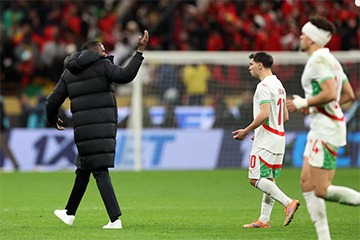
“The entire incident was caused by the coach of the Senegalese team, who took it upon himself to call the players off,” Hack said. “If he had not done that, you may not have had the reaction from the supporters that you had, or the reaction from the players.”
In disciplinary terms, the sanctions have been widely criticised as disproportionate when compared with previous CAF cases.
Saibari was once suspended for three matches for moving a towel. Samuel Eto’o received a four-match ban for misconduct in the stands and not on the pitch. Yet a coach who effectively sabotaged a continental final broadcast to the world and in the presence of both the FIFA President, the CAF President and the representative of the leadership of the host nation, received only a marginal slap on the wrist.
To many in Morocco, this sends a troubling message: that the gravest offence of disrupting a showpiece final ranks only marginally above minor breaches of discipline. A player who gets two yellow cards is punished with a match suspension.
Yet a coach, who put the continent in a disgraceful situation, is suspended for five matches and fined – a penalty that his football federation will easily write off.
Damage to Morocco’s moment on the continental stage
The Rabat final was not just another match. It was Africa’s biggest football occasion, staged in one of the continent’s most modern footballing environments, with Morocco positioning itself as a model host ahead of future global tournaments.
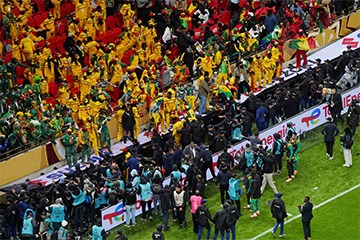
Instead, images of chaos, pitch abandonment, and unruly behaviour were beamed worldwide.
Hack, the former CAF head of the disciplinary committee, warned that the episode reinforced damaging stereotypes CAF has spent years trying to erase. “Again, it gives the impression that Africa doesn’t know how to control its spectators,” he said, noting that only the intervention of Senegal captain Sadio Mané prevented the situation from descending into tragedy.
For Morocco, the frustration is acute: the host nation complied with its organisational obligations, yet the disciplinary aftermath has left the stain of the final lingering far longer than the football itself.
What CAF should have done
According to Hack and several legal observers, CAF missed a critical opportunity to assert authority and protect the competition.
First, the Disciplinary Committee should have applied Articles 82 and 84 strictly, recognising the walk-off as an automatic and serious offence, irrespective of the emotions surrounding a final.
Second, the coach responsible should have faced a far heavier sanction, including a ban from all football activities for a minimum of six months, rather than a five-match suspension that still allows participation in marquee events like the World Cup.
Third, CAF should have placed greater responsibility on the Senegalese federation, both financially and administratively, to reinforce the principle that teams and officials are accountable for their conduct on the biggest stages.
Finally, CAF ought to have issued a firmer, clearer ruling that prioritised deterrence, credibility and institutional integrity over damage control.
A missed moment for leadership
For Morocco, the AFCON final was meant to be a showcase of progress, infrastructure and footballing ambition. Instead, the post-match handling has overshadowed the host nation’s achievement.
As Hack put it bluntly, “They missed the opportunity to really impose sanctions which were necessary.”
In Rabat, and across Africa, the lingering question remains whether CAF’s disciplinary framework is truly fit for purpose — or whether, when it matters most, the rules are simply optional.