To the north of Ibadan, on the way to Iseyin, is a village perpetually wearing mournful, forlorn looks. You must have some interest in Yoruba history to know that this community, at the height of its glory, was Ibadan’s arch-rival in might and riches.
It is today called Orile Ijaiye but some 200 years ago, it was simply Ijaiye; it was also known as Ijaiye Kurunmi. Kurunmi was its leader who, in about 1830, with others, literally stole the town, complete with compounds, market and palace, from its original Egba Gbagura owners.
Aare Ona Kakanfo Kurunmi was a man of great conviction and of contradiction. He was “haughty, despotic, ambitious and cruel” but he was also “firm, just and reasonable on most occasions.” That was the judgment of Missionary R. H. Stone who was in Kurunmi’s Ijaiye and observed him and his ways for six years, starting from 1859.
The church man wrote all the above in his ‘In Africa’s Forest and Jungle, or Six Years among the Yorubans’ published in 1900. Reverend Henry Townsend needs no introduction. He published the first newspaper in Nigeria, ‘Iwe Irohin’, in 1859.
Townsend met Aare Kurunmi in 1852 and wrote that the strongman professed to be “a great enemy to thieves and kidnapping” but he was also compelling trade caravans “by armed force to visit Ijaiye” so that he could collect from them trade tax (toll) of 200 cowries per load.
Like all vain leaders who dance to adulatory beats of their followers and enjoy being worshipped, Stone noted that Kurunmi “would brook no opposition, although he would sometimes go through the formality of pretending to consult twenty-four elders.” Historians said the Aare’s subjects held him “in great awe.”
They said he was a leader who “dispensed justice in a summary fashion, sometimes even acting as executioner.” They also wrote that the character of his rule was resented even by his friends. Two missionaries were in Ijaiye in December 1854 with one of them noting that they visited the “bloodthirsty” Aare, who seemed to him a very different type of ruler from the “mild, aged and prudent Alake” at Abeokuta.
He was a man of immense wealth. R. L. Smith in 1962, quoting an author, describes the Aare’s compound as a “vast labyrinth covering 11acres and containing many storerooms filled with goods, as well as accommodation for the ruler’s 300 wives and 1,000 slaves; the head slave was himself master of 300 slaves.
Visitors were received in a large enclosed space which was used for public trials and executions as well as audiences.” Beyond this personal wealth, for 31 years, Kurunmi made his town and people a community of pride and prosperity. Read R.S. Smith’s ‘Ijaiye, The Western Palatinate of the Yoruba’ (1962); Read Samuel Johnson’s ‘History of the Yorubas’ (1921).
Smith reviewed texts on that era of recorded history and concluded that Ijaiye was a community of progress. He said Townsend in 1852 estimated the inhabitants at about 40,000 and praised the arrangement and level streets of the town. Townsend wrote that he was particularly impressed by the “spacious market place in the centre of the town… the best I have seen in Africa, not excluding Sierra Leone, and seems to be well supplied.” Smith said “the inhabitants were engaged in weaving cloth and above all in agriculture, Kurunmi being ‘a great farmer’ and expecting his subjects to follow suit.”
Stone estimated the population at about 100,000. He too “was very impressed by the market” where, he wrote, “caravans from the interior met those from the coast.” All the great things Kurunmi gave his town were wiped out in less than two years because Ijaiye had a leader who knew no restraint, who enjoyed hearing only his own voice, who was “haughty, despotic, ambitious and cruel.”
Kurunmi grew to become disdainful of the law, norm and custom that gave him leadership. He mismanaged his success so badly that between 1861 and 1862, it was his lot to have his friends, allies and comrades destroy him, destroy his family and destroy his town. He paid the price all tyrants pay, ultimately.
Unfortunately, his town’s greenery died with him. Marcel Dirsus says when the tyrant “is dead or simply out of office, chaos often follows.” For most of last week, the world heard American president, Donald Trump, solemnly asserting that his country would ‘take’ Greenland and make it an addition to its prized possession. Greenland is not a no-man’s-land.
An autonomous territory of the Kingdom of Denmark, it belongs, by law, to Denmark. But Trump said sensationally in an interview that the law gives him no fetters, he would take whatever he wanted. That is a man in the mould of Phalaris, tyrant of Akragas in Sicily who died c. 554 BC. Tyrants ways in power blight their memory in death.
This is the age of tyrants, domestic and international. Nothing confirms that this world is in trouble more than last week’s Donald Trump interview with The New York Times. Two Saturday’s ago, Trump, like Saddam in Kuwait, invaded Venezuela and took its president as war booty.
Yesterday, Trump is shown to have posted an image of himself online captioned ‘Acting President of Venezuela.’ Did he really do that? Audacious. His worst is yet to come. In the interview with The New York Times, Trump refused to agree that what he did with Venezuela violated international law.
“I don’t need international law,” he told his interviewers. The man said the law was powerless before him. What followed that statement was even more alarming. He was asked if there were any limits on his war powers on the world stage. His response: “Yeah, there is one thing. My own morality. My own mind.”
The man who said the above holds the yam and the knife of the safety of the Earth; the nuclear buttons of the US are in his care, a punch away from his whim. The whole of humanity should be alarmed, worried and sweating in unease. The unease is sharpened by the scale of what Trump controls – which he knows he controls, and the use of which is now determined by his temper and temperament.
This should lead you to ask how safe you are from this man? Think about this: In 1945, in Hiroshima and Nagazaki, one nuclear bomb’s death toll ran into tens of thousands. Potentially, today, experts say the toll, in large-scale conflicts, could be billions due to firestorms and nuclear famine. Check.
It will take just one lone tyrant-leader of a nuclear power to wreak all that. In my opening story, we saw what imperial Kurunmi did to his own civilisation. A state governor flashed Marcel Dirsus’s ‘How Tyrants Fall’ before me on Thursday. I bought the book on Friday in Ibadan.
In the midst of the turmoil across the world, even here in Nigeria (Rivers State, especially), I found it coincidentally instructive that the very first words in the book’s Introduction is a quote from the last Shah of Iran, Mohamed Reza Pahlavi: “I don’t deny I’m lonely. Deeply so.
A king, when he doesn’t have to account to anyone for what he says or does, is inevitably very much alone.” There is an English name for a king or leader who does what the Shah describes here. He is a tyrant. The Encyclopedia Britannica says the word ‘tyranny’, in the Greco-Roman world, is “an autocratic form of rule in which one individual exercised power without any legal restraint.”
That definition fits what Trump says he has become. And when you have them in a democracy, how should you approach them? Carouse or cajole them? “Dictators don’t withdraw. They don’t. They have to be thrown off, thrown out.” Former British Prime Minister, Margaret Thatcher, said this.
She had many quotes of similar stricture for the madmen of his era. She said it when Argentina invaded the Falkland Islands on 2 April 1982; she repeated it when Iraq invaded Kuwait on 2 August, 1990. The Gulf War was triggered by Iraq’s invasion of Kuwait. In a media interview on this matter, Thatcher declared that international resolutions alone do not stop tyrants.
She said dictators like Iraqi leader, Saddam Hussein, must be stopped from marching into other peoples’ territory. After the defeat of Iraq, Thatcher said if the world had reacted with only strong words; if Saddam Hussein was not thrown out, “Saddam Hussein would still be in Kuwait and probably right down the Gulf and in charge of 60 percent of the world’s oil reserves if George Bush and Britain and other nations had not taken action and thrown the tyrant out.”
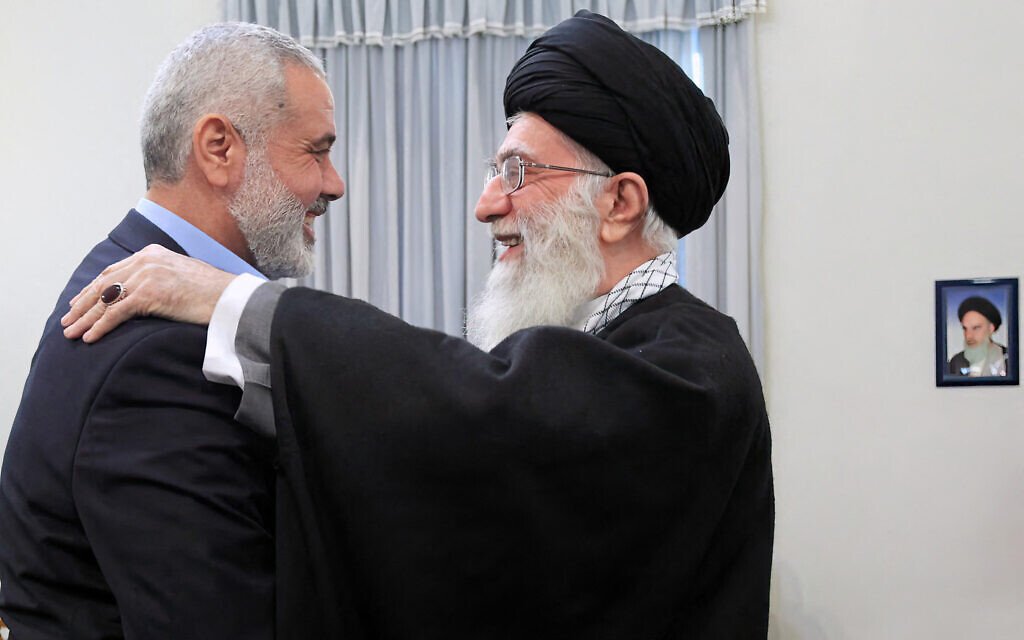
She believed that the world ran great risks in not cutting dictators to size. Fascist regimes, she said, were a threat to world peace and to people’s wellbeing. The country called Iran is in turmoil. Iran’s Supreme Leader, Ayatollah Ali Khamenei, said at the weekend that “vandals and rioters” were “ruining their own streets to please the president of another country”; American president, Donald Trump, who sees and says it, believes that what rules Iran is tyranny.
He issued a warning to leaders of that country on Friday saying: “You’d better not start shooting because we’ll start shooting too.” “You be thief, a no be thief” (Fela Anikulapo Kuti). Iran’s Supreme Leader, Khamenei, the same Friday replied Trump and said he was a tyrant destined to fall like his likes: “The US president who judges arrogantly about the whole world should know that tyrants and arrogant rulers of the world such as Pharaoh, Nimrod, Mohammad Reza (Pahlavi) and other such rulers saw their downfall when they were at the peak of their hubris.
He too will fall,” Khamenei wrote on X. In 2019, Rachel Elizabeth Whitlark quoted The Law of Armed Conflict (LOAC) as demanding “necessity, distinction (between civilian and military targets), and proportionality for any use of force.” Whitlark “urges caution” before legislating oversight of the sole presidential authority for launching a nuclear weapon.
That was seven years ago. I am sure she would review her position after reading Trump last week. For, when the custodian of the world’s most lethal weapons of war declares that only he could restrain himself from using those weapons, the problem ceases to be rhetorical; it becomes existential.
How studded is the United States’ nuclear arsenal? Check the Federation of American Scientists’ ‘Status of World Nuclear Forces’. Of the roughly twelve thousand nuclear warheads in existence worldwide, the United States holds over five thousand (about two-fifths of all nuclear weapons on Earth). Check the Arms Control Association.
In practical terms, the figures mean that a single human being, the American president, sits atop an arsenal capable, on its own, of extinguishing entire civilisations and altering our planet’s future. Those who know would tell those who don’t that nuclear weapons are “civilisational endpoints.”
They would warn that the weapons’ custody demands humility, restraint, and institutional brakes, not the confidence of a lone will. Yet, the man who controls the greatest of the numbers of death hinted last week that the world owed its peace to him and him alone.
When an individual’s self-control, rather than institutional safeguards, becomes the final barrier between peace and catastrophe, humanity is in deep shit. This era belongs to strongmen (I do not want to say tyrants). From Russia to China, to the US, to Africa, Cape to Cairo, to everywhere.
The usual voices of courage are mute; the shrill are the maga who sing and speak in tongues. In Nigeria, the croaky prances uphill and down dale in deep prayer for despotism. We never learn. Literature after literature, in politics and war studies, warn that enormous powers in the hands of one man is safe only when hemmed in by caution, by consultation, and by credible restraints.
In this era, all around us, we see strongmen ignoring the law without consequences. We see personal will replacing systemic restraint; we see the erosion of deterrence. The word ‘deterrence’ has its roots in Latin ‘deterrentem’; it is the present participle of ‘deterrere’, which means “to frighten from, discourage from.”
In theories of law and military strategy, it describes discouraging actions through fear or threats. The concept of deterrence exists today as a reminder to all big men and small men and to all humanity that actions have costs; that leaders are fallible; that societal systems must watch over actions of leaders and that there are consequences for actions taken or not taken.
Now, with a world president in Trump, the safety valves have been shortened to the size of personal assurance. Tyrants are strong men too big to respect caution. Everywhere we turn, we see small and big strongmen acting God. We feel the world as it is being entrusted to the temperament of feeble gods rather than to the strong arms of institutions.
With nuclear buttons in the charge of one man who is disdainful of the law, the true danger is no longer in the weapons; it is in the impulsive fingers that may press the buttons. President Barack Obama was in Ghana in 2009. He famously told the Ghanaian parliament that “Africa doesn’t need strongmen; it needs strong institutions.”
He repeated it in Addis Ababa, Ethiopia, on July 28, 2015 at an African Union event. Looking at his Trump, hearing him and seeing what the strong man does with the strong institutions of the United States and how he does it, I wonder what Obama would say of his America today.
“What is strong when institutions are weak?” Benedicte Bull of The University of Oslo asked in 2014. In her ‘Towards a Political Economy of Weak Institutions and Strong Elites in Central America’, Professor Bull argues that the answer to the question is: “elite networks and their command over, and competition for the control over four sets of resources: money, means of force, information, and ideas and ideologies, including religion.”
It is her observation that in the anatomy of weak institutions, you find some that failed, some that are captured, some penetrated by the elite. If you are a Nigerian, think of the small deities (the small gods) who dare both the law and their chi. Think of institutions that have thrown away their guardrails in the name of elite and political solidarity; think especially of the judiciary.
Think of courtrooms where litigants emerge and both sides celebrate as victors. Then ask the hard question: why is the Nigerian judiciary so terminally unwell? Are judgments that perch shamelessly on the fence of justice proof that the courts have failed, that they have been captured, or that they have simply been penetrated? Whatever you think, just know that tyrants make the law sing for them.
They steal institutions. They dismantle structures, they bypass, or co-opt or seize independent democratic, legal, and financial institutions to consolidate power, to enrich themselves, and to eliminate opposition. They are strong men who know and show that they are strong. Fortunately, like Kurunmi of Ijaiye, strong men are not invincible. If they were, the phrase, ‘Achilles heel’ would never have entered our lexicon.