By Lasisi Olagunju
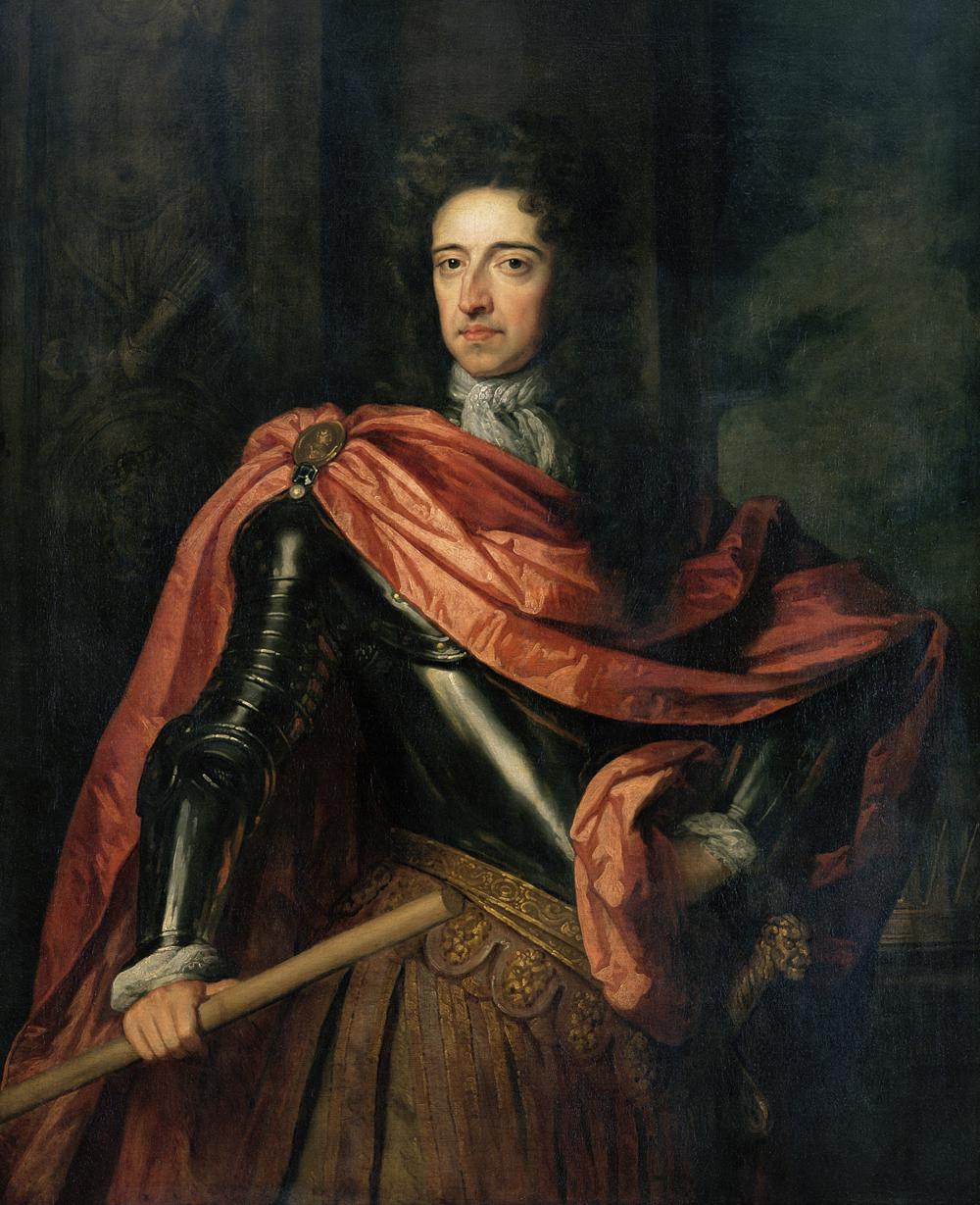
On August 2, 1100, England’s King William II went hunting in the New Forest in southern England. During the chase, an arrow shot at a stag by his companion, the Norman nobleman Walter Tirel struck an oak tree, ricocheted, and pierced the king’s chest. The king died right there. The spot where he fell is today marked by the Rufus Stone. History records the episode as an accident. Yet the story has endured for nearly a thousand years as a powerful illustration of unintended consequences. An arrow meant for a stag struck a king instead. And that is how events far away — sometimes aimed at something else entirely — end up wounding those who thought themselves safely out of range.
It offers a lesson for anyone in Nigeria who thinks a crisis anywhere, especially the ongoing war in Iran, is too far away to hurt them here. The negation of a Yoruba proverb captures the inevitability of distant consequences: igi kìí dá l’óko k’ó pa ará ilé—a tree does not fall in the bush and kill the city dweller. Events rarely harm those who are truly untouched by them. But in an interconnected world defined by oil, the fall of a tree in the Gulf can shake the political ground in Abuja. The Yoruba also say the ceiling does not cave in and kill the wayfarer (Àjà kìí jìn kó pa èrò ònà). Again, this is working for Nigeria and Nigerians in the reverse. Donald Trump started the war in Iran because he wanted (wants) a new regime there which will be answerable to him. The war will miss its intended target if history remains a faithful mocker of all-powerful men like Donald Trump.
It may even do worse: and, it is already doing it on a global scale. In Nigeria, hundreds of miles away from Iran, personal wellbeing is being upended; family finances are facing ruins because of petrol and its combustible price. Yet, it may get worse. A classic warning from the cockpit captures Nigeria’s moment: “We are about to enter a zone of turbulence. Please fasten your seat belts and remain seated.” The celt of thunder from the Middle East has reached every home. On Saturday, fuel queues returned to major cities in Nigeria. The Nigerian National Petroleum Company Limited raised the pump price of petrol again—its second increase in four days. Iran is the culprit.
The widening crisis around the Strait of Hormuz may seem distant from Nigeria’s politics, but history teaches that events in the Persian Gulf often echo loudly in oil-producing states. When tension grips the Gulf and the shipping lanes tremble, the first reaction of the global market is almost instinctive: the price of crude rises. And what I read is that global oil prices are rising. Brent and West Texas Intermediate climbed above $90 per barrel at the weekend. Ordinarily, Nigerians should celebrate this as good news, but because we are Nigerians, the development can only be celebrated with paradox and oxymoronic songs and dance steps. We sell yam and use the proceeds to buy pounded yam.
We cannot profit from increased earnings from our labour tilling the land. NNPC read what I read of global oil price and its domestic petrol price moved from ₦960 to ₦967 per litre, and this was after an earlier jump from ₦875. The tremor is getting stronger as the Iranian crisis worsens, and lengthens. Reports said on Sunday that across the country, filling stations quickly adjusted their meters.
In parts of Southern Nigeria, petrol now sells for about ₦1,080 per litre. Earlier in the week, the Dangote Refinery also raised its gantry price. The cause is the same: higher crude costs driven by war shrieks in the Middle East. Nigerians, like passengers in rough air, can only brace for rougher bumps ahead. With spiked petrol prices, homes grappling with sick finances may soon gasp for life as cost of living takes a bash. And that should not be seen as a thief in the night. For a country like Nigeria, whose public finances lean heavily on petroleum exports, and imports, the political consequences of a shift in the price of the economy’s oxygen can be profound. And I can safely make a prediction: Even with a struggling opposition, oil prices abroad may become hostile votes at home in Nigeria. Whether as windfall or hardship, the Iranian crisis may yet tinker (or tamper) with the ballot boxes of Nigeria’s 2027 election.
I say so because where I come from, I grew up to know that afẹ́fẹ́ kìí fẹ́ kó má kan igi oko l’ára—the wind does not blow through the forest without touching the trees of the forest. And a strong wind that blows without ceasing will do more than touch the trees; it will break the branches of the strong and waste the fruits of the fruity. So, if regime change is Trump’s primary goal in Iran, his arrow may miss the stag and hit kings in all countries where petrol is the giver of life. I wrote last week that this war may be a long haul. It looks like I may be right. From a war of ego it is morphing into a war in defence of independence for Iran. Donald Trump has openly tied his offensive in Iran to regime change.
In an interview with American news site, Axios, he suggested he should be involved in choosing Iran’s next leader. He said he wants “someone that will bring harmony and peace to Iran.” Days after saying that, Trump doubled down. He loudly called on Iranians to overthrow their government, warning that the alternative is “absolutely guaranteed death.” On Truth Social, he declared that there will be no deal with Iran except “unconditional surrender.” The irony is striking. During his 2016 campaign, Trump promised to end the American habit of remaking other nations. He vowed to “break the cycle of regime change” and abandon the reckless interventions of the past.
In 2019, he repeated the pledge, declaring that America’s era of “never-ending war, regime change, and nation-building” was over and that the U.S. military was not meant to be “the policeman of the world.”
Now, the man has become the ultimate kingmaker, and Inspector General of the world, and he flaunts it. What is the definition of discordance if this is not it? In Venezuela, Trump abducted a president. In Iran, he killed the spiritual and political leader. After Venezuela and Iran, Trump has said he is “looking forward to a great change that will soon be coming to Cuba.” There was no diplomacy in his statement of objective: regime change. He said: “Cuba is at the end of the line. They’re very much at the end of the line. They have no money, they have no oil. They have a bad philosophy. They have a bad regime that’s been bad for a long time. Cuba is in its last moments of life as it was. It’ll have a great new life, but it’s in its last moments of life the way it is.” The world president has said what he wants from, and with Cuba, and he may get it.
But can he succeed with Iran? If he succeeds with Iran, what will be the definition of that success? Will he not be transiting from the house of disease to the home of death? How about a harder anti-American hardliner succeeding today’s unyielding theocrats? What Trump’s current fixation risks illustrating is what sociologist Robert K. Merton famously described as the law of unintended consequences. Merton argued that political actions often produce outcomes their authors never anticipated. Literature in sociology reminds us that unintended consequences can be positive (unexpected benefits), negative (unplanned harm), or perverse (when an action makes the original problem worse). In Iran, the louder the external calls for regime change, the stronger the regime’s nationalist legitimacy may become. Trump has not benefited from the teachings of that law. The more one reads Iran’s contemporary political history, the clearer it becomes why America remains a hard sell to large sections of the Iranian public.
It may be true that many Iranians see their regime as repressive, corrupt and unfeeling. Western television networks may keep showing crowds of Iranians cheering American and Israeli strikes against symbols of state power. But wars have their own logic. We have seen how the same conflict has produced a powerful backlash, especially after the mass killing of Iranian schoolgirls early in the fighting. Moments like that often awaken a deeper instinct: when a nation feels attacked from outside, even its fiercest internal critics may close ranks. Deeper still on the regime change rhetoric of Trump is the question: can a nation whose political identity was forged in resistance to foreign domination truly have its leadership determined from abroad? History suggests the answer may expose the futility of Trump’s objective.
My point is that the US-Iran conflict is more structural and historical than religious. I cite an example. In 1962, the Iranian parliament passed a law granting law-breaking American expatriates living in Iran immunity from prosecution in Iranian courts. A young cleric, Ruhollah Khomeini, (who later became Ayatollah Ruholah Khomeini) reacted with fury. The cleric said, by that law, “If any of them (Americans) commits a crime in Iran, they are immune. If an American servant or cook terrorises your source of religious authority in the middle of the bazaar, the Iranian police do not have the right to stop him. The Iranian courts cannot put him on trial or interrogate him. He should go to America where the masters would decide what to do. . . .
We do not consider this government a government. These are traitors. They are traitors to the country.” Scholars J. S. Ismael and T. Y. Ismael, writing on ‘The Political Thought of Ayatollah Khomeini’ in June 1980, brought in the above lines and further observed that this confrontation helped transform clerical dissent into a wider nationalist resistance movement. It got worse such that by late 1970s, the outrage had matured into a powerful ideological narrative: that Iran must never again become subordinate to external powers. The reality of, and hatred for, American power already embedded in Iran’s political vocabulary crystalised into the action that birthed the 1979 revolution.
I do not think that forty seven years after, historically proud Iranians would happily exchange the theocratic dictatorship of a home-bred Ayatollah for a contraption put together by an erratic, exploitative godfather reigning abroad. This should not be too blurry for me to see, and cannot be too complex, knotty, for me to untie; history explains it: Because the present Iranian state was built on the rejection of foreign domination—especially American domination—external attempts since 1979 to reshape Iran have often reinforced the regime’s founding narrative rather than weakened it. Trump’s present intervention may simply allow the regime in Iran to present and entrench itself as a defender of Iran’s sovereignty against the banditry of outside manipulation.
In other words, Iran’s historical memory of humiliation means that Trump’s loud, lousy attempt to reshape the country in his own image may produce the opposite effect. A revolution born in resistance to foreign privilege rarely surrenders its autonomy to foreign proxies. The louder his calls for regime change, the stronger the regime’s ideological justification may become. Back to Nigeria and its share of this problem. Non-partisan political economists will warn that if the exchange of bombs in Iran escalates further and the Gulf’s energy arteries remain constrained, if global shipping disruptions deepen and freight costs surge, inflation at home will worsen even as oil prices climb. The paradox would be bitter: our nation earns more from crude while its citizens struggle with higher prices of food, transport and medicine.
One article in the Financial Times yesterday said “oil market prepares for $100 a barrel as Middle East producers cut output.” Another published same day explained “why oil at $200 a barrel is no longer unthinkable.” Put the mathematics of the two together and the answer is simple: global economic — and possibly political — turmoil. I pity Nigeria, and the Mr Jones of its animal farm who still believes the farm is insulated from the storm. This is where politicians should worry. Elections are less than twelve months away. A hungry electorate can be costly to court — and even more expensive to buy. Keeping them is costlier still. Yet bribery does not always win. Robert C. Brooks’ The Nature of Political Corruption (1909) warned long ago about the limits and consequences of that path.
Nigerian politicians, of course, are not strangers to Philip Nel’s provocative essay, ‘When Bribery Helps the Poor’. Their own takeaway from Nel, appears simpler: in Nigeria, bribery is “the only thing that works.” And indeed, on election day, it often does. So, the government will continue doing what it does best: ignoring spiralling prices of petrol, etc, advertising dubious statistics as proof of a good life. But elections are rarely decided by macroeconomic indicators; they are decided by how daily life feels to the voter. Still, politicians are incurable optimists. Even in violent turbulence, they insist the aircraft will land safely. Their counter-incantation in the storm comforts them: Ìjì kìí jà kó da omi inú àgbọn nù— no storm rages fiercely enough to spill the coconut water inside its shell. They insist that elections are not decided by how daily life feels to the voter. They ask: in our country, is election not ultimately a matter of cash? What money cannot buy, more money will. One day, it just won’t.
That is why we say every action or inaction has consequences. Prebendal optimism has. What happened in the New Forest nine centuries ago reminds us that consequences rarely travel in straight lines. An arrow meant for a stag killed a king. In the same way, a war meant to reshape Iran may yet reshape politics in countries far beyond the Persian Gulf — and that includes Nigeria.