By Lasisi Olagunju
Nigerians when they cry, even the bereaved gets scared. Because they are an impossible people; everything divides them. The Iranian crisis is the latest divider. I see Trump supporters across the Middle Belt and the South. I read anger across parts of Nigeria’s Muslim North. Some who once applauded the brutal, deadly suppression of Shiites in Kaduna (even unleashing street mobs on their corpses) now rage that the arch-enemy has killed a Shiite supreme leader in Iran. Hubris sits in the house as ‘Stand Straight,’ while its servant walks the world as ‘The Unbending.’ Imperfect translation of a perfect Yoruba saying.
But that is the simple story of America and Iran — of Donald Trump and Ali Khamenei — and the collision of pride that has brought the world to the perilous moment which started on Saturday. The war that began on Saturday was unnecessary and avoidable. Pride and prejudice bear much of the blame. Where courtiers and kings are consumed by hubris, war becomes inevitable. Fruit and root are inseparable. Modern Iran did not emerge in a vacuum; its identity is deeply rooted in imperial self-importance. Iran’s ancestors believed that they were a special creation; their descendants say they must stand in all places and at all times on their own terms. That explains Iranian policies marked by defiance, pride, and an unbending resolve.
A little history here. Today’s Iranians descend from a king who once tried to punish the sea. King Xerxes’s father, Darius I, was a great king. He died, his son took over and promised himself that he was going to do what his father could not do. In 480 BCE, Xerxes prepared to invade Greece with imperial confidence. He cut a canal through the Mount Athos isthmus and ordered pontoon bridges across the body of water called the Hellespont. Ask Geography and the maps. I did: Hellespont is today’s Dardanelles, a narrow strait in north-western Turkey, linking the Aegean to the Black Sea via the Sea of Marmara and the Bosporus. It is the natural boundary between Europe and Asia. Xerxes built his bridges and was happy.
He boasted that he was invincible and taunted Greece with a waiting defeat. Then the unexpected happened. A storm wrecked the bridges. The historian, Herodotus, wrote that when Xerxes saw what remained of his impregnable bridges, he flew into a rage and famously ordered that the sea be “punished” with 300 lashes and chains. A king lashing at nature itself for defying his will. Oxford classicist, E. R. Dodds, defined hubris as “arrogance in word or deed or even thought.” It is that fatal overreach, the belief that power can bend even the elements, that shaped Xerxes’s campaign which ended in shame, defeat and disgrace. Hubris, history warns, does not respect time or geography.
Today, centuries later, the excesses of antiquity reverberate in the geopolitics of a restless region. And this is not just about Iran and its leadership; it is also about the leadership of the US and Israel, its 51st state. In June last year, after the 12-day war with Israel, Iran’s Ayatollah Ali Khamenei said his country emerged victorious over Israel and “delivered a slap to America’s face.” Khamenei said that the US “achieved no gains from this war.” He told the world that America came into the fight because “it felt that if it did not intervene, the (Israeli) regime would be utterly destroyed.”
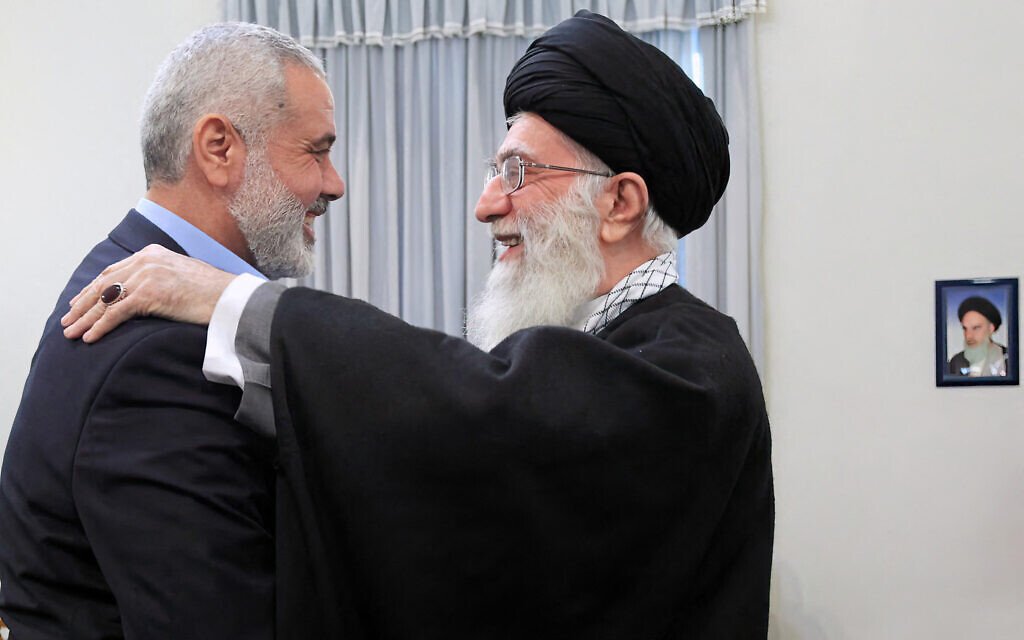
He spoke with his full balls. “Have more than you show; speak less than you know” is a famous maxim delivered by the Fool in Shakespeare’s King Lear (Act 1, Scene 4). The character urges restraint, humility, and strategic silence. The Iranian leader did not benefit from that counsel from Shakespeare’s Fool. This past weekend, Iranian state media confirmed that Ayatollah Ali Khamenei had been killed in a joint U.S.-Israeli operation. May our enemies not catch up with us. Iran prepared for war at night but war sauntered in and conquered it in daytime.
In the Ayatollah’s death we see a modern echo of the lethal arrogance that has courted ruin before: pride and overreach wreaking the unraveling not just of regimes, but of nations. So, what next? Analysts say that whether Iran stabilises under an interim council and new leadership, or slides into deeper conflict and chaos, will depend on forces far beyond Tehran — and far beyond the ambitions of any one man. When the elephant dies, the forest slips into silence. Iran has entered a 40-day period of national mourning. What happened to that country has been described as the most devastating attack on that soil in decades.
Across the nation, grief mingles with fear as the country confronts a fraught leadership transition and the looming shadow of further conflict. Ambition outran prudence when Xerxes crossed into Greece in 480 BCE. I can say the same of Iran of 2026 and its fight with the United States, a confrontation of pride and peril. Old Persia is modern Iran. For centuries the world used the name ‘Persia’, they insisted that their country was Iran. In the twentieth century, Iranians successfully got the country to be known and called Iran — the name their ancestors gave them and which they used for themselves. That shift was more than semantic; it reflected the nation’s long memory and deep sense of identity.
Today, that identity is being threshed in an arena of pride, where heavyweights pound each other with deathly blows. Khamenei’s three-plus decades in power were marked by internal repression, mass protests violently suppressed, and decades of confrontation with Western powers over Iran’s nuclear programme and regional influence. His leadership was never just about Tehran; it helped shape the geopolitical contest across the Middle East, backing proxy networks and challenging U.S. and Israeli interests. Now, an era has ended. It is a war about armament and disarmament.
The West, particularly America, the police of the world, said Iran was desperately involved in a nuclear weapon programme. Of course, it cannot be allowed to enter that premier league; only privileged initiates play on that field. I have heard questions such as: If others have nuclear weapons, why can’t Iran? That is the rational question that can only be asked in a world competing on a level playing field. It is worse for Iran now that a pretender to Christianity occupies the White House. I am alluding to what end-time interpreters call Iran’s role in the final days.
Some argue that hardliners are moving from geopolitics into theology, treating apocalyptic texts literally and geopolitically rather than symbolically. They take their lessons from 20th-century writers like Christian Zionist and dispensationalist Hal Lindsey, author of ‘The Late Great Planet Earth’ (1970), and from later U.S. prophecy teachers. I asked and was told that scripture and scholars of Ezekiel 38–39 suggest modern Iran (ancient Persia or Elam) will join a coalition, which will include Russia, Sudan and others, in an assault on Israel during the Great Tribulation. And they believe that if they do not move now, the tribulation they dread will be here and now.
They see Persia’s enduring presence in the region, from Babylonian conquest to the Medo-Persian Empire and through the New Testament era, as reinforcing its prophetic significance. Complicating matters, Iran and its current leadership are mostly Shia Muslim, whose doctrine holds that the Hidden Imam, or Mahdi, will return at the end of time, preceded by major turmoil in the region. When a people carry the weight of such spiritually foreboding significance, the possession of nuclear weapons becomes an even more dangerous proposition. Especially in a Trump era ruled by hubris, superstition and conspiracy theories. It is a messy affair.
As Eric Abrahamson and David Freedman observe in ‘A Perfect Mess’, a little disorder can make systems not weaker but stronger, more adaptable, more resilient, and, paradoxically, more effective. Perhaps Iran, and indeed the world, needs this current madness: the chaos, the overreach, the collisions of ambition and belief, to build a sane world. Maybe (and I mean, maybe) the very disorder we dread is the teacher we cannot ignore. The death of the Ayatollah ended an era, but the war is far from over, and may not end soon. History shows these people do not fight, lose and go home — witness the Iran-Iraq War of the 1980s. Go further back and the record is just as telling: the Greco-Persian Wars, a series of conflicts between the Greek city-states and the Persian Empire, lasted roughly 50 years, from 499 BCE to 449 BCE. The world should brace for a long engagement of missiles, warships, and warplanes, with all the social, political, and economic disruptions that follow. Nigeria, in particular, must remain vigilant.
Because of who the killers of the Iranian leaders are, I fear complications in areas and regions that shed blood when the victim sheds mere tears. The anger in northern Nigeria is not confined to Nigeria; it echoes across sympathetic corridors stretching from the Sahel to the streets of the Middle East. We need to be very careful. Localising the conflict here will be an ill wind. To underscore vigilance and the lesson of caution, I anchor all this on what the mother bird tells her chick: a storm will not kill a bird if it listens to the precautions the storm teaches. An expanded conflict may push humanity toward the very precipice it has long struggled to avoid. It can.