President Bola Tinubu is a very lucky strongman who has die-hard supporters, even among his victims. One of my friends mounted the rooftop on Tuesday last week and joyfully announced to the president’s critics: “The man you wished would not return is back at his duty post.” He did not end his celebratory message without crowning it with “yegede”, the Yoruba triumphant equivalent of “shame on you!”
But did Tinubu’s critics really wish him away forever? Whoever wishes the sick dead is not a critic; the person is an enemy in the dark mode of ultra-wicked Fadeyi Oloro. But, the truth is, the president himself is the king who took his orí adé abroad to sleep outside the palace gates, and who only returned, apparently reluctantly, following an uproar.
The president finally came back last Tuesday, ending a four-week stay in Europe and dousing the palpable anxiety over the fate of his presidency. He arrived in Lagos from Paris at about 6.22 p.m.
Although we have no visual of his coming down from the plane, Tinubu landed and told journalists of his one-month, two-nation life in Britain and France: “I enjoyed myself; ready to kick, ready to walk. There’s nothing wrong. Well, rumour will always be emanating from politics. But the fact remains, I’m here healthy, sound, and ready to go.”
His return and the assurance from him above were very reassuring, but they have not stilled the question: Did the man return strong, truly hale and hearty? Whatever the answer, it does not matter here. The man has his destiny to fulfil in whatever way, and as God directs. Between the day he left and the day he returned, more Nigerians were born and many others died, some of them apparently healthy until death struck. Sometimes, the dry tree remains standing while the green one falls. That is fate.
The presidential election holds on January 16, 2027; 103 days away. That is a long journey along life’s unpredictable arc. Between now and then, who knows who among us will live to vote and which contestants will remain in the race? Appearance of the moment will not answer that question. There is the trending video of the old-man moving with tremulous tenacity in or out of the National Theatre, Iganmu, Lagos, for the premiere of a film on MKO Abiola. In presidential health matters, all Nigerians are doctors.
Offline and online, many who watched the video paused to listen to the lub-dub rhythm of the heart of the shaky master. The butterfly is labalábá in Yoruba. It flies with a wobbly, tentative motion, as though it would fall with every flap of its wings. Yet that is how its Maker fashioned it, and with that seemingly precarious flight, it journeys safely into the bush. Is that the case with our president?
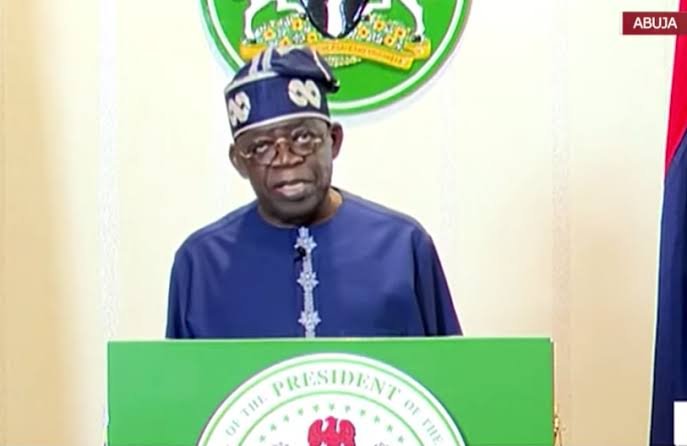
Two days after his return, Tinubu addressed the nation to mark Nigeria’s 66th independence anniversary. He spoke of the promise Nigeria held at independence, its manifest “destiny” for greatness, and the trials, travails and tribulations of its journey. He concluded by suggesting that he was the Moses who had led the country out of captivity and across the Red Sea. His speechwriter painted the challenge of failure with dripping optimism.
That broadcast of hope in Nigeria’s unsteady destiny, and the scary speculations on Tinubu’s health which preceded his return from abroad, lead me to the concept of kádàrá, the Yoruba word for “destiny,” derived ultimately from the Arabic qadar, meaning fate or divine decree.
The Yoruba word for the head is orí, the spiritual vessel of destiny. In a poem, it comes as “the friend who can follow the individual on the most distant of journeys…” And the respect and recognition is universal. When football superstar, Kylian Mbappé, or Lamine Yamal, misses a goal and instinctively clutches his head, what he holds is more than the physical object perched on his neck.
As it is with individuals, so it is with villages, towns and nations. Nigeria came into being with a great head and an excellent blueprint; immense human and material potential, but its good head has been repeatedly betrayed by bad character. Where I come from, we say character is destiny: ìwà l’ẹ̀wà; we say no good head can indefinitely rescue a life governed by bad conduct.
We agonise over the apparent ‘abortive’ destiny of the Giant of Africa while we argue over the wobbly physical and moral gait of our leaders. We choose leaders in total surrender to kádàrá, as though destiny teaches that life need not obey the biology or physics of appearances. We pad our choice with dubious philosophy: the apparently strong may fall; the visibly frail may endure. But a butterfly is strong because it knows the limit of its strength. It survives not by emerging as strong or flying as swiftly as the eagle, but by remaining within the peculiar orbit of its own existence. We choose our pilots; we do not think character matters.
Pause and reflect on the Omani co-pilot aboard a Flydubai flight from Dubai to Tel Aviv last Wednesday, September 30, 2026. The co-pilot, a man entrusted with 181 lives, attacked the captain with a crash axe and attempted to seize control of the aircraft in order to crash it. Some political leaders are like that: they enter the cockpit for purposes other than a safe flight; the lives entrusted to them are secondary. In choosing drivers, choose also character.
American folklorist and specialist in the art and culture of the Yoruba, William R. Bascom, discusses this way back in 1951. Bascom lists kádàrá and àyànmọ́ among the Yoruba terms for fate or destiny and thoroughly explores their implications on human existence. If you are the ever hungry one like me, you would go further from Bascom and approach Professor Segun Gbadegesin who supplies a fuller philosophical treatment in ‘An Outline of a Theory of Destiny,’ a chapter in Lee M. Brown’s edited volume: ‘African Philosophy: New and Traditional Perspectives’ published in 2004.
Gbadegesin identifies àyànmọ́, that which is chosen and affixed to one; àkúnlèyàn, that which one kneels down to choose; and àkúnlègbà, that which is received while kneeling, as distinct accounts of destiny. Then he brings in character as a decisive factor in the success or otherwise of this journey. “In the final analysis,” he wrote, “a person is what she is in virtue of her destiny, her character…”
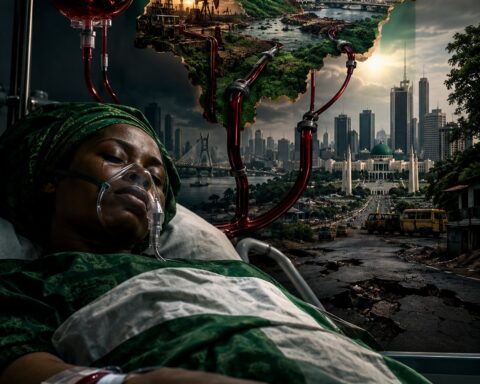
Nigeria is blessed with the best of destiny. What it lacks is not a good head; it was born great. Its affliction, and albatross, is the character of its choices. Those choices have made its promise as abortive as the Dimka coup.
In his Independence Day broadcast on Thursday, President Tinubu recalled that independence carried the promise that Nigerians “would have the freedom to shape their own destiny.” Sixty-six years later, what has become of that promise, and of the destiny we were supposedly free to shape? I said it earlier that destiny is not shaped by promise alone.
Character is its decisive instrument. Nigeria’s tragedy is not that it was apportioned a poor kádàrá; it is that, through repeatedly poor choices and ruinous leadership, it has fashioned for itself a miserable àtubọ̀tán. Àtubọ̀tán is the final outcome, how life’s entire story eventually turns out, the destination at which the wandering roads of existence finally meet.
Professor Wande Abimbola explains the metaphysics behind this: In the Yoruba conception of life and living, every person selects an orí (a head) before entering the world and, in making that choice, chooses the broad direction of his destiny. Abimbola stresses that a good head is just a potential; it is not an automatic certificate of success. It is his thesis, validated by the science of his faith and scholarship, that human exertion, character, sacrifice and the activities of other forces operate within the unfolding of destiny.
The father of Nigerian theatre, Hubert Ogunde, carried the same philosophy from sacred verse and scholarship into popular theatre. In his song on orí, he counsels: If you would take a wife, ask your orí; if you would build a house, consult your orí. To all this, add good character, and the road to success opens. Nigeria, however, repeatedly makes uninformed choices which negate its promise and erase its place on the map of global development. It is the reason why it is left behind.
This country became independent on October 1, 1960. India gained independence from Britain just 13 years earlier, on August 15, 1947. The Federation of Malaysia became independent from the same colonial power on August 31, 1957; the larger Malaysian federation came into being on September 16, 1963. All three countries stepped into nationhood with promising heads, rich in human and material possibilities.
But look at what character, choices and leadership have made of those heads.
World Bank data says Nigeria’s current average life expectancy at birth is 54.6 years; an Indian can expect to live 17 years longer than a Nigerian; a Malaysian, 22 years longer. Malaysia has reached 100 percent electricity access, India stands at 99.9 percent; approximately 39 percent of Nigeria remains without it.
A further check of the World Bank’s current records: Malaysia reduced absolute poverty from 49 percent in 1970 to about one percent in 2014. Extreme poverty is now virtually zero in Malaysia; it is 41.8 percent in Nigeria. Malaysia worked hard and transformed its agricultural and commodity-based economy; it is now powered by manufacturing and services. Malaysia built production; Nigeria built a distributive politics around oil, an elaborate system for raiding and sharing the spoils. But the system is not working. It cannot work.
Whoever does not own a kola-nut tree cannot claim its fruit. That is how Yoruba proverb authority, the late Professor Oyekan Owomoyela, renders a saying whose lesson is that a people cannot sustainably take and share what they do not produce.
So, between Nigeria on this side, India and Malaysia on the other side, the difference is not kádàrá. It is not geography. It is certainly not colonialism which did not spare India or Malaysia. The three countries were colonies of the same overlord, Britain. Nor is the issue ethnic and religious plurality; India has even more complicated variants of both. The decisive difference lies in what each country repeatedly did with what it inherited. It lies in the choices made by its people and in the character of its leadership. A promising head can be ruined by bad character; a great national destiny can be squandered by those entrusted with shaping it.
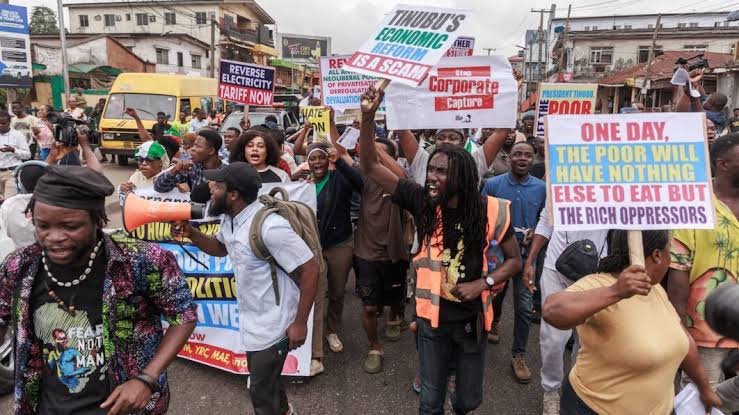
“I enjoyed myself” was the Eureka that our leader brought from France. Now, after thoroughly enjoying himself in Paris, President Tinubu is back in a country wracked by unimaginable suffering. How his presidency will ultimately end, what history will write beside his name, and whether his return marks renewal or merely another turn in a troubled journey, belong not simply to kádàrá but ultimately to àtubọ̀tán.
The eagle is a bird of sight, speed and strength. Shaky-shaky labalábá cannot serve as a symbol of effective leadership. Butterfly or eagle, Tinubu’s flight is still in progress.