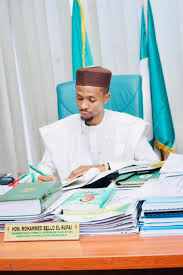
The political landscape in Kaduna State witnessed a major shake-up on Thursday as Mohammed Bello El-Rufai, son of former Kaduna State governor Nasir El-Rufai, officially announced his resignation from the ruling All Progressives Congress and his defection to the African Democratic Congress. The lawmaker, who represents Kaduna North Federal Constituency in the House of Representatives, made the announcement amid growing political realignments and intensified coalition-building ahead of the next electoral cycle.
His departure from the APC marks one of the most significant political defections in Kaduna State in recent months and is expected to further reshape political alliances within the state and beyond. Mohammed Bello El-Rufai’s defection was accompanied by similar moves from three other lawmakers who also abandoned their former political parties to join either the ADC or the Nigeria Democratic Congress. Among them are Umar Ajilo and Suleiman Richifa, both from Kaduna State, who left the Peoples Democratic Party to align with the ADC.
The development signals growing momentum for alternative political platforms seeking to challenge the dominance of the major parties ahead of future elections. Political observers say the defections may also reflect widening dissatisfaction within established political parties as internal disagreements, ideological differences and leadership struggles continue to reshape Nigeria’s political environment.
Although Mohammed Bello El-Rufai did not immediately provide detailed reasons for his decision to leave the APC, sources close to the lawmaker indicated that ongoing political consultations, strategic calculations and dissatisfaction with developments within the party may have influenced the move. The defection is particularly symbolic because of the political stature of the El-Rufai family within the APC and Kaduna politics over the years. Former governor Nasir El-Rufai remains one of the most influential political figures associated with the APC, especially in northern Nigeria, making his son’s exit from the ruling party a development that has already generated significant political reactions.
Analysts believe the move could trigger further defections and recalibrations among politicians loyal to different factions within Kaduna State politics. The ADC, which has recently attracted increased attention from opposition politicians and reform-minded actors, appears to be positioning itself as a growing alternative platform capable of attracting established political figures from both the APC and PDP. Party supporters have described the latest defections as evidence of rising confidence in the ADC’s national outlook and political strategy.
Meanwhile, the defection of Umar Ajilo and Suleiman Richifa from the PDP to the ADC adds another layer to the evolving political dynamics in Kaduna State. Both lawmakers are considered influential figures within their constituencies and their decision to abandon the PDP is expected to affect local political structures and alliances in their respective federal constituencies. Political analysts say the trend of defections across party lines highlights the fluid nature of Nigerian politics, where political loyalty is often influenced by shifting alliances, electoral prospects and internal party tensions.
The emergence of newer political platforms like the ADC and NDC has also intensified competition within the opposition space as parties seek to build stronger coalitions capable of challenging the ruling establishment. The Nigeria Democratic Congress, which also gained a new lawmaker in the latest wave of defections, is gradually attracting attention as another platform seeking to expand its influence nationally. Observers note that as preparations for future elections gather momentum, more lawmakers and political actors may continue to reassess their positions and seek platforms they believe offer better political opportunities and ideological alignment.
Within the APC and PDP, the latest defections are likely to spark renewed efforts to strengthen party unity and prevent additional losses, particularly in politically strategic states like Kaduna. Kaduna State has historically remained one of the most politically influential states in northern Nigeria, often serving as a battleground for major political contests and ideological rivalries. The movement of high-profile politicians across party lines in the state therefore carries implications beyond local politics and could influence broader national calculations ahead of the next general elections.
Political stakeholders have continued to stress the importance of ideological clarity, internal democracy and credible leadership in strengthening Nigeria’s democratic system. However, critics argue that frequent defections among politicians also raise questions about party ideology and long-term political commitment in the country. Despite such concerns, supporters of the affected lawmakers insist that political realignment remains a legitimate democratic right and a reflection of evolving political realities.
As reactions continue to trail the development, attention is now focused on how the APC, PDP, ADC and NDC will manage the changing political equations in Kaduna State and whether the latest defections will inspire similar moves in other parts of the country. For now, the exit of Mohammed Bello El-Rufai and the accompanying defections have added fresh intensity to Nigeria’s already active political atmosphere, reinforcing signs that the battle for future electoral dominance is gradually taking shape.