1. Introduction
Nigeria’s crisis is not new. Every regime is condemned by the people; every successor is feared even before taking office. And yet, the cycle repeats itself. We are trapped in what can only be called a culture of lucid paralysis — a condition where citizens clearly see what is wrong, analyse it endlessly, yet fail to act decisively to alter the system.
This paralysis is not ignorance. It is not even apathy. It is something far subtler and more dangerous: the ability to know, to lament, to predict, and still to perpetuate the very structures that one condemns.
2. The Anatomy of Lucid Paralysis
a. Learned Helplessness
Repeated betrayal by leaders has conditioned Nigerians to believe that nothing they do will change outcomes. The electorate expects disappointment and therefore accommodates it in advance.
b. Cultural Fatalism
A widespread belief that “this is just how Nigeria is” normalises dysfunction. Corruption, electoral malpractice, and abuse of office are viewed not as exceptions but as inevitabilities.
c. Moral Paralysis
Philosophically, it is the failure of praxis — knowing the good but not doing the good. Citizens lament injustice but reproduce it in their own smaller domains: workplaces, communities, families.
d. Elite Capture
The political class exploits this paralysis by presenting themselves as inevitable rulers. Even when discredited, they are re-elected because the masses have been conditioned to see no alternatives.
3. Historical Parallels
Colonial Legacy: The British perfected a system where Nigerians were made spectators of their own governance. Power was distant, opaque, and alien. That culture of watching without shaping has lingered.
Post-Colonial Betrayals: Each transition (1960, 1966, 1979, 1999 etc) was accompanied by popular hope soon dashed. The cycle of dashed expectations deepened the paralysis.
Religious Overcompensation: Both Christianity and Islam have been weaponised to sanctify patience in the face of injustice — “leave it to God.” This often converts righteous anger into passive endurance.
4. Why It Persists
Structural Poverty: When survival is the daily battle, reform becomes a luxury.
Elite Complicity: Those with the education and means to resist often find ways to benefit from the system instead.
Weak Institutions: Without courts, parliaments, or civic bodies capable of channelling citizen frustration into reform, energy dissipates in talk and lamentation.
5. Consequences
Elections where losers concede before ballots are cast.
A political economy where corruption is expected and budgeted for.
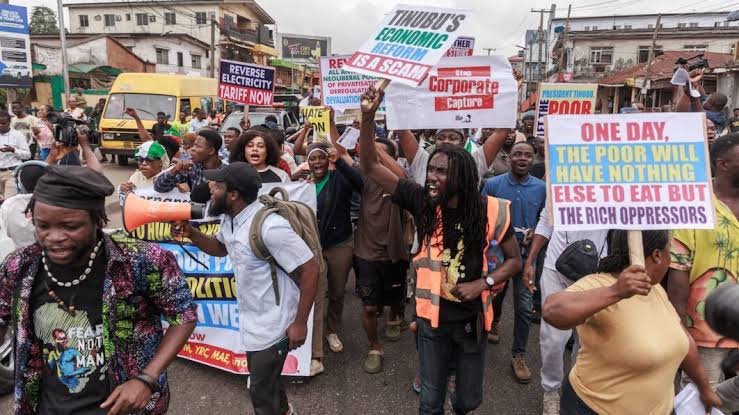
Citizens who can perfectly describe their oppression but can not mobilise to end it.
This is why Nigeria continues to “run in place,” condemned to repeat cycles of outrage and silence.
6. Breaking the Culture
a. Re-imagining Sovereignty ( Orange Union Model )
Nigeria must be recast on a foundation of genuine consent — an Orange Union of distinct ethnic nations choosing cooperation rather than enforced unity. Only then can responsibility and accountability take root.
b. Civic Re-Training
Citizens must unlearn the culture of resignation and relearn the practice of agency. Civic education must shift from abstract rights to concrete action pathways.
c. Elite Reckoning
The intellectual and professional classes must abandon complicity and embrace responsibility. A society rises or falls on its elites.
d. Collective Action
Paralysis ends only when citizens move from knowledge to movement, from lament to organised pressure — in unions, associations, and civic networks.
7. Conclusion
Nigeria’s deepest ailment is not corruption, tribalism, or poor leadership. These are symptoms. The disease is lucid paralysis: knowing but not acting, seeing but not moving, lamenting but not resisting.
History teaches us that nations do not die because their people lack knowledge per se. They die because knowledge is divorced from courage. For Nigeria to live, we must end the culture of paralysis.
The time has come to turn lament into leadership and knowledge into power.
T.Modu
Follow us on all social media platforms @dailyquery for news and analyses around the globe.