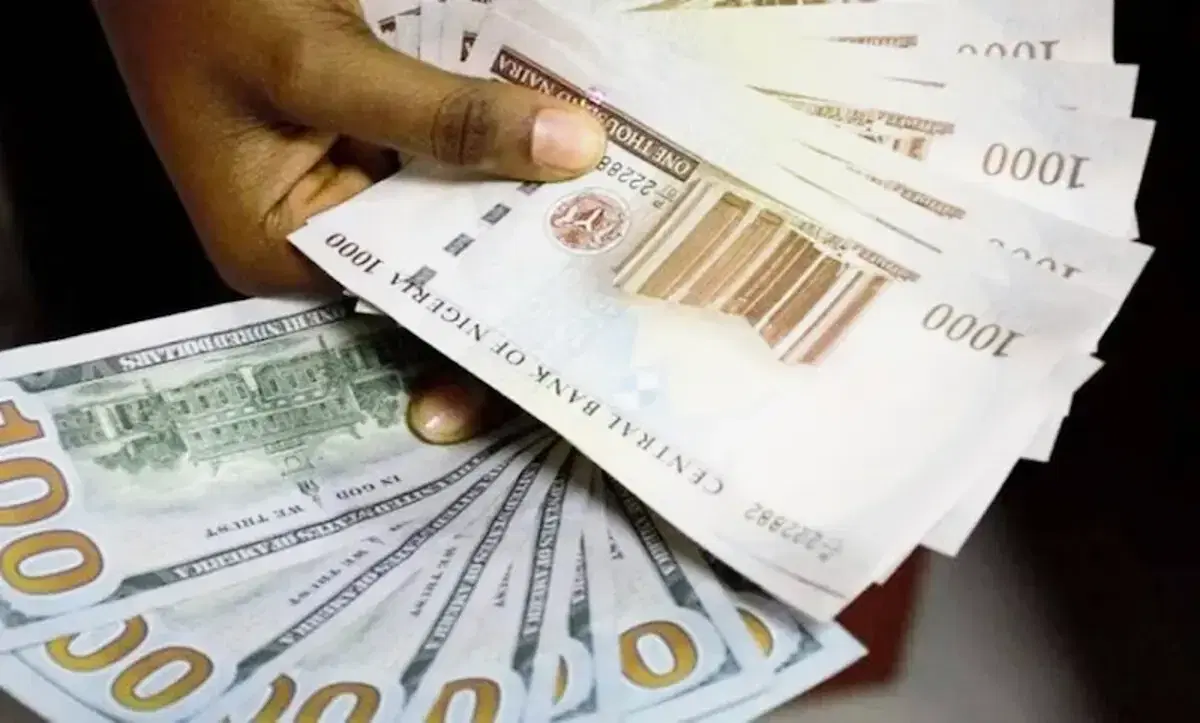
The Nigerian Naira maintained a relatively stable position against the United States Dollar on Wednesday, December 24, 2025, as trading opened across both the official and parallel markets.
This stability comes amid ongoing efforts by the Central Bank of Nigeria (CBN) to manage liquidity within the Nigerian Foreign Exchange Market (NFEM).
However, Several key factors are currently influencing the exchange rate dynamics as the year draws to a close which includes: Seasonal Demand, CBN Interventions, Global Oil Prices as economic experts suggest that the Naira may continue to trade within this band for the remainder of the week, provided that the current balance of supply and demand is maintained through official channels.
According to reports, official Market Performance (NFEM)
In the official window, the Naira showed minor fluctuations but remained within the range established during the previous week’s trading sessions. According to real-time data, the exchange rate in the NFEM opened at approximately 1,455.95 NGN per 1 USD.
This follows a closing rate of 1,459.43 NGN recorded on Monday, December 22. Market analysts noted that the intraday high reached 1,461.63 NGN, while the lowest point dipped to 1,452.65 NGN during early morning trades. The relative steadiness in the official window suggests a consistent supply of foreign exchange to meet legitimate corporate and individual demands.
Parallel Market (Black Market) Trends
In the parallel market, popularly known as the black market, the Dollar continues to trade at a premium compared to the official rate. As of today, December 24, 2025, bureau de change operators are quoting the Dollar between 1,720 NGN and 1,745 NGN for selling, while buying rates hover around 1,710 NGN to 1,730 NGN.
The gap between the official and parallel market rates—often referred to as the “spread”—remains a focal point for economic observers. While the official rate has seen incremental improvements or stability, the parallel market continues to react more sharply to localised demand and seasonal holiday pressures.