By Florence Onuegbu
The Lagos State Government has emphasised the need for thorough and well-coordinated investigations to ensure successful prosecution of Sexual and Gender-Based Violence (SGBV) perpetrators.
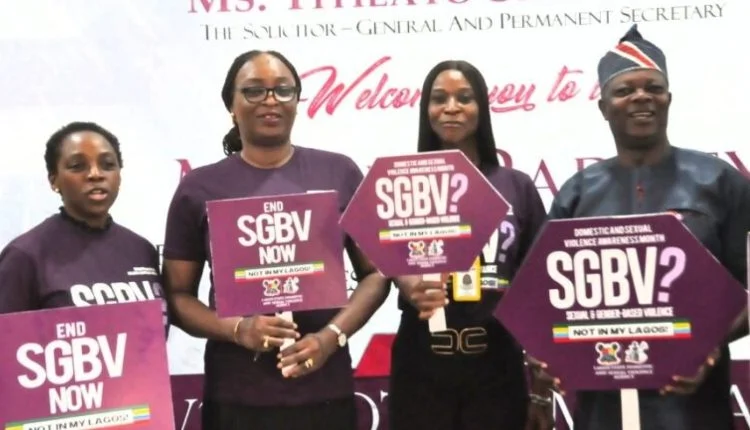
Dr Babajide Martins, Director, Directorate of Public Prosecutions (DPP), Lagos State Ministry of Justice, said this on Tuesday in Ikeja, at a Case Conference Meeting, organised by the Lagos State Domestic and Sexual Violence Agency (DSVA).
Martins emphasised the importance of thorough investigations, noting that gaps in police work can weaken cases and hinder convictions.
He said it was critical to ensure proper recorded confessional statements, in line with Section 3 of the Administration of Criminal Justice Law (ACJL) of Lagos State 2021, as amended.
According to him, the reluctance of witnesses to testify is one of the major challenges facing the prosecution of SGBV cases, as witnesses are often subjected to pressure from family members, relatives of defendants or the defendants themselves.
He urged stakeholders to strengthen collaboration and strictly adhere to legal procedures, to enhance access to justice for survivors of SGBV.
The director said the meeting aimed at ensuring that law enforcement officers understood the review protocol of the Office of the DPP in relation to SGBV cases.
He said the engagement was designed to explain why some cases were considered not feasible for prosecution and how such decisions were reached.
Martins said the forum also provided an overview of the various sexual offences and the elements required to properly prove such cases in court.
Also speaking, Justice Abiola Soladoye of the Ikeja Sexual Offences and Domestic Violence Court, said the lack of sufficient evidence and contradictory statements in case files were issues affecting prosecution of perpetrators of SGBV.
Soladoye said medical reports were no longer mandatory in sexual offence cases, if there were other indicators of sexual assault.
She suggested moving towards forensic evidence collection and away from relying solely on medical reports.
Also, the Executive Secretary, DSVA, Mrs Titilola Vivour-Adeniyi, said the conference provided an opportunity to assess efforts and interventions over the past year.
According to her, the meeting provides a platform for engaging in honest discussions aimed at improving justice delivery process for survivors of domestic and sexual violence.
She said the meeting focused on ensuring that survivors, who broke the culture of silence, were treated with dignity and professionalism, while perpetrators were held accountable.
According to her, outcomes from the meeting will help stakeholders identify gaps, strengthen collaboration and improve response systems for effective access to justice for all survivors of gender-based violence.
Vivour-Adeniyi said the meeting brought together critical stakeholders, including officers of the Nigerian Police Force, the judiciary, civil society organisations, representatives of the health sector, and relevant ministries, departments and agencies.
Dr Olawale Abidekun of Alimosho General Hospital, Igando, described the programme as informative and corrective, emphasising the importance of proper documentation and reasoning beyond the criminal aspect.
Abidekun said the programme had broadened the minds of criminal justice officers to avoid being myopic in their approaches.
He stressed that raising public awareness is crucial, and efforts should focus on educating people about recognising and reporting abuse.
Also speaking, CSP Anjuguri Manzah, the Divisional Police Officer, Okokomaiko Police Division, said the withdrawal of support from victims’ families was a significant challenge in ensuring justice for SGBV survivors.
Manzah said that families often developed cold feet due to fear of stigmatisation.
“Sometimes, there is a lack of cooperation from victims’ families, and this is a major bottleneck in the investigation process,” he said.
The DPO assured survivors of the police’s commitment to providing justice through discrete investigations.