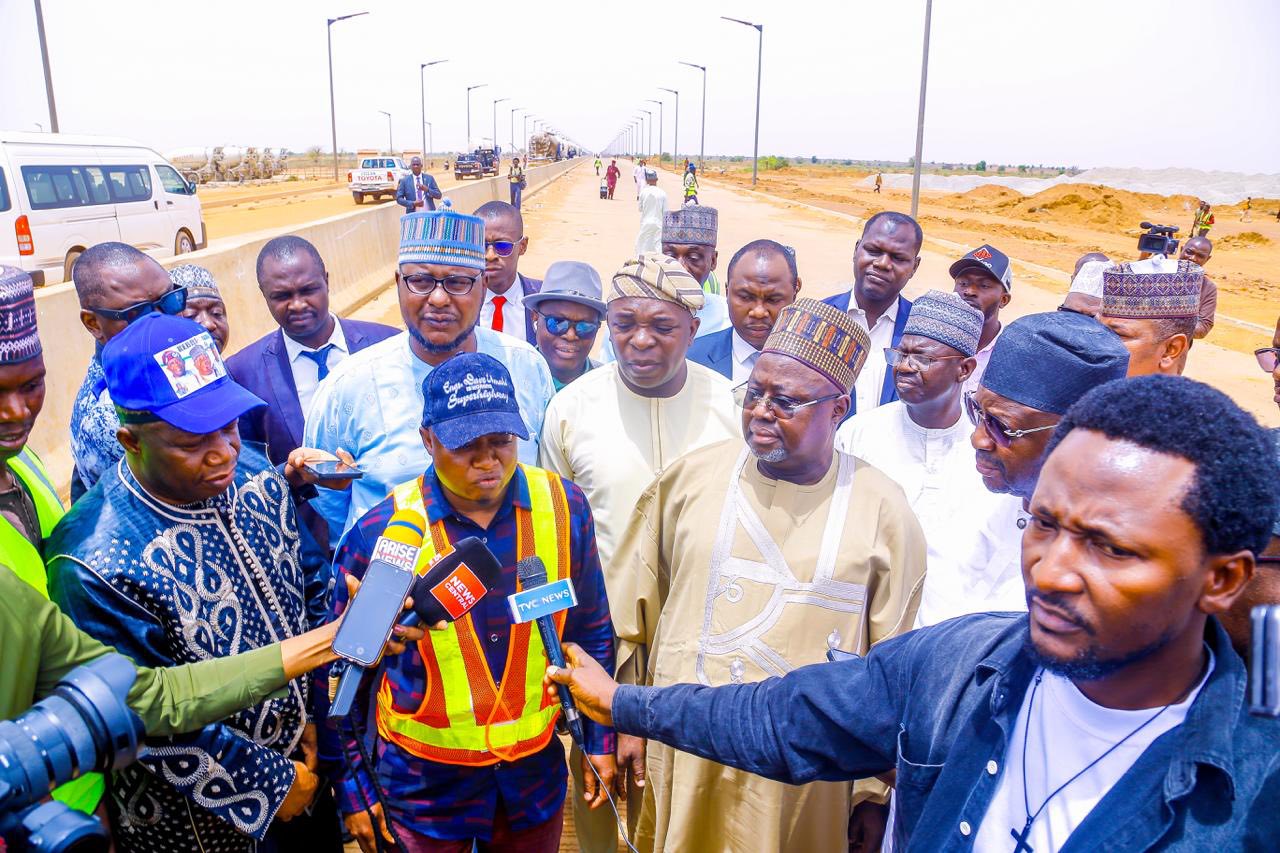
The Sokoto-Badagry Super Highway project is a massive undertaking, and as of early 2026, it has become a central pillar of the “Renewed Hope” infrastructure agenda. The Kebbi State government’s enthusiasm is well-founded, as the state holds the “lion’s share” of the project’s total length.
The project isn’t just about laying asphalt (or in this case, concrete); it’s being built as a Trade, Transport, and Security (TTS) corridor.
The highway aligns with several dams and vast arable lands. By providing a high-speed link to the Southwest (Lagos/Badagry), it allows farmers in the Northwest to move perishable goods to southern markets with significantly less “post-harvest loss.”
It will resuscitate the ancient Trans-Sahara trade route, linking Nigeria more effectively to the Niger Republic and Benin Republic.
In a first for Nigerian highways of this scale, the design incorporates CCTV surveillance and solar-powered street lighting, Security outposts and medical centers every 5 kilometers. The Kebbi State government has even donated a fleet of Hilux vehicles specifically to patrol the construction zones.
It’s fascinating to see a project first conceived during the Shagari administration (nearly 50 years ago!) finally hitting the “pavement” phase. While the “100-year lifespan” of the concrete is a bold engineering claim, the shift toward using local materials like cement instead of imported bitumen is a smart move for the local economy.