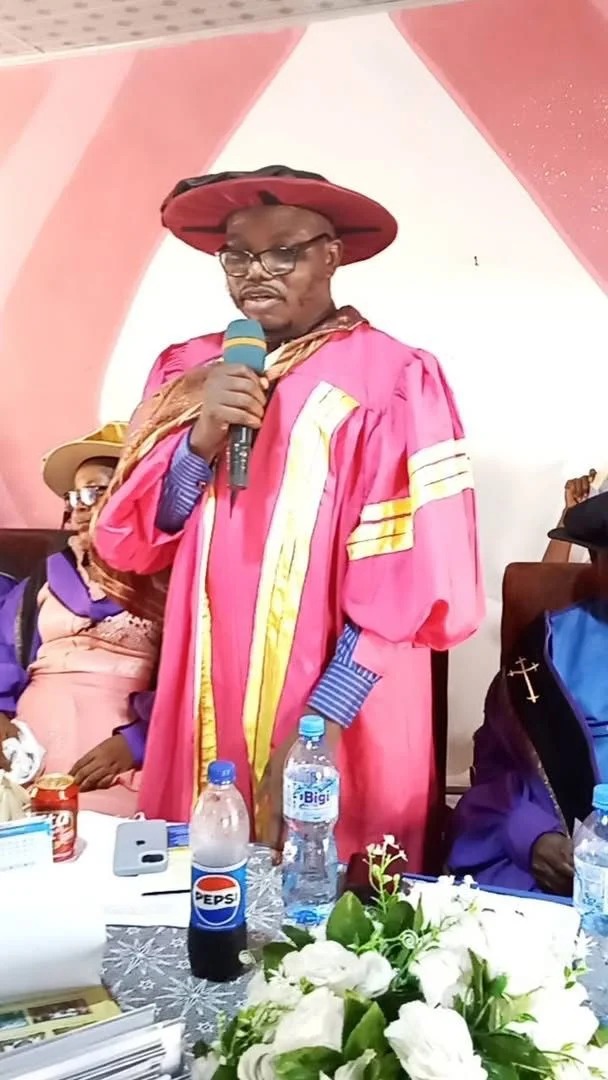
The President and Chief Executive Officer of the Child’s Rights and Rehabilitation Network, Sam Itauma, has urged students of Kingdom Life College of Education to remain focused on their education and avoid social vices such as cultism and internet fraud, popularly known as Yahoo Yahoo.
Itauma gave the advice during the matriculation ceremony of the institution held over the weekend in Eket, Akwa Ibom State, where he also encouraged students to become responsible citizens by actively participating in the democratic process.
According to a statement issued in Uyo on Tuesday by the institution’s Press Directorate, the child rights advocate delivered the message while presenting a keynote address to newly admitted students of the college.
During the event, Itauma was honoured with the Distinguished Education Ambassador Award in recognition of his contributions to education, youth development and child welfare through his humanitarian activities.
Addressing the students, Itauma stressed the importance of discipline, academic commitment and moral integrity, warning that involvement in criminal and anti-social activities could destroy promising futures.
He specifically cautioned students against joining cult groups and engaging in internet fraud, describing both practices as dangerous trends that continue to negatively affect many young people and damage the reputation of society.
“Take your studies seriously and strive to become shining stars and worthy citizens in society,” he said.
“Shun social vices such as cultism and internet fraud, popularly known as Yahoo Yahoo, which is becoming a growing menace in our society today.”
Itauma noted that education remains one of the most powerful tools for personal transformation and national development, urging students to remain committed to learning and character building throughout their academic journey.
He encouraged the matriculating students to see themselves as future leaders and role models who must contribute positively to the progress of their communities and the country at large.
According to him, many youths often become vulnerable to criminal activities because of peer pressure, desperation for quick wealth and lack of proper guidance.
He therefore advised students to pursue honest means of livelihood and resist temptations that could derail their ambitions and tarnish their reputations.
Beyond academics and personal conduct, Itauma also charged the students to become active participants in Nigeria’s democratic process by supporting credible leadership and rejecting politicians who attempt to manipulate voters with temporary material benefits during elections.
“At the same time, I encourage you to be active participants in the democratic process by voting for leaders committed to improving citizens’ lives and rejecting politicians who exploit them with temporary incentives during elections,” he added.
He stressed that the future of the country depends largely on the choices young people make during elections and other civic engagements.
According to him, students and youths generally have a responsibility to demand accountability, good governance and policies that genuinely improve living conditions for ordinary citizens.
Itauma also encouraged the students to use their education to promote peace, justice and development within society rather than becoming instruments of violence or political manipulation.
He expressed appreciation to the management of the institution for recognising his efforts in child protection, education advocacy and rehabilitation programmes targeted at vulnerable children and youths.
The Child’s Rights and Rehabilitation Network, founded by Itauma, has been widely known for its interventions in child welfare and rehabilitation initiatives in Akwa Ibom State and beyond.
Over the years, the organisation has provided support for abandoned and vulnerable children while advocating against child abuse, trafficking and harmful cultural practices.
Speaking during the ceremony, officials of the college described Itauma as a committed humanitarian whose work continues to inspire many young people across the country.
The institution said the Distinguished Education Ambassador Award was presented to honour his dedication to promoting education, social responsibility and youth empowerment.
The matriculation ceremony attracted students, parents, lecturers, traditional leaders and other dignitaries who gathered to witness the formal admission of the new students into the institution.
School authorities also used the occasion to remind students of the institution’s academic standards and code of conduct, urging them to maintain discipline and uphold the values of the college.
Observers at the event noted that Itauma’s message reflected growing concerns over the increasing involvement of some youths in internet fraud, cultism and other criminal activities across the country.
Many education stakeholders have repeatedly warned that the rise in such activities poses serious threats to national development, security and the future of young people.
Analysts also believe that greater investment in education, mentorship and youth empowerment programmes could help reduce the attraction of criminal activities among students and unemployed youths.
As the ceremony ended, students were encouraged to focus on academic excellence, leadership development and positive contributions to society while avoiding activities capable of jeopardising their future aspirations.