Iran and the United States (U.S.) are entering a crucial round of nuclear negotiations on Thursday, with delegations from both countries set to meet again in Geneva.
The meeting is against the backdrop of heightened military tensions in the Middle East.
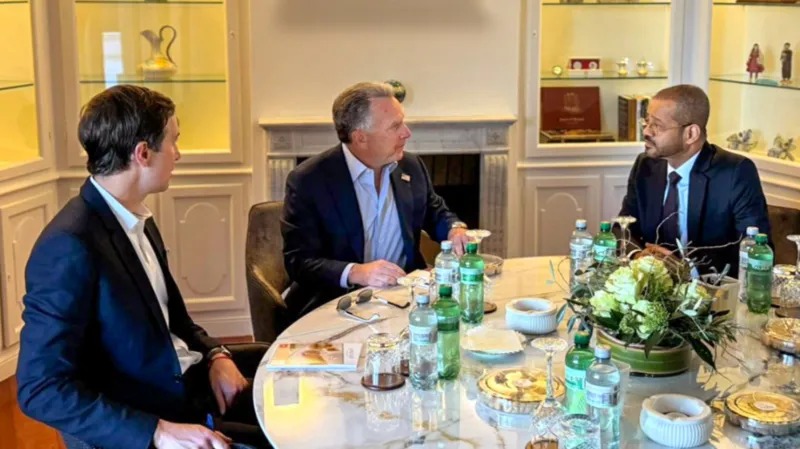
The talks mark the third round of indirect negotiations this year, once again mediated by Oman.
In previous meetings, Omani Foreign Minister,Badr al-Busaidi, acted as an intermediary, relaying messages between the two sides, which do not engage in direct diplomatic exchanges.
Iran’s delegation is led by Foreign Minister Abbas Araghchi.
The U.S. is represented by Special Envoy Steve Witkoff and Jared Kushner, the son-in-law of U.S. President Donald Trump.
Also expected in Geneva is Rafael Grossi, head of the International Atomic Energy Agency, following preparatory talks with Araghchi last week.
At the centre of the negotiations is Iran’s controversial nuclear programme.
The U.S. and its Western allies aim to prevent Tehran from developing nuclear weapons.
Iran denies seeking nuclear arms and maintains that its program is solely for civilian purposes.
Tehran has signaled willingness to accept certain limitations, including restricting uranium enrichment to low levels as stipulated under the 2015 nuclear agreement, formally known as the Joint Comprehensive Plan of Action (JCPOA).
The was as a result from what Trump withdrew in 2018.
However, Iranian officials have drawn clear red lines.
They refuse to fully dismantle the country’s uranium enrichment infrastructure and consider Iran’s missile program non-negotiable, describing it as a key element of national deterrence.
Tehran has also rejected discussions on ending its support for regional militant groups such as Hezbollah in Lebanon.
In exchange for nuclear concessions, Iran is demanding relief from sweeping economic sanctions that have largely cut the country off from global financial markets, discouraged foreign investment and contributed to a deep economic crisis.
The downturn has significantly weakened the middle class and pushed parts of the population into poverty.
Beyond economic relief, Iran’s leadership is seeking to avert the risk of military confrontation.
Last week, Trump issued an ultimatum to Tehran, setting a 10- to 15-day deadline.
“We’re either going to get a deal or it’s going to be unfortunate for them,” he said, warning that otherwise “bad things” could happen.
Iranian leaders have responded with warnings of escalation in the event of an attack.
President Masoud Pezeshkian has threatened a “comprehensive war” if Supreme Leader Ali Khamenei is targeted.
Khamenei has cautioned that any U.S.-initiated conflict could spiral into a broader regional war, while insisting that Iran does not seek such an outcome.
Failure to achieve a breakthrough in Geneva could heighten the risk of military confrontation.
In recent weeks, the U.S. has significantly expanded its military presence in the Middle East.
Two aircraft carriers were deployed along with dozens of fighter jets and support aircraft reportedly the largest U.S. air force buildup in the region since the 2003 Iraq War.
Switzerland, which is hosting the talks in Geneva, is regarded by Tehran as a neutral intermediary and represents U.S. interests in Iran, where Washington has no diplomatic mission.