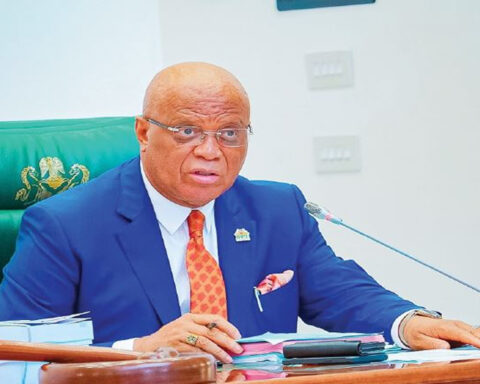
In a decisive response to the escalating wave of banditry, kidnappings, and terror attacks across the country, the Nigerian Senate has announced its readiness to fast-track the constitutional amendment process required to establish state police. The move is being positioned by federal lawmakers as a critical and long-overdue remedy to the country’s worsening internal security challenges.
Speaking on the development, the Chairman of the Senate Committee on Media and Public Affairs, Senator Yemi Adaramodu, confirmed that the Red Chamber is fully prepared to accelerate legislative action without delay. “The Senate is fully prepared to commence the constitutional processes for the establishment of state police without delay.
We will ensure that the necessary legislative stamina is accorded to the establishment of state police, so as to keep Nigerians safe and secure, and drive out rampaging bandits and other social marauders,” Adaramodu stated. The decision to expedite the decentralization of Nigeria’s policing system follows a series of high-profile security breaches, including the recent harrowing abduction of school pupils and teachers in Oyo State.
For years, Nigeria has operated a highly centralized policing model under the Nigeria Police Force (NPF). However, critics argue that the federal structure has become overstretched and poorly equipped to counter localized guerrilla tactics employed by terrorists, bandits, and secessionist groups.
Proponents of the new bill argue that establishing state-controlled police forces will enhance grassroots intelligence, shorten response times and bolster community trust. The momentum behind the bill has been significantly bolstered by the executive arm of government.
President Bola Ahmed Tinubu has consistently advocated for a decentralized security architecture, recently urging the National Assembly to treat the constitutional amendment as a matter of urgent national importance. High-level consultations between the Presidency and leadership of the National Assembly have intensified.
Femi Gbajabiamila, the Chief of Staff to the President, indicated that federal authorities have gained substantial traction on the legalities of the transition. Despite the overwhelming legislative push, the path to establishing state police is fraught with constitutional complexities.
To amend the 1999 Constitution, the bill must not only pass a two-thirds majority vote in both the Senate and the House of Representatives but must also be approved by at least 24 of the 36 State Houses of Assembly.
Furthermore, critics have raised concerns over the potential for state governors to weaponize local police forces against political opponents, as well as the financial capacity of economically fragile states to fund and equip modern police departments.