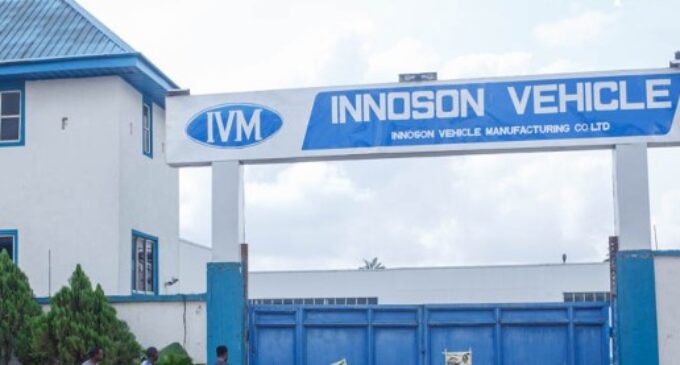
Nigeria’s pioneer indigenous automaker, Innoson Vehicle Manufacturing Company Limited (IVM), has called on the Federal Government to urgently review its tariff structure on electric vehicle (EV) components, warning that current import policies favor foreign imports over domestic assembly.
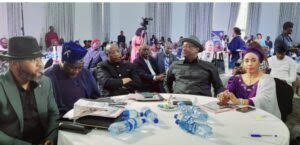
The management made the appeal on Thursday morning, August 20, 2026, during an industrial assessment tour of IVM’s primary manufacturing facility in Nnewi, Anambra State. The facility was visited by a high-level joint delegation led by the Manufacturers Association of Nigeria (MAN) Anambra, Enugu, and Ebonyi regional branch, as part of MAN’s Industrial Energy Adoption Programme.
Speaking on behalf of the company, the Chairman of Innoson Group, Chief Innocent Chukwuma, highlighted a severe policy imbalance threatening local industrialization. While the Federal Government recently introduced tax waivers and reduced import duties to zero for fully built imported electric vehicles, raw materials and necessary knock-down components imported by local manufacturers continue to attract heavy import tariffs.
Chukwuma cautioned that this structure artificially elevates local assembly costs, making imported EVs cheaper than locally produced units and undermining Nigeria’s National Automotive Industry Development Plan.
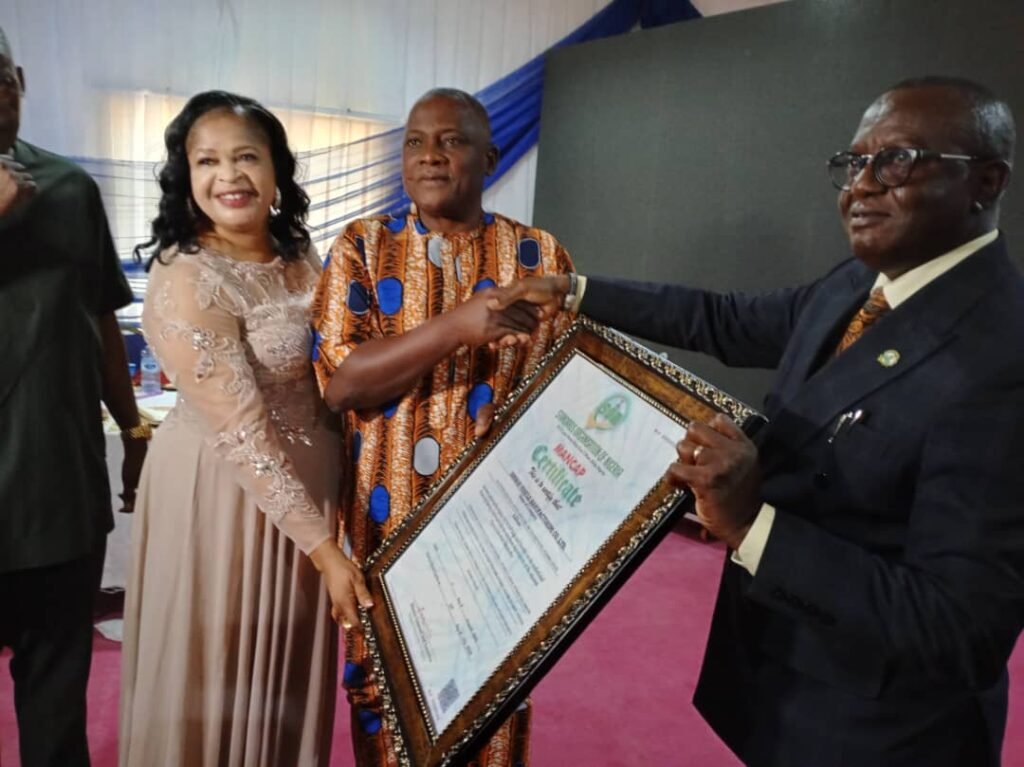
The visiting delegation included prominent figures across energy and manufacturing sectors; Lady (Dr.) Adaora Chukwudozie, Chairman, MAN (Anambra/Enugu/Ebonyi Branch), Oweh Mba-Sam, Managing Director, MAN Power Development Company Limited (MPDCL) and Executives from Norwegian renewable energy fund Empower New Energy and EPC partner Paras Energy & Natural Resources Development Limited.
Reacting to IVM’s presentation, Dr. Adaora Chukwudozie urged fiscal authorities to quickly engage domestic automakers. She emphasized that Nigeria’s green transition should create local employment rather than turn the nation into a dumping ground for foreign-made vehicles.
”If we are encouraging the transition to electric vehicles, then companies that have invested in manufacturing those vehicles locally should also be encouraged. We should not create a situation where it becomes more attractive to import a finished electric vehicle than to import the components required to manufacture that same vehicle in Nigeria,” Chukwudozie stated.
The delegation inspected IVM’s dedicated EV assembly lines and tested several indigenous electric models. Beyond fiscal policy, discussions centered on transitioning IVM’s production facility to large-scale solar power under MAN’s clean energy initiative to slash operational costs, meet ESG targets, and position the firm for carbon credit integration.