The Independent National Electoral Commission (INEC) has confirmed that sample ballot papers for its nationwide mock accreditation exercise on Saturday, November 28, 2026, will omit the names and logos of registered political parties to ensure the process remains strictly focused on testing election technology rather than promoting partisan interests.
Speaking during an appearance on Channels Television’s Politics Today on Friday, November 27, 2026, INEC’s Deputy Director of Voter Education and Publicity, Wilfred Ifogah, clarified that the exclusion is deliberate to preserve the non-partisan integrity of the dry run ahead of the 2027 general elections.
Ifogah emphasized that the exercise is not intended to favor any political group, noting that it is strictly a mock operation designed to evaluate operational readiness, build public confidence in the commission’s systems, and allow citizens who turn out to experience a practical demonstration of the voting process.
According to the commission, the mock accreditation and result management exercise will run on Saturday, November 28, 2026, from 8:30 a.m. to 2:30 p.m. across 17,676 selected polling units nationwide. This deployment covers two designated polling units in each of Nigeria’s 8,838 Registration Areas, or wards, spanning all 36 states and the Federal Capital Territory.
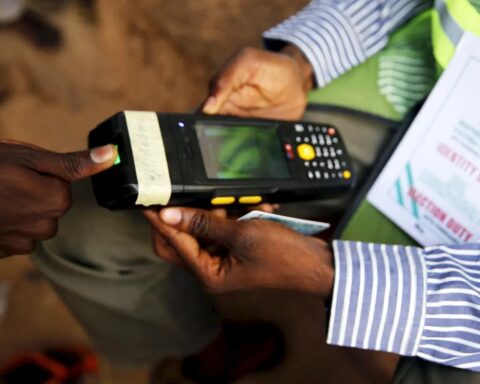
Registered voters residing in these selected areas are expected to present their Permanent Voter Cards (PVCs) at their respective polling units to undergo simulated accreditation and cast sample ballots, with electoral materials already dispatched to the field.
Earlier in the week, INEC Chairman Prof. Joash Amupitan reiterated during a strategic briefing with Resident Electoral Commissioners (RECs) that the simulation is vital for identifying and resolving logistical bottlenecks and communication gaps prior to the general polls.
He noted that omitting registered party identifiers eliminates any perception of political bias while allowing electoral officials to stress-test hardware and field logistics.
In a related operational update, INEC’s Director of Voter Education and Publicity, Mrs. Victoria Eta-Messi, highlighted that Saturday’s exercise will evaluate the upgraded Bimodal Voter Accreditation System (BVAS) alongside a newly introduced electronic polling unit result sheet.
Integrated directly with the INEC Result Viewing Portal (IReV), this technical safeguard is built to automatically detect arithmetic discrepancies and block inaccurate uploads at the source before results are transmitted.
The nationwide simulation serves as a critical dress rehearsal for the 2027 general elections, which INEC has scheduled to commence with the Presidential and National Assembly polls on January 16, 2027, followed by the Governorship and State Houses of Assembly elections on February 6, 2027.