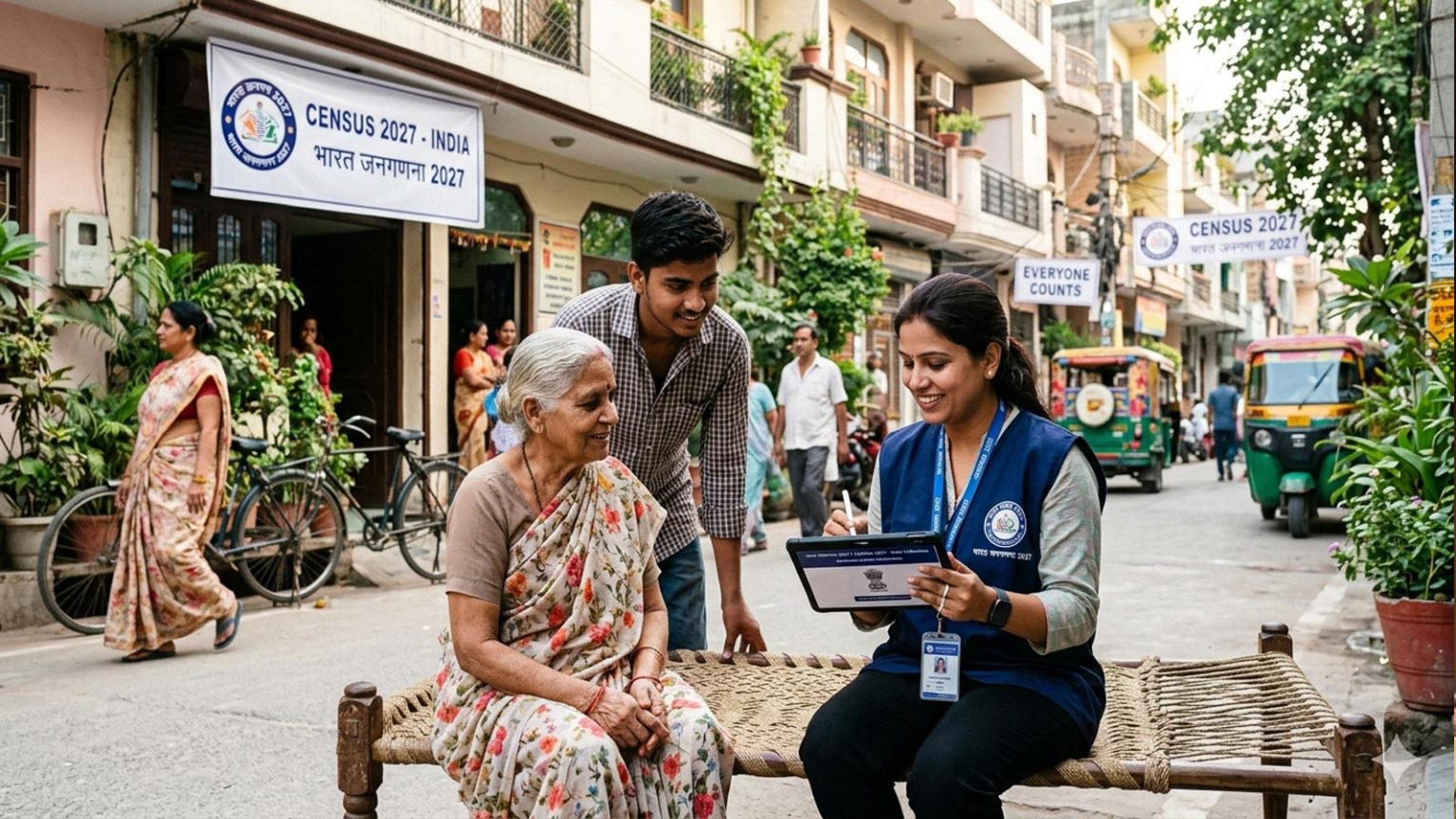
The government of India is set to launch what has been described as the world’s largest census, with more than three million officials expected to participate in a nationwide counting exercise scheduled to run over the next year.
The massive population count in India, home to an estimated 1.4 billion people, is seen as a critical national project aimed at addressing the growing challenges of population management, urban planning, and resource allocation.
Officials say the census will provide vital data to support inclusive governance and evidence-based policy formulation across the country.
Described by the government as a “gigantic exercise of national importance,” the census is expected to cost about $1.24 billion, reflecting the scale and complexity of counting one of the world’s largest and most diverse populations. The exercise will involve millions of enumerators who will move from house to house across cities, towns, villages, and remote areas to collect demographic, economic, and social data.
Government officials say the census will play a crucial role in planning for the future, especially as the country continues to face mounting pressure on infrastructure and public services due to rapid population growth. Accurate population data is essential for planning in sectors such as healthcare, education, transportation, housing, and employment.
India’s rapidly expanding population presents both opportunities and challenges. While the country has one of the world’s largest workforces, it also faces significant pressure in providing basic amenities such as electricity, food, housing, and clean water to millions of people.
Many of the country’s megacities, including Mumbai, Delhi, and Bengaluru, are already grappling with major urban challenges such as water shortages, air and water pollution, traffic congestion, and overcrowded informal settlements. Urban planners say updated census data will help authorities better understand migration patterns, population density, and infrastructure needs.
Experts believe the census will also help the government identify poverty levels, employment trends, literacy rates, and access to basic services across different regions. Such data is often used to determine how government funds are distributed and where development projects are most needed.
In rural areas, the census is expected to provide insights into agricultural communities, rural-urban migration, and access to education and healthcare services. Policymakers say such information is necessary for designing effective poverty reduction programmes and improving rural development strategies.
The census will also employ digital tools and modern data collection methods to improve accuracy and efficiency. Officials say technology will help reduce errors, speed up data processing, and make the results available faster for policy planning.
Demographers and economists say the outcome of the census could shape India’s economic and political planning for the next decade. Population data influences everything from electoral boundary adjustments to budget planning, social welfare programmes, and infrastructure development.
Despite the benefits, the exercise is expected to face logistical challenges, including reaching remote communities, ensuring accurate data collection, and managing such a large number of field officials. However, authorities say adequate training and digital monitoring systems have been put in place to ensure the success of the exercise.
As the counting begins, the world will be watching closely, as the census represents not just a population count but a major administrative exercise that will help define India’s development priorities in the coming years.
With over a billion people to count and millions of officials involved, the exercise stands as one of the most ambitious administrative operations ever undertaken, underscoring the importance of data in modern governance and national planning.