By Ugo Onuoha
T will be difficult, probably impossible, to make Nigeria work the way it is presently structured and governed. In theory we are running a federal system through the framework of a unitary structure. Operatives in Abuja, the federal capital territory, determine who gets what, how, when, and where. Let’s illustrate right away with one trending absurdity. Until last week, Osun State was governed by the opposition People’s Democratic Party [PDP] with Ademola Adeleke as governor.
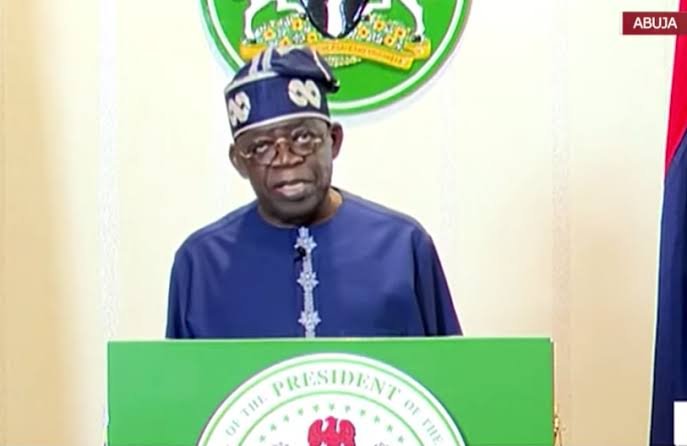
The ruling party in Abuja is the All Progressives Congress [APC]. Last year the APC regime of Nigeria’s president, Alhaji Bola Ahmed Tinubu, had approached the Supreme Court to make a pronouncement on the constitutional prescription on fiscal autonomy for the country’s 774 local government areas. And the court found in his favour.
The court, among others, ruled in July 2024 that local government funds must be paid directly into the councils’ bank accounts, and no longer through joint bank accounts maintained by the respective states and their councils; and that for this purpose only democratically elected councils would be recognised. Any councils led by unelected caretaker committees would not benefit from the federal allocation committee largesse; governors were forbidden from withholding, altering, or redirecting council funds as was the case before the judgment; and, that non-compliance would be treated as contempt of the apex court, with the attendant sanctions. In my opinion, and which I have severally weighed in on, that foray to the Supreme Court by the federal government was a wasted effort.
In spite of Nigeria’s distorted federal system, the so-called federating components are, and should remain the federal and the state governments. Enforcing the funding of councils directly from the federation account would amount to attempting to make the local government a federating component. Well, that Supreme Court judgment has been observed in the breach. Indeed, some states brazenly and in defiance of the apex court and the federal government caused their state legislatures to make laws that virtually made the Supreme Court judgment a nullity. Except in a few states, it has remained business as usual with local government funds.
Instructively, the same Tinubu regime that procured a court judgment that frowned at the withholding of council funds by other levels of government, has been caught in the same web. For much of this year, it had withheld the federal financial allocations to Osun State under the pretext that the elected councils dominated by the PDP were not legitimately returned. The regime was insistent that the APC controlled councils whose tenure had elapsed should be the beneficiaries of the funds.
The situation of starving the councils of funds degenerated to a level where the Osun State governor, and his songster billionaire nephew, Davido, had to contribute personal money to pay the salaries and wages of the staff of the local governments. In seizing the federal financial allocations of the councils, the federal government spared no thoughts for the pains and privations visited on the workers.
Its primary interest was politics and flexing of muscle. On December 5, the Supreme Court struck out a suit instituted by the attorney-general of Osun State challenging the Federal Government for withholding the councils’ allocations. The court said that the attorney-general had no standing to sue on behalf of the councils. However, the court chided the federal government, saying that withholding the allocations was illegal and egregious. In other words, it could be construed as contempt of the Supreme Court ruling. As with Nigerians, both sides are claiming victory.
The purpose of the foregoing story of Osun State was to establish the truism that partisan politicians, especially of the Nigerian hue, are often incapable of transforming a country to a nation. They are preoccupied with winning the next election, and not doing anything that will endure. So, any country that has a preponderance of partisan politicians as against statesmen at the helm of its affairs will continue to be in the lower rungs of the global development ladder. And forging a nation out of a country will remain a pipe dream. That unfortunately appears to be the lot of Nigeria since 1966 when the military sacked the first republic elected leaders and seized political power.
The sad reality of our situation is that Nigeria will not work until, and unless, we begin to be intentional in making a nation out of the country. And we will need less of partisan politicians controlling the levers of power, and more of statesmen directing our affairs to begin that journey. Building a nation is a process, not an event. It will be safe to speculate that if the military had not aborted the democratic process in 1966, the then ongoing endeavour at nation-building would have achieved significant milestones by now. As we said this remains in the realm of speculation because a totally different outcome was possible.
Building a sustainable and enduring nation would require defining a shared vision which fosters a unifying identity, common values, and goals subscribed to by citizens; establishing and nurturing a legitimate governance process that is transparent and accountable through requisite institutions and laws; ensuring security and rule of law to protect citizens and enforce laws equally; driving economic development, investing in infrastructure, diversifying the economy, and supporting entrepreneurship, promoting social cohesion which involves encouraging dialogue, inclusivity, and celebrating diversity; investing in human capital formation including prioritising education, healthcare, and innovation; and, engaging and encouraging citizens to participate in decision-making, and through that, fostering patriotism.
In the particular case of Nigeria, part of the requirements to make the country work would include strengthening institutions, enhancing transparency, and accountability in government, combating corruption, and making elections credible. There also will be the need to move beyond the mono-product [crude oil] economy, increase investment in agriculture, ICT, and manufacturing. Pay attention to the country’s roads and rails infrastructure, fix public electricity supply to curb energy deficits, and then ensure the ease of doing business nationwide. Education and skills acquisition are keys to making Nigeria work.
So, in this regard, there will be the need to upgrade schools, promote vocational training, and encourage innovation. Underpinning the foregoing is security. Without securing the Nigerian space every other endeavour will be in vain.
But there are foundational issues that will prove to be obstacles to the growth and development of Nigeria. And unless they are cured this country will continue to move round in cycles. The Good Book says in Psalm chapter 11 v 3 that “If the foundations be destroyed, what can the righteous do”. It appears that the foundation of Nigeria was fractured in 1966, and the damage deepened by the successive military dictatorships.
And the will to course-correct and to turn the ship of the Nigerian state from its perilous journey have frequently been sabotaged by the ruling elite. Voices have been raised by concerned and knowledgeable personages that doing the same thing the same way and expecting a different and beneficial result was foolhardy. Yet those who control the levers of power are usually unconcerned. The irony is that the most vocal advocates for change turncoat when they find themselves in government.
There’s no better example than Tinubu who for the better part of three decades had insisted on the political and fiscal restructuring of this country, until he became the president in 2023. For him, the advocacy for the true restructuring of the country has become an irritation and an anathema. Now he only sees elections, and how to win them by any means.
Sadly, Nigeria will not work unless we go back to the basics. And where to begin is the scrapping of the fraudulent 1999 Constitution which was foisted on the country by the Gen. Abdusalami Abubakar junta after it had secretly inserted strange clauses in the document. By the way, the Constitution was drafted to suit the planned transmutation of Abubakar’s predecessor, the late Gen. Sani Abacha, to civilian president by the ‘five leprous fingers’ called political parties [apologies to the assassinated Bola Ige]. Ige was the immediate past attorney-general of the country when he was shot and killed in his Ibadan, Oyo state home.
So, ab initio the so-called Constitution was not fit for purpose. In other words, for almost three decades this country has been struggling to erect a superstructure on a bogus foundation. As lawyers will say, it’s akin to attempting to place something on top of nothing. To make progress as a country, there’s a need to go back, and begin all over. Suggestions on what to do are not in short supply. With some amendments, the first republic governing model remains a viable template. After all, it was during that period that Nigeria made significant progress in governance and development. The four regions competed in a fairly healthy manner. And they operated with their own constitutions and they focused on the priorities of their regions. Presently there are reports from constitutional conferences gathering dust on government shelves.
But if those reports are not good enough or if our current rulers do not like the administrations that midwifed them, then they should consider looking the way of The Patriots led by the former Secretary General of the Commonwealth of Nations, Chief Emeka Anyoku. The group has been pushing for drastic reforms with emphasis on restructuring the country towards a more inclusive and truly federal system. For the avoidance of doubt, their advocacy pre-dated the Tinubu regime.
The Patriots have been at it for years, long before Anyoku became its leader. The key proposals of The Patriots are a people-driven new Constitution drafted by a non-partisan Constituent Assembly elected by Nigerians, and approved through a national referendum; true federalism with powers devolved to six or eight federating zones, fiscal federalism, and the zones or by whatever name they are called having their own Constitutions; reduction in the size of the federal cabinet, and replacing the bicameral national assembly with a unicameral structure; holding elections same day with the deployment of technology; and, judicial reforms to stop the courts determining winners in elections, creating zonal and specialised courts, but maintaining a Supreme Court which will not be saddled with all manners of litigations, including a case of ‘two fighting’.
Some Nigerians believe very strongly that the problems besetting our country are in us as citizens, and not in our stars. The persons in this school of thought are persuaded that if our people can be reorientated, the present structure will pose less of a problem. This position cannot be casually dismissed by a wave of the hand. However, an unmistakable truth which we hold to be self evident is that Nigeria is structurally defective. The present structure was the creation of the military during the many years they held political power. Majority of the states and local government areas were created by the military juntas to serve their own purposes, and its command and control system.
The anomaly explains why the original Kano state and Lagos state with about the same population now have different numbers of local governments. While Kano has been split arbitrarily into two [Kano and Jigawa states], and between them have over 70 council areas, Lagos has remained one state with just 20 local government areas. In effect, the former Kano state gets more than 70 federal financial allocations through their [Kano and Jigawa] council areas, while Lagos is limited to 20. The same for representation in the national assembly.
In all, the prevailing structure of Nigeria provides the most compelling reasons against its retention. It is not working. Enormous political power is concentrated in the centre which makes election to the presidency to be a do-or-die contest. And a money guzzler. The same for the control of financial as well as natural resources. The many natural resources buried in the belly of the country are under the control of the president and the federal government. Is it any surprise then that Abuja breathes and lives corruption. The figures now being casually dropped in financial scandals in the federal government are migrating from billions of Naira [and even dollars] to trillions of Naira.
Neither the scandals nor the figures currently shocks Nigerians. The powers of a Nigerian president and the resources at his disposal to enforce his will are so staggering that he can, as we say in local parlance, “do and undo”. And it has been happening. It’s currently happening. Unchecked power breeds inefficiency, and can easily turn a president into the Biblical Golden Calf – an object of worship. Are the signs of this visible in today’s Nigeria?
Follow us on all social media platforms @dailyquery for news and analyses around the globe.