By Kio Amachree
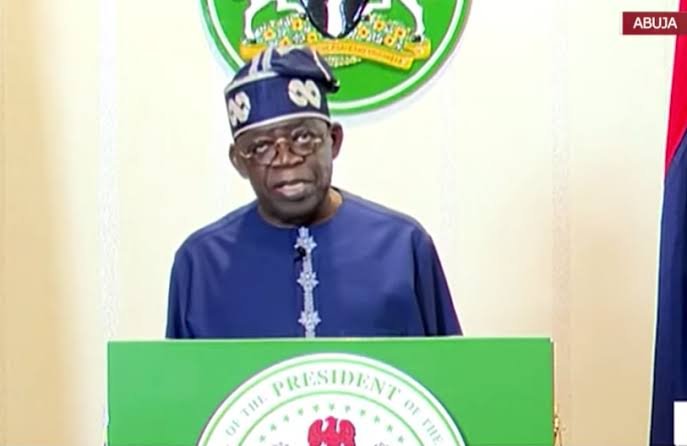
STOCKHOLM: There are budgets, and there are confessions. Nigeria’s 2026 Appropriation Act is a confession, written in the language of line items, signed into law by President Bola Ahmed Tinubu, and countersigned by a National Assembly that has abandoned oversight for the far more lucrative business of insertion.
Begin with the revelation that has set Nigerian social media ablaze this week. Public accountability organisation Tracka uncovered that N8.05 billion was earmarked in the 2026 budget for the construction, renovation and equipping of churches and mosques, with N1.91 billion set aside for seven church related projects and N6.14 billion budgeted for 52 mosque projects across the country, covering worship centres, solar installations, boreholes, musical equipment for churches, carpets, Islamiyya schools and imam houses. In a secular republic, in the middle of a debt emergency, the federal government is buying carpets for mosques and musical instruments for churches with borrowed money.
But the true scandal is not the piety. It is the plumbing. Follow the agencies assigned to execute these projects and the fraud reveals its architecture. Code ERGP1246583 hands N280 million for mosque renovation and mini grids in Zamfara Central Senatorial District to the Federal Co-operative College, Kaduna. Code ERGP30244079 routes N280 million through the Ministry of Housing and Urban Development for the renovation of the Central Mosque Minna, Paiko Central Mosque and the provision of carpets. Code ERGP30241711 allocates N210 million to the Institute of Agricultural Research in Zaria to build a mosque complex. An agricultural research institute. Building mosques. A cooperative college running power grids for places of worship. This is not development. This is money finding the darkest available exit.
When Arise Television’s Rufai Oseni tore through these documents on air, he asked the only question that matters. Who is from Zaria? Why is it that the mosque budget went to Zaria? Rubber stamp lawmakers, he said. The answer is the oldest one in Nigerian public finance. Somebody powerful is from there, and the agency was chosen precisely because nobody audits an agricultural institute for mosque construction.
Now widen the lens, because the religious allocations are merely the gargoyles on a cathedral of theft. BudgIT found N2.24 trillion in insertions in the 2024 budget. In 2025, that figure rose to N6.9 trillion, constituency projects, zonal intervention projects and empowerment schemes with no feasibility studies, no locations and no plans to complete them. Even with a dedicated N100 billion vote for zonal intervention, lawmakers still pad the budget further, and for 2026 alone N344.8 billion has been set aside for their salaries and perks.
The 2025 numbers deserve to be read slowly. BudgIT’s analysis of the 2025 Appropriation Act revealed that the National Assembly inserted 11,122 projects worth N6.93 trillion, including 238 projects valued above N5 billion each, 1,477 streetlight projects costing N393.29 billion, 538 boreholes worth N114.53 billion, over 2,100 ICT projects valued at N505.79 billion, and N6.7 billion for the empowerment of traditional rulers. Eleven thousand insertions. This is not a legislature amending a budget. This is a marketplace where each seat comes with a stall.
And 2026 continues the tradition with new refinements. The 2026 budget features a so called ghost agency allocated over N1.3 billion and an education commission transformed into a construction company. No fewer than 16 federal ministries, departments and agencies received more than N205.96 billion for projects outside their statutory mandates, with some dedicating more than 70 percent of their total appropriations to projects unrelated to their core responsibilities. The Ministry of Defence, while insecurity ravages the country, budgeted N1.9 billion for solar projects, roads, culverts and pumping machines for farmers. The ministry charged with fighting Boko Haram is buying water pumps. Bandits burn villages while Defence money installs streetlights.
Then there is the matter of how the budget grew in the dark. Tinubu submitted a proposal of N58.47 trillion. The National Assembly passed N68.32 trillion, an upward revision of over N9.09 trillion. And here is the detail that should end careers. President Tinubu eventually signed a budget about N9 trillion higher than the amount submitted to the National Assembly, and Weekend Trust cannot independently verify how the additional N9 trillion came about. Nine trillion Naira materialised between the parliamentary vote and the presidential pen, and no institution in Nigeria can explain where it came from. In any functioning democracy this alone would trigger a forensic audit and resignations. In Abuja it triggered a signing ceremony.
All of this is financed by a nation drowning. The government projects total revenue of N34.33 trillion against the spending plan, leaving a deficit of N23.85 trillion on the original proposal alone, before the trillions in insertions. The national debt has surged to N152 trillion from N97 trillion in late 2023, with debt service consuming 45 percent of revenues. Despite N107.2 trillion appropriated since 2023, only 20 percent of 2025’s capital budget was spent by mid year, and unexecuted projects now exceed N17 trillion. Understand what that means. The projects are budgeted, the money is borrowed, the debt is real, and the roads, hospitals and schools never appear. The budget is not a plan. It is an extraction device.
Even the leadership of the House is implicated by its own defence. Deputy Speaker Benjamin Kalu, confronted over a N1 billion allocation for churches in his constituency, clarified that the fund is meant for 130 churches at N6 million each for youth reorientation and social support programmes. The second most senior legislator in Nigeria, whose constitutional job is to check exactly this kind of spending, is personally distributing public money to 130 churches in his own constituency and calling it clarification.
Atiku Abubakar, no stranger to the system himself, put the moral core of it in nine words. God is not a laundering machine for public funds. He has demanded that the government publicly name every church and mosque beneficiary, noting that many budget line items fail to identify the specific worship centres receiving funds, making independent verification nearly impossible. That vagueness is not sloppiness. It is design. A mosque with no name and no address cannot be inspected, and money sent to a building that cannot be found is money that was never meant to arrive.
Meanwhile the same government pleads poverty to teachers, doctors, pensioners and the parents of the largest population of out of school children on earth. Even the Northern Christian Elders Forum has rejected the allocation, urging Tinubu to redirect the funds to security and economic recovery at a time when millions of Nigerians are grappling with insecurity, hunger, poverty and unemployment. When the clergy themselves refuse the offering, you know the collection plate has become a getaway car.
This is the Tinubu system in miniature. The executive tolerates legislative insertions to buy a compliant Assembly. The Assembly rubber stamps the executive’s numbers to protect its own padding. Agencies with no mandate become laundries because their books are never opened. Religion provides the sanctity, vagueness provides the cover, and borrowing provides the cash. Every Naira of it will be serviced for decades by children not yet born, in villages that will never see the borehole, the streetlight or the carpet.
The National Assembly of Nigeria has ceased to be a parliament. It is a clearing house. And a budget passed by a clearing house is not an appropriation act. It is an invoice presented to the Nigerian people for their own robbery.