The foreign ministers of the Group of Four (G4) nations, Brazil, Germany, India, and Japan, have formally thrown their weight behind Africa’s decades-long push for permanent membership on the United Nations Security Council, framing the continent’s continued exclusion as a historical injustice that undermines global stability.
The endorsement came during a high-level ministerial summit on Tuesday at the UN Headquarters in New York, held on the sidelines of the 81st Session of the General Assembly.
In a joint statement released Wednesday morning on September 23, 2026, the four nations pledged to push for structural reform of the 15-member body, pointing out that its current composition reflects a mid-20th-century political order rather than modern global realities.
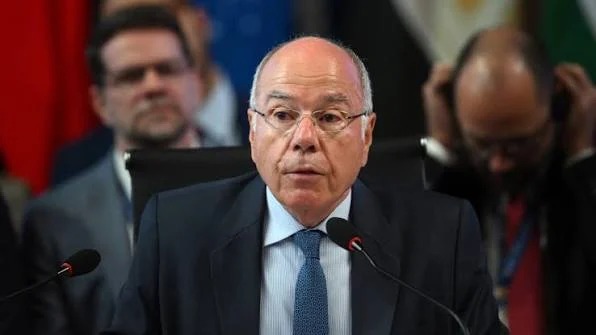
Representing the bloc were Brazilian Foreign Minister Mauro Vieira, German Federal Minister for Foreign Affairs Dr. Johann Wadephul, Indian Minister of External Affairs Dr. Subrahmanyam Jaishankar, and Japanese Foreign Minister Motegi Toshimitsu.
Addressing diplomatic correspondents following the closed-door session, Indian Minister of External Affairs Dr. Subrahmanyam Jaishankar emphasised that the Council’s inability to resolve ongoing global conflicts stems directly from its outdated structure.
He noted that a Security Council that ignores Africa’s voice lacks both the moral authority and practical capacity to enforce international peace.
The G4 statement explicitly backed the Common African Position, which is anchored in the Ezulwini Consensus and the Sirte Declaration. That framework calls for Africa to receive no fewer than two permanent seats, complete with veto rights and five non-permanent seats on an expanded Security Council.
The ministers criticized the 18-year deadlock within the Intergovernmental Negotiations framework, warning that procedural delays have effectively stalled real progress.
To break the stalemate, the G4 announced plans to initiate text-based negotiations during the current General Assembly session, aiming to rally broader support across member states and force a long-overdue vote on global governance reform.