By Okoh Aihe
The past two weeks have been hectic. Some issues of life related to growing up and paying of deserved final greetings to those who have done well and have undertaken that ultimate journey for the well-deserving. And for the young ones starting the journey of life, to begin to look at a future full of promises unperturbed by immediate challenges confronting the country. Each generation must have a swing in order to build their own story into the future.
The activities include lots of movements and communications to coordinate schedules and ensure every piece falls in place. There were developments that reverberated across the country. In Kwale where I had gone for one of the programmes, there was hardly any public power supply. So, when the scorching sun drilled some pains into our bodies, the only place to find some cold water was from a small shop relying on solar power.
Without power supply the telecommunications network was not only fickle but really just comatose. It was worse inside the hotel except you come out to pick some errant signals. It was a matter of luck to get connected and scramble some calls.
Also at the time, the airlines were threatening to pull their big birds from the air because of the cost of operations and force everybody, including the politicians, to go on the road. You may want to say the road network around the country is not the best but insecurity makes it worse. I am sure the operators swore silently to make the politicians taste a little bit of the pain which the ordinary folks endure on the road everyday. Not a bad idea, you will agree.
Unfortunately, I tasted a dose of it, and I am not a politician. That fateful Saturday morning, I got into the airport at Asaba by 11am and would not leave the place until 6pm. Someone said I was lucky. He got into the airport in Benin by 9am and wouldn’t fly until 7pm in the evening!
An airline official had whispered to me that aviation fuel is the new demon causing serious disruptions in the aviation industry and putting their schedule to the sword. This was long before Lufthansa, the German airline, announced it would remove 20,000 short-haul flights from its schedule this summer by way of reducing fuel consumption by 40,000 tonnes.
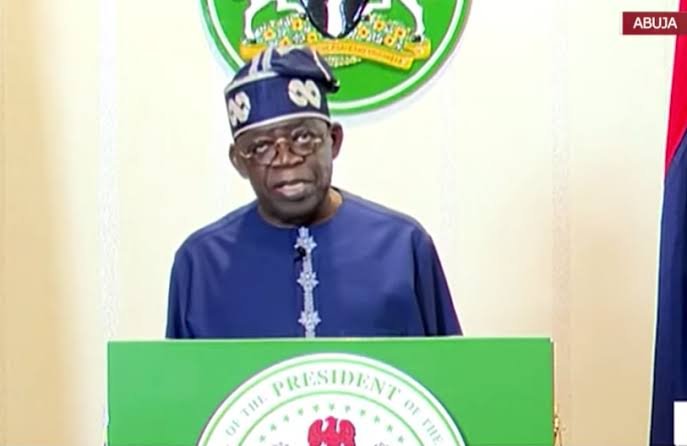
Thankfully, President Bola Tinubu has offered the airlines a 30 percent debt relief on monies owed various agencies of government by the operators, with a further commitment to review the various taxes, levies and charges on tickets. They were really cut-throat and it’s only humane and welcoming to business for the President to offer such measures. It makes sense for the airlines to grab the offer and ask for more. It will not be the first time. Afterall, there is a certain character called Oliver Twist who would always ask for more in Charles Dickens’ book of eponymous title.
So where is the relationship between Airlines and telecommunications? Just give me a little time. Except that I will also appeal that you permit me the little opportunity to remark that Festus Keyamo is doing well at the Aviation Ministry. What is happening now goes far beyond the minister to illustrate the unintended consequences of war, no matter how far away, like the one in the Middle East, which affects the high and the mighty and the very low across the world, all equalised by the tyranny of misfortune.
Back in my little corner of town at the Federal Capital Territory (FCT), there was no public power supply for the next four days and there was no explanation from any service provider. No communications whatsoever. Afterall, there is a close relationship between monopoly and arrogance. No comeuppance for service disruption or blatant dereliction of responsibilities.
Another major development last week was the commencement of subscribers’ compensation for poor service quality by telecom service providers. Although the idea has been on the plate for some time, the regulator said the process must start immediately.
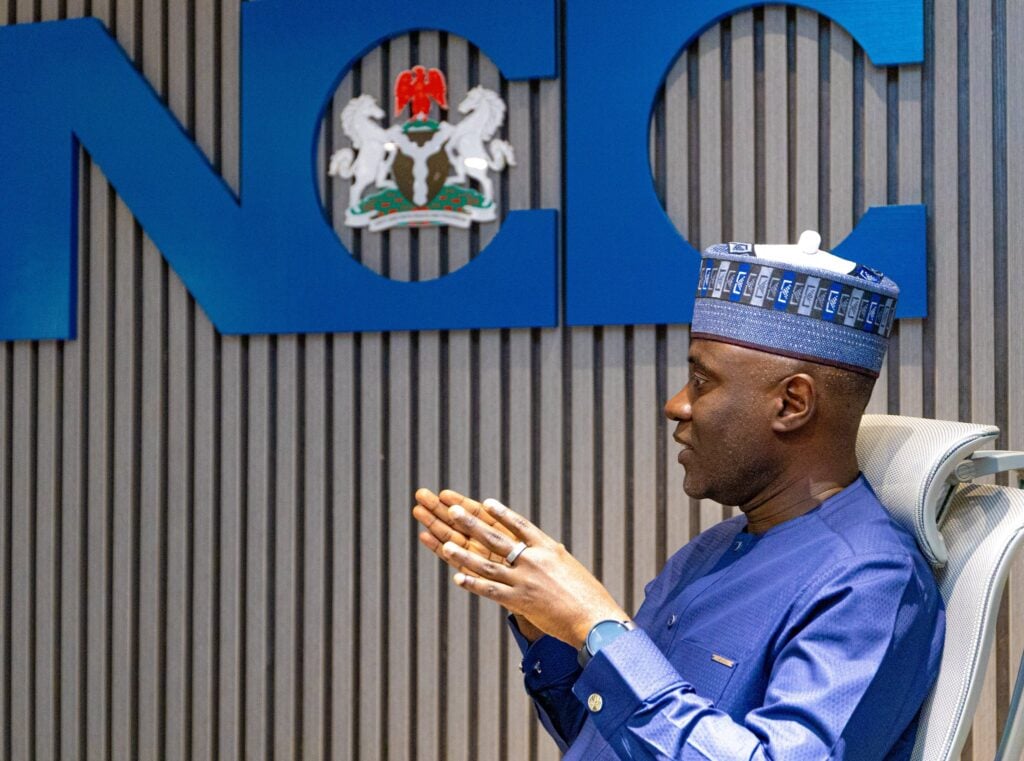
Speaking to the media in Lagos last week, Executive Vice Chairman of the Nigerian Communications Commission (NCC), Dr Aminu Maida, said: “The NCC has put mechanisms in place to make sure that all subscribers that qualify for compensation get compensation. For any subscriber to qualify, such subscriber must have obviously suffered adversely from poor service quality offered by telecoms operators. NCC carried out network assessment in each local government area of the country, and we have seen that some subscribers were disenfranchised from making calls or sending text messages. Only those that attempted to make calls and could not make successful calls will be compensated.”
As the elders would say in my part of the country, when you suddenly smack a child on the back in order to kill a stubborn tsetse fly, you must show that child the dead fly as evidence. Otherwise, the child would have a reason to yell for attention and help.
Maida had to laboriously explain the process that informed the decision; the role of the operators and which subscribers would qualify for compensation. If a subscriber has not engaged in any activity on the network, by making a call or using data within the period, such a subscriber would not qualify for any compensation.
From the industry, the writer can report that the Mobile Network Operators (MNOs) are comfortable with the new regulatory decision of the NCC and are ready to work with the regulator in order to achieve desired results, even if it is from a selfish point of view or what you may call self preservation.
An industry source informed that the operators, especially the publicly quoted companies, feel more comfortable paying airtime compensation instead of fines to the government, adding that investors frown at fines very seriously. Except for some few details laced in the compensation process, the operators are embracing compensation because it benefits the subscribers themselves instead of fines to the government which use would always be indeterminate.
However, Maida assured that the NCC was more interested in superintending an industry that can offer the best services going forward instead of stop-gap measures of airtime compensation and fines, adding that he has the commitment of the operators to invest more in industry network buildout to increase capacity and quality of service.
But here is my confluence of thoughts. In all the three areas I have mentioned in this writeup, namely: aviation, power and telecommunications, telecommunications remain about the only sector where operations and services are regularly measured and failure punished as we have seen severally in the industry. The other observation is that industry subscribers still don’t feel that the regulator is doing enough, prompting them to always call for stiffer action. They are right in their demands.
Here is the little irony of life. The industry that has all the statistics for accountability, the industry permanently ahead of others even in performance and contribution to the overall economy, with all its weaknesses, and bearing the extreme burden of a challenging operating environment, is the one constantly under pressure and surveillance by the regulator. This is also important because the NCC must continuously subject the operators to agile regulatory measures to ensure they provide good services now and in the future. It is the work of the regulator to hold the operators to good service provisioning and responsible corporate behaviour at all times.
This is my final take. What the NCC is doing shouldn’t be an isolated regulatory practice. No matter how challenging the operating environment may be, other sectors should be held up to similar regulatory fire to test their capacity and readiness for performance in a global market square that will always be challenged. We just must know as a country that all sectors – finance, telecoms, power, oil, aviation, roads, waterways, railway, and many more – are all interconnected and need to be managed with equal measure in order to create the kind of economy that can deliver the nation from this nightmare and exaggerated success.