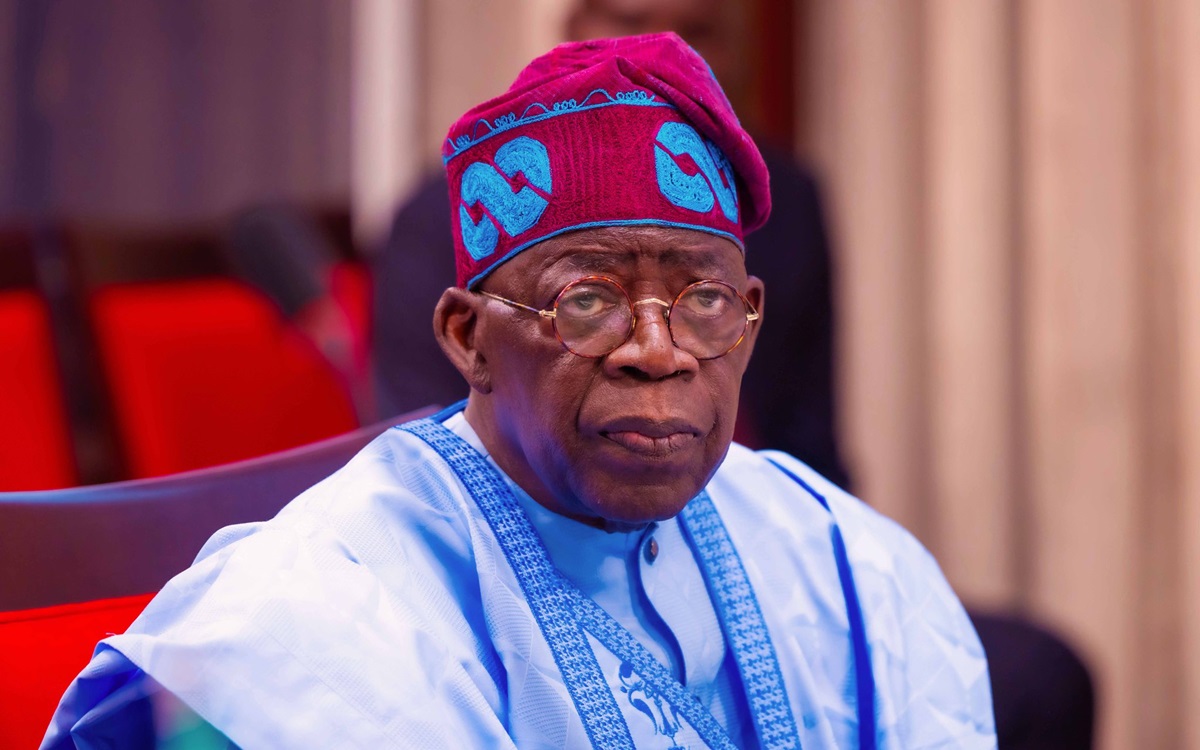
The political landscape in Ondo State is beginning to take on an early election-season intensity as mobilization efforts quietly gather momentum ahead of the 2027 presidential poll. At the center of this unfolding strategy is a directive attributed to Bola Ahmed Tinubu, aimed at building a formidable grassroots network capable of influencing voter behavior across every corner of the state.
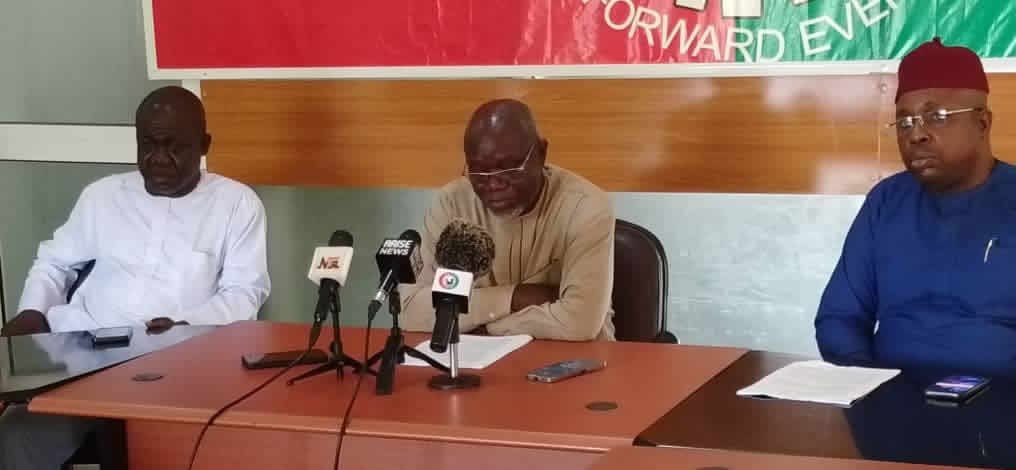
Speaking during the inauguration of the Ondo State chapter of the Renewed Hope Ambassadors in Akure, the state coordinator, Victor Olabimtan, unveiled an ambitious recruitment plan that could reshape political engagement at the local level.
According to Olabimtan, the President has directed the group to enlist 25 individuals from each of the state’s 3,933 polling units. The result is a projected army of 98,325 foot soldiers, each tasked with a clear and measurable objective: to persuade at least five voters to support Tinubu’s re-election bid.
This approach, if effectively implemented, could potentially translate into hundreds of thousands of committed votes, built not through mass rallies or high-profile endorsements, but through one-on-one engagement in homes, markets, and community gatherings.
Olabimtan described the initiative as more than just a political exercise. Rather, he framed it as a strategic bridge between government policy and public understanding. He noted that the Renewed Hope Ambassadors were established nationwide to ensure that the policies and programmes under the administration’s “Renewed Hope Agenda” are not only heard but also understood at the grassroots.
“The gap between governance and the people has often been one of communication,” he explained. “What we are doing is creating a human network that translates policies into real-life impact stories that people can relate to.”
Observers say the model reflects a shift from traditional top-down campaigning to a more decentralized and personalized form of political outreach. By embedding campaign agents within communities, the strategy leverages trust and familiarity—factors often more persuasive than large-scale political messaging.
In many rural and semi-urban parts of Ondo State, where access to digital information remains uneven, such face-to-face interaction could prove decisive. Political analysts argue that this kind of structure mirrors successful grassroots campaigns seen in other democracies, where localized engagement has tipped electoral outcomes.
However, the scale of the plan also raises questions about coordination, funding, and message consistency.
Managing nearly 100,000 recruits across diverse communities will require a robust organizational framework and sustained motivation among participants.
Despite these concerns, the mood at the inauguration in Akure was one of optimism and resolve. Attendees, many of whom are expected to take on leadership roles within the polling unit structure, expressed confidence in the strategy’s potential to deliver results.
For them, the mission goes beyond politics—it is about participation, visibility, and influence in shaping the future direction of the country.
As Nigeria inches closer to another electoral cycle, initiatives like this suggest that the battle for 2027 may not be won solely on national debates or media campaigns, but in the quiet, persistent conversations happening at the grassroots.
And in Ondo State, that conversation has already begun.