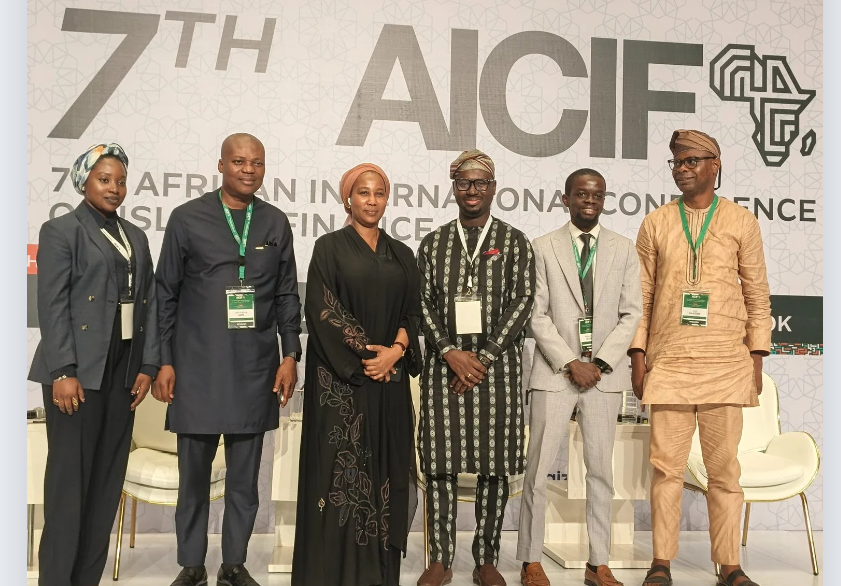
The Chairperson of the African International Conference on Islamic Finance (AICIF), Ms. Ummahani Amin, has called for greater adoption of Islamic finance as a sustainable means of bridging Africa’s vast infrastructure financing gap, currently estimated between $130 billion and $170 billion annually.
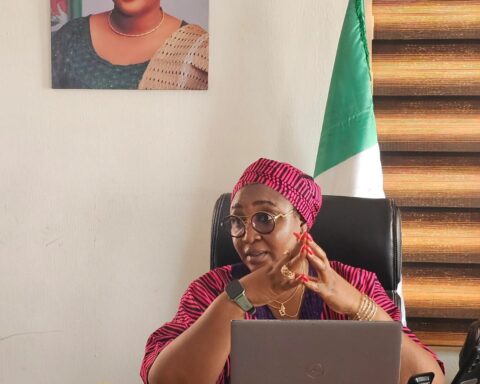
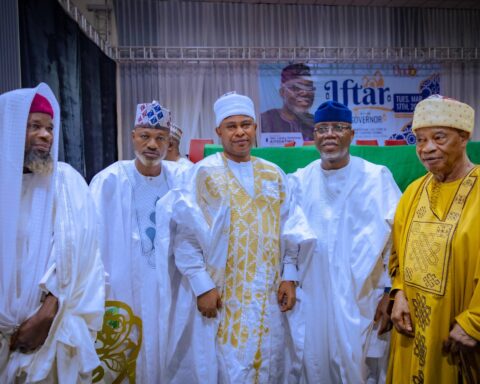
Speaking at the 7th edition of the African International Conference on Islamic Finance (AICIF) 2025 in Lagos, organised by Metropolitan Law Firm and Metropolitan Skills Ltd in collaboration with the Securities and Exchange Commission (SEC), Amin said that despite its progress, Africa is yet to fully tap into the catalytic potential of Islamic finance for inclusive growth and development.
She noted that while global Islamic financial assets grew by 14.9% year-on-year to reach $3.88 trillion in 2024, Africa’s share remains marginal due to persistent challenges such as underdeveloped market infrastructure, low liquidity, and limited investor education.
To enable Sukuk and other Islamic financial instruments to serve as true enablers of financial intermediation and macroeconomic stability, we must first dismantle the barriers that continue to stifle their growth,” Amin said.
Amin, who also serves as Managing Partner of Metropolitan Law Firm, emphasised the transformative role of Artificial Intelligence (AI) in reshaping ethical finance through improved compliance automation and broader financial access. However, she cautioned that technological advancement must be guided by strong ethical principles to preserve public trust.
Highlighting the theme of this year’s conference, “Africa Emerging: A Prosperous and Inclusive Outlook,” she underscored the importance of collaboration, innovation, and knowledge-sharing as essential pathways to unlocking the continent’s inclusive prosperity.
As part of the conference’s youth empowerment initiative, AICIF partnered with the SEC to host a startup pitch competition aimed at supporting young entrepreneurs.
ZannyTecture Recycling Company Limited won in the Social Impact category for transforming discarded tyres and PET bottles into eco-friendly materials.
BetaLife Health emerged winner in the Technology category for developing an Al-powered blood supply optimisation platform.
Amin also unveiled The Metropolitan Waqf, a new initiative designed to expand educational opportunities for marginalised communities, particularly in conflict-affected regions of Nigeria.
Meanwhile, the Director-General of the Securities and Exchange Commission (SEC), Dr. Emomotimi Agama, disclosed that Nigeria’s non-interest capital market has grown to over #1.6 trillion, reflecting expanding investor confidence and the success of recent regulatory reforms under the Investments and Securities Act (ISA) 2025.
“The remarkable growth of the non-interest segment in Nigeria now valued at over #1.6 trillion demonstrates that when there is an enabling regulatory environment, the market responds with vigour,” Agama said.
He revealed that Nigeria’s sovereign Sukuk programme has raised more than #1.4 trillion through seven issuances since 2017, funding the construction and rehabilitation of 124 key roads spanning over 5,820 kilometres nationwide.
Agama also announced the planned issuance of a $500 million international Sukuk, describing it as the next major step in attracting ethical capital for infrastructure and economic development.
He noted that the growing acceptance of Islamic finance across Africa particularly in countries such as Egypt, Kenya, Tanzania, Senegal, and Ghana reflects the continent’s readiness to mainstream non-interest financial instruments.
The SEC DG commended Metropolitan Skills for its consistent role in promoting Islamic finance and revealed that key resolutions from the 2025 AICIF would contribute to shaping the Second Nigerian Capital Market Masterplan (2026-2035), as the first plan draws to a close this year. Agama urged stakeholders to leverage Islamic finance as a tool for ethical investment, financial inclusion, and infrastructure renewal, stressing that:
“Prosperity without inclusion is not sustainable. Islamic finance offers us a pathway to both.” The Managing Director of MetropolitanSkills Limited and Coordinator of the 7th African International Conference on Islamic Finance (AICIF), Ms. Yinlaifa Edolo, has underscored the importance of inclusivity, indigenous solutions, and regulatory collaboration in advancing Islamic finance across Africa.
Speaking at the conference, Ms. Edolo explained that MetropolitanSkills Limited, a multidisciplinary service firm specializing in capacity building, human development, event management, procurement, and general contracting is the primary convener of the annual AICIF. The firm organizes the event in partnership with Metropolitan Law Firm, its sister organization.
According to her, this year’s edition marks a major milestone as it features, for the first time, a strategic collaboration with Nigeria’s apex capital market regulator, the Securities and Exchange Commiss (SEC). She described the partnership as a significant leap that brings a new level of credibility and depth to the conference.
“This year is a hallmark for us. For the first time in the history of AICIF, we’ve collaborated with a major institutional partner, the Securities and Exchange Commission (SEC), Nigeria. The SEC’s participation has been phenomenal, bringing the regulator’s perspective to what has always been a conversation about growth, equity, social impact and inclusivity,” Edolo said.
She added that the SEC’s involvement aligns with its capital market master plan and demonstrates how Islamic finance principles can be integrated into broader financial sector reforms.
“The SEC has transformed what might have remained abstract policies into tangible actions you can see and almost feel. That’s why this collaboration means so much this year,” she stated.
Edolo also emphasized that inclusivity lies at the heart of Islamic finance, distinguishing it from conventional systems.
By its very nature, Islamic finance is inclusive. It’s not discriminatory, it reaches everyone. Through instruments such as Zakat and Waqf, Islamic finance delivers social impact where conventional finance often falls short,” she explained.
However, she cautioned against framing Islamic and conventional finance as competitors, insisting that both can coexist harmoniously within the same financial ecosystem.
“It’s not about which one overtakes the other. The essence of inclusion is that everyone has a seat at the table. As long as there is space for both Islamic and conventional finance, people can freely choose what aligns with their conscience and beliefs,” she said.
Offering broader advice to financial and non-financial institutions alike, Ms. Edolo urged organizations to prioritize indigenous problem-solving over imported or generic models.
“Inclusivity is not just a slogan. When creating solutions whether products or services they must go beyond copy-and-paste approaches. Our challenges are unique, and only indigenous solutions can effectively address them,” she advised.
She concluded by encouraging financial institutions, particularly non-interest ones, to adapt Islamic financial tools in ways that directly respond to local realities and development needs.