By Charles Obiajulu Ugwu – PhD
There are beliefs we inherit the way we inherit family land; already fenced, already named, already declared sacred. We walk the perimeter without asking who drew the boundaries or why the markers stand where they do. Over time, repetition turns into reverence, and reverence hardens into immunity from scrutiny. What was once fiercely debated becomes untouchable. What was once a contested judgment becoming a timeless decree.
The risk is not faith itself. The risk is forgetting that what appears immovable was, at some point, argued into place.
In 325 CE, bishops from across the Roman world gathered at the First Council of Nicaea, convened by the emperor Constantine the Great. The dispute that summoned them was theological: the teachings of Arius, who argued that the Son was not co-eternal with the Father but a created being. The question was not abstract. It cut to the heart of Christian worship. If Christ were not fully divine, what did that mean for salvation? For prayer? For identity?
Yet the setting matters. Constantine had recently consolidated power in a fractured empire. Christianity, newly favored, was itself divided. A divided church threatened civic stability. Unity of doctrine promised unity of governance.
The bishops debated intensely. The outcome was the Nicene Creed and the affirmation that the Son is homoousios “of one substance” with the Father. That single Greek term would shape Christian orthodoxy for centuries. But the creed did not descend complete from heaven. It emerged from argument, negotiation, and imperial oversight. Some who disagreed were exiled. Orthodoxy was not only confessed; it was enforced.
The pattern established at Nicaea would repeat. The First Council of Constantinople expanded the creed and clarified the divinity of the Holy Spirit. The Council of Ephesus affirmed Mary as Theotokos “God-bearer” a Christological safeguard that also reshaped devotional life. The Council of Chalcedon defined Christ as one person in two natures, fully divine and fully human, “without confusion, change, division, or separation.”
These formulations were not linguistic ornaments. They structured liturgy, defined what could be preached and established boundaries of belonging. They also generated schisms that endure, such as the separation between Chalcedonian churches and what are now known as Oriental Orthodox communities.
The councils presented themselves as guardians of apostolic truth. Historically, they were also arenas of rivalry. Alexandria and Antioch brought different theological instincts. Rome and Constantinople contested precedence. Imperial favor could tilt outcomes. The divine was invoked as authority; the procedures were unmistakably human in the forms of; speeches, drafts, votes, anathemas.
By the medieval period, conciliar deliberation had matured into a sophisticated institutional instrument. The Fourth Lateran Council, convened under Pope Innocent III, defined the doctrine of transubstantiation using Aristotelian categories of substance and accidents. It mandated annual confession for the faithful. These were decisive interventions. They reshaped sacramental practice and formalized clerical authority in the moral life of believers.
The language of the Eucharist had moved from biblical imagery to philosophical precision. The shift did not negate faith; it translated it into the intellectual vocabulary of the age. The recovery of Aristotle through Islamic and Jewish scholarship had transformed European thought. Theology absorbed and adapted those tools. This pattern of translation, consolidation, response recurs across centuries.
The 16th century fractured Western Christendom. Reformers challenged papal authority, sacramental theology, and clerical corruption. In response, the Council of Trent codified Catholic doctrine with clarity and rigor. It affirmed both scripture and tradition as authoritative, definitively listed the biblical canon for the Roman Church, clarified teaching on justification, and standardized the Roman Missal.
Trent did not occur in a vacuum. The printing press had accelerated the spread of dissenting ideas. Emerging nation-states sought independence from ecclesiastical control. Economic grievances and moral scandals weakened institutional credibility. The council’s decrees were theological, but they were also strategic responses to upheaval.
Centuries later, amid modern revolutions and scientific advance, the First Vatican Council defined papal infallibility under specific conditions. The Papal States were collapsing; political sovereignty was diminishing. The council reinforced spiritual authority even as temporal power waned.
In the mid-20th century, the Second Vatican Council marked a significant reorientation. The liturgy was revised; vernacular languages replaced Latin in many contexts. The church articulated renewed commitments to ecumenism and religious freedom. The tone shifted from defensive posture to dialogical engagement.
Vatican II unfolded in a world shaped by two world wars, decolonization, and unprecedented technological change.
Bishops from Africa, Asia, and Latin America contributed voices that earlier councils had scarcely heard. The council’s documents reflect the anxieties and hopes of the 1960s as clearly as Trent reflects the turbulence of the 1500s.
Across these epochs, one reality is constant: Christian doctrine has been shaped through assemblies responding to historical pressures.
Even the canon of scripture, often assumed to be self-evident, was recognized over time through regional synods such as the Council of Carthage and later reaffirmed at Trent. The books did not arrive bound and labeled. Communities discerned, debated, and decided.
To say this is not to diminish the spiritual significance believers attribute to these processes. It is to acknowledge their historical character.
The central question, then, is not whether councils occurred. It is how to interpret their authority. Are these formulations timeless expressions of divine will? Are they historically conditioned attempts to preserve coherence? Can both claims coexist?
From a historical standpoint, councils were composed of men shaped by their cultures, philosophical frameworks, and political realities. They faced pressures of unity and fragmentation, of external threat and internal dissent. They sought clarity and stability. In doing so, they codified doctrine, delineated orthodoxy, and sometimes marginalized alternative voices. The language of eternity passed through human deliberation.
This does not settle the theological question of divine guidance. That claim belongs to faith. What history can establish is that Christian orthodoxy did not crystallize spontaneously. It was articulated, defended, and sometimes revised in response to concrete circumstances.
The creeds recited in churches today bear the marks of ancient controversies. The Eucharistic prayers echo medieval scholasticism. Papal definitions reflect modern anxieties about authority. Liturgical reforms mirror contemporary sensibilities about participation and language.
The sacred and the strategic have never been cleanly separable.
To confront this history is not an act of cynicism. It is an act of intellectual maturity. Institutions endure not because they are static, but because they adapt sometimes consciously, sometimes under pressure. Christianity’s survival across two millennia owes as much to structured reinterpretation as to steadfast conviction.
The history of Christian councils reveals a faith that has navigated empire, schism, reform, and modernity through deliberative judgment. Whether one interprets that judgment as guided by the divine or as an evolving human endeavor remains open to conviction and debate.
What should not remain closed is the space for that debate.
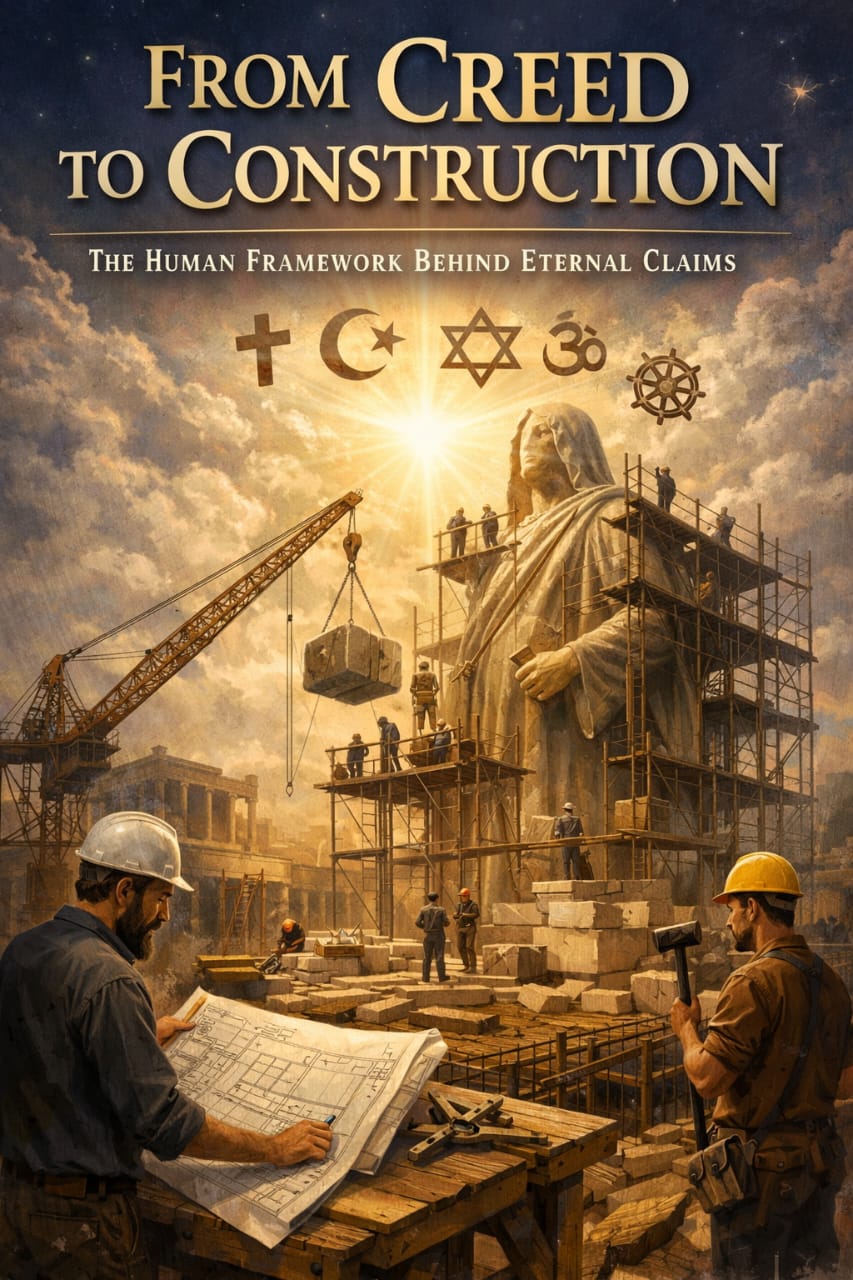
If beliefs are strong, they will withstand examination. If institutions are confident in their foundations, they will not fear historical clarity. The movement from creed to construction does not negate the sacred. It reminds us that even the most enduring claims have passed through human hands and it is in that recognition that honest, unsentimental, rigorously attentive to evidence that global engagement becomes possible.
Yet a caution is in order.
My contrarian lens, especially one trained to detect fragility in systems, stand the risk of being perceived as an overreach in my submissions here. However to emphasize construction is not to deny devotion and to expose human agency is not to erase transcendence. Faith traditions are not mere policy documents rather they should be seen as lived experiences, sources of meaning, and moral frameworks that have shaped civilizations.
Scrutiny should therefore clarify, not caricature
About the Author
Dr Charles Obiajulu Ugwu is a contrarian thinker writing from Lagos