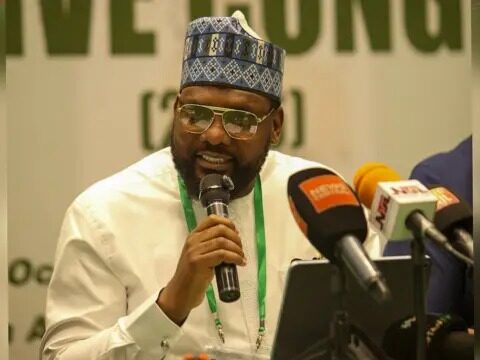
A former National President of the Sports Writers Association of Nigeria, Fan Ndubuoke, has raised concerns over declining ethical standards in Nigerian sports journalism, warning that the profession risks losing its credibility if urgent reforms are not undertaken.
Ndubuoke, who spoke at a workshop organised by Imo SWAN, delivered a thought-provoking paper titled “The Burden of Finding a Balance Between Patriotism and Professionalism: The Ethical Questions.” In it, he highlighted the growing tension sports journalists face between national loyalty and professional integrity.
He noted that while patriotism, professionalism, and ethics are fundamental pillars of journalism, their application in Nigeria’s media environment has become increasingly complex due to political pressures, economic hardship, and institutional decay.
“The sportswriter is expected to state facts without fear or favour, yet in doing so, he may be labelled unpatriotic or even face intimidation,” Ndubuoke said, describing the profession as one fraught with difficult choices about loyalty—to the truth, the state, or media proprietors.
The former board member of the Nigeria Football Association lamented what he described as the “erosion of values” within the sporting press, attributing it largely to corruption and the growing influence of political patronage. According to him, many practitioners have abandoned professional excellence in pursuit of financial benefits and political connections.
This shift, he warned, has led to a loss of investigative journalism, weakened critical analysis, and a decline in creativity and independence within the profession.
Ndubuoke also took a swipe at the broader sports administration system in Nigeria, describing it as lacking legal structure and accountability. He likened the system to a “Ponzi scheme,” where resources are concentrated in the hands of a few administrators while athletes and grassroots development suffer neglect.
He further accused sections of the sporting press of enabling this dysfunction by celebrating administrators, ignoring institutional irregularities, and, in some cases, benefiting from unethical practices such as inducements and unofficial allowances.
“The question we must ask is: who is holding these institutions accountable?” he queried, calling for greater scrutiny of sports governance and financial transparency.
On the ethical responsibilities of journalists, Ndubuoke emphasised the need for truth, accuracy, fairness, objectivity, and accountability. He decried a culture where “imaginary superstars” are created, unmerited praise is given, and reportage is compromised by financial interests tied to administrators, agents, and coaches.
He linked these ethical lapses to wider challenges in Nigerian sports, including questionable player selections, neglect of home-based talents, and persistent crises within sports federations.
Addressing the delicate balance between patriotism and professionalism, Ndubuoke cautioned against blind loyalty, stressing that true patriotism lies in speaking the truth for national development.
“A journalist who suppresses the truth in the name of patriotism is neither patriotic nor professional,” he stated.
He urged SWAN to return to its founding principles, including promoting professionalism, defending members’ welfare, and contributing meaningfully to sports development, rather than serving as an extension of government or administrative interests.
Ndubuoke concluded by calling on sports journalists to remain steadfast in their commitment to ethical standards, insisting that only through integrity and professionalism can the association reclaim its role as a credible voice in Nigerian sports.
The workshop served as a platform for reflection on the future of sports journalism in Nigeria, with participants challenged to restore public trust and reposition the profession as a driver of accountability and development.