We still remember what it was like when the African Democratic Congress (ADC), newly acquired and rebranded, roared into the political space this July. It was like a bright new day. Full of promise. There was fanfare. There was camaraderie. The party appeared every inch like a new bride; like the bride party that could seduce the electorate into voting for a new order; a new arrangement that could change Nigeria for good.
Before this advent, the ruling All Progressives Congress (APC) was all over the place, showing off like the peacock. It strutted across the country, celebrating the death of the opposition. But the entry of ADC into the scene jolted it considerably. It came to realize for the first time after the death of PDP that the bones of the opposition were yet to be interred. The realization mattered. It aroused the APC to a looming reality, to wit, that a political party that could clip its flapping wings was around the corner. That was the mood of the polity at that time. That was APC’s most troubling discomfort then.
However, no sooner had the ADC entered the scene than the ovation that ushered it in peter out. A reversal set in even before the party rolled out any form of agenda. What was responsible for the twist in the plot? As a coalition arrangement, the ADC was programmed to incorporate disparate political parties, notably the PDP, Labour Party, and elements from the defunct Congress for Progressive Change, among others. The agglomeration of these parties was promising. It was projected that it would make the ADC a fighting force; a formidable political platform that could give the APC a bloody nose. This macho image of the ADC fitted into people’s perception of the party. The perception offered hope. It offered prospects of a radical displacement.
However, some six months after ADC bulldozed its way into the political arena, it has not been able to make any impact. If anything, the initial goodwill that greeted its entry is fading away. The party is looking as morose as the rest of the confused lot that strut about as political parties.
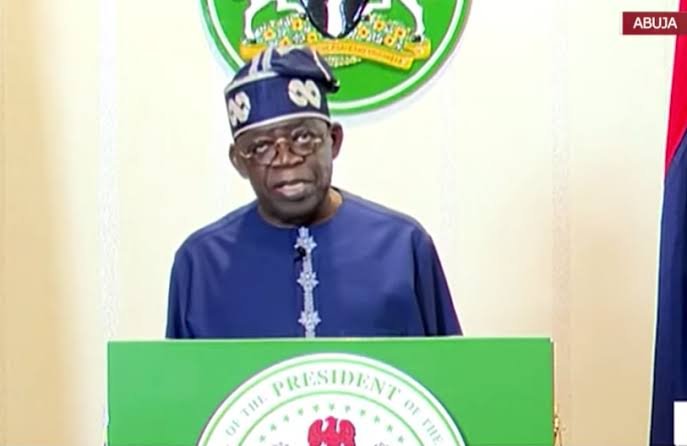
This pitiable state of affairs is borne out of a certain snag. The top echelon of the party is peopled by high profile political actors whose exploits can only be likened to that of institutions. Notable among them are Alhaji Atiku Abubakar and Mr Peter Obi. These two gentlemen took the second and third positions respectively in the 2023 presidential election. In that election, both Atiku and Obi felt strongly like the real victors. They challenged the claim by Bola Tinubu to have won the election. Peter Obi particularly felt that he won the election. He said he had facts and figures to prove his claim. But the courts dictated otherwise.
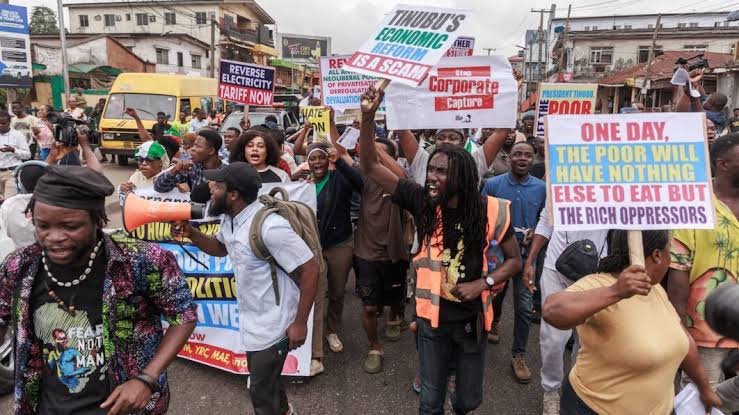
Having come close to winning the presidency, according to the official results of the February 25, 2023 presidential election, Atiku and Obi see themselves as potential and possible presidents of Nigeria. This feeling has become even more accentuated in the face of Tinubu’s monumental failures. Analysts believe that a non-performing Tinubu would be easy to defeat in the 2027 presidential election. Who, between Atiku and Obi, will deliver this technical knockout to Tinubu? This is the crux of the matter. It is the bone of contention. It is the scramble for this bone that snatched the fire away from ADC. As it stands now, the party has lost its initial verve. That is why some nine months or so to the commencement of party primaries for the 2027 general elections, the ADC is yet to discover its mission, let alone fashion out a roadmap for 2027. The party is behaving as if 2027 can wait or be put off indefinitely for its own sake.
Sadly for the party and those who subscribe to it, 2027 cannot wait. As a matter of fact, the ADC will lose steam and appeal if it does not resolve its contradictions fast and now. Quite a number of people believe that Atiku is the problem of and with ADC. The former Vice President, from what we can see, is driven by a personal agenda. He wants to be president of Nigeria and this ambition cannot be subordinated to any other issue. For Atiku, for instance, the understanding between the north and the south about rotation of the presidency is hogwash. He does not believe in it. Here, he is following the footsteps of Muhammadu Buhari.
All through the years that he stood election for the office of president, Buhari never paid heed to the north-south understanding. He ran in every election cycle whether it was deemed the turn of the south or that of the north. After several attempts, Buhari had his way ultimately. Atiku is playing the same card. That is why he is not persuaded by the argument that it is the turn of the south to produce the president in 2027. For this reason, Atiku is bent on standing for election in 2027. He may also be considering the fact that the coming election year could be his last chance, based on age, to stand election to the office of president. If this is the case, the question of him stepping down for anybody does not arise.
As for Peter Obi, he is an institution that cannot afford to diminish itself. This man, more than any other Nigerian who has ever stood election for the office of president, has proved that Nigerians can vote for a better Nigeria if they see someone that can guarantee them that. In 2023, the people massively voted for Obi because they believe that he is the change they are looking for. What this means is that Obi has the real people of Nigeria behind him. In his quest for the presidency, Obi is propelled by a force that owns and controls the heartbeat of Nigeria. Even though the statement they made through their votes in 2023 was thwarted, the invisible powers that took Obi to a height many Nigerians could not imagine are still alive and kicking. They are waiting and are still ready to carry Obi shoulder-high again. Can Obi afford to dash the hopes of this multitude by opting out of the presidential race for any reason? Obi will be committing political harakiri if he does that.
What this scenario suggests is that neither Atiku nor Obi will step down for each other. In other words, both men will stand for election on separate platforms. But ADC wants both in its fold. The party believes that the combined forces of Obi and Atiku will give it a clear edge over Tinubu’s APC. But that combined force remains far-fetched. It is even looking unrealizable. This is the dilemma that ADC faces. But it is high time those behind the party moved on. The party should decide between Obi and Atiku and fire on with whatever decision it takes. Time is running out on ADC. It should seize the moment now.