Hegseth’s remarks follow high-level security talks in Washington as both nations confront allegations of targeted attacks on Christian communities.
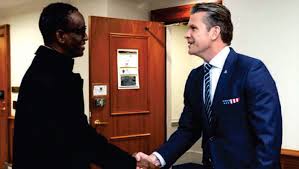
United States defence secretary, Pete Hegseth, has declared that his department is “working aggressively” with Nigeria to end what he describes as the “persecution of Christians by jihadist terrorists.” His statement followed a Thursday meeting with Nigeria’s national security adviser, Nuhu Ribadu—a meeting that coincided with a U.S. congressional hearing on alleged Christian persecution in Nigeria.
The timing was deliberate. Washington wanted to signal that it is taking this issue seriously. But seriousness is not the same as strategy.
From Diplomacy to Militarised Rhetoric?
In his post on X, Hegseth highlighted his discussion with Nuhu Ribadu and invoked the controversial “Department of War” branding embraced by the Trump administration. Reports that Dan Caine, chairman of the Joint Chiefs of Staff, attended the meeting indicate that the U.S. is viewing Nigeria’s security challenges through a distinctly military lens.
Then came the most alarming part: President Donald Trump’s earlier threat to deploy U.S. troops into Nigeria “guns-a-blazing” to “wipe out Islamic terrorists.” Such language is more reminiscent of a campaign rally than diplomatic communication. It undermines U.S. credibility and needlessly provokes a key partner.
Nigeria Responds With Diplomacy, Not Defensiveness
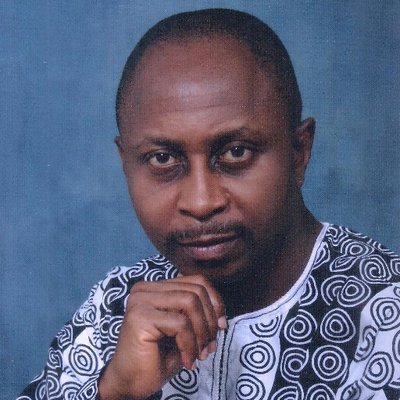
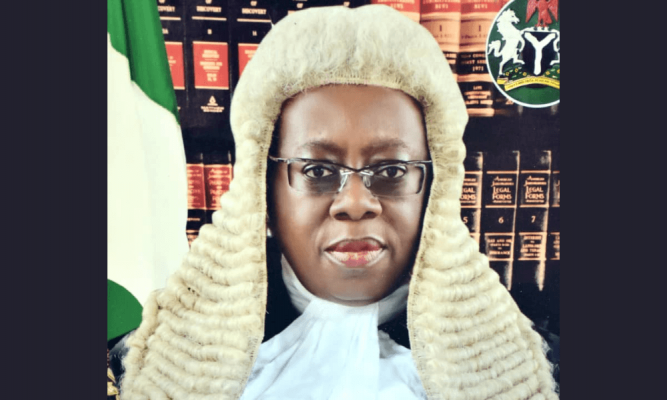
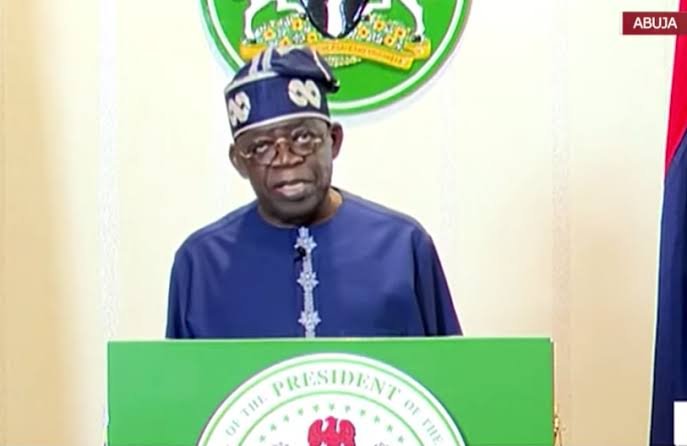
To its credit, Nigeria did not respond with outrage. Instead, President Bola Tinubu dispatched a robust, senior delegation to Washington. Led by Ribadu, the team included
-
Bianca Ojukwu – Minister of State for Foreign Affairs
-
Kayode Egbetokun – Inspector General of Police
-
Lateef Fagbemi – Attorney-General of the Federation
-
General Olufemi Oluyede – Chief of Defence Staff
This is not a token delegation; it’s a statement of seriousness. President Tinubu is engaging because it understands the stakes—not because it accepts Washington’s framing.
The delegation also met with U.S. Representative Riley Moore, part of a broader effort to counter claims made before the Congress.
The Problem With the “Christian Persecution” Narrative
At the hearing, Jonathan Pratt of the U.S. State Department said Washington would work with Nigeria to create a task force on alleged Christian persecution. But the word “alleged” matters. Violence in Nigeria is widespread and devastating, but it is driven by a combustible mix of:
-
terrorism (Boko Haram, ISWAP)
-
banditry
-
farmer–herder conflict
-
political and economic grievances
-
climate pressure
To reduce our present overlapping crises to a simple narrative of jihadists targeting Christians may be politically convenient in Washington, but it is analytically shallow. It distorts policymaking and risks inflaming tensions at home.
The Real Danger: Oversimplification and Overreach
The United States can be a constructive partner. It can help with intelligence, counter-terrorism training, and development support. But that cooperation must be rooted in respect—respect for Nigeria’s sovereignty, and respect for the complexity of its challenges.
Threats of unilateral military action are not respect.
They are destabilizing, counterproductive, and reckless.
If U.S. policy becomes driven by ideological narratives or domestic political agendas, it will harm not only Nigeria but America’s long-term strategic credibility.
A Path Forward Built on Partnership, Not Pressure
As Nigeria, via President Tinubu’s led administration continue to demonstrate transparency in security operations and acknowledge the genuine suffering of communities—Christian and Muslim alike. The U.S. must dial down its militarised rhetoric and embrace diplomatic rigor instead of political theatrics.
The future of Nigeria–U.S. cooperation will depend on whether both sides can rise above noise and focus on facts.
What the world needs now is collaborative problem-solving, not a new stage for interventionist impulses.
And this moment—handled with wisdom rather than intimidation—could be the beginning of that cooperation.
“Nigeria is on course for recovery.”